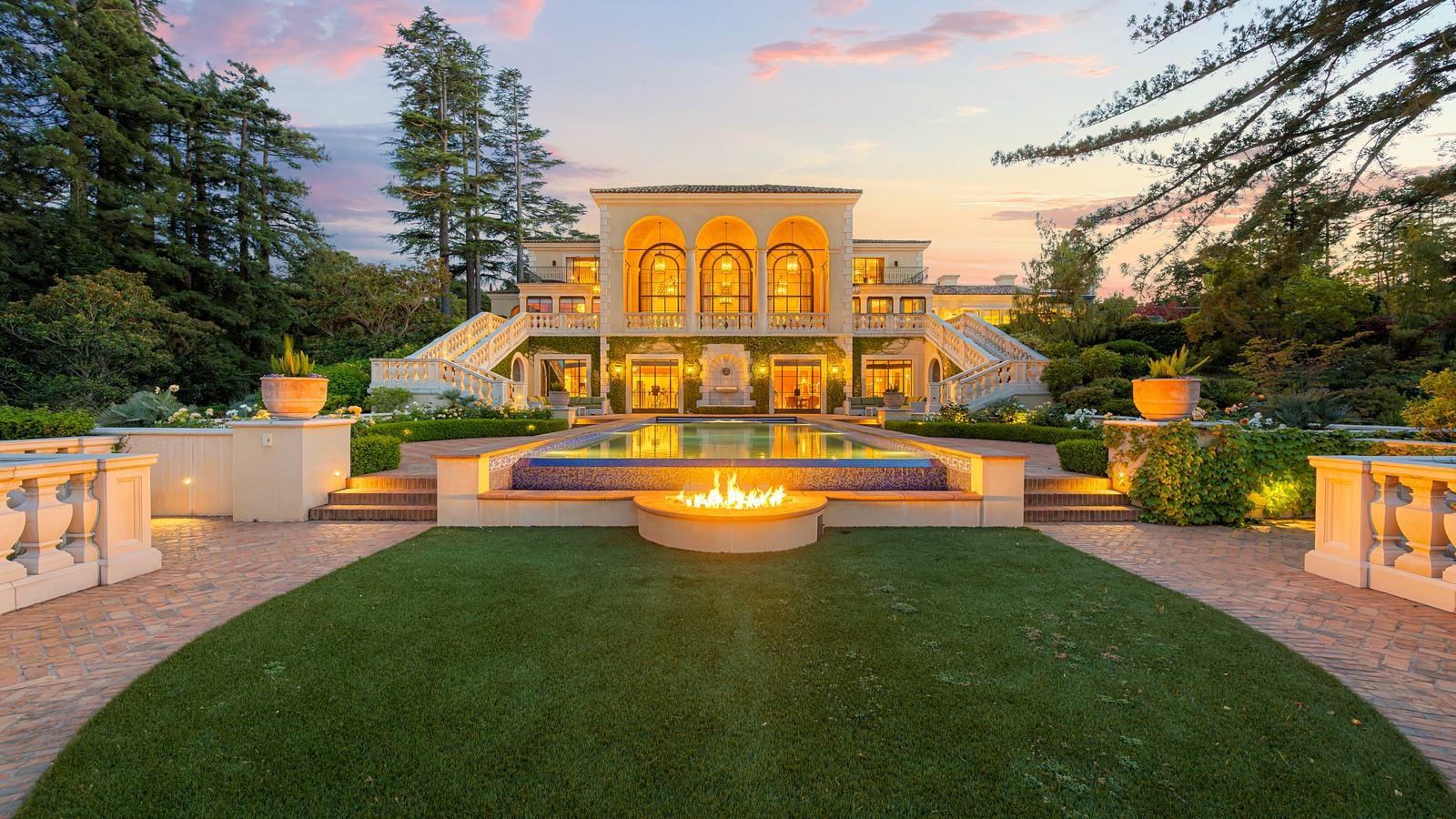
Sotheby’s International Realty reports a $70 million Hillsborough estate sale among its August highlights, alongside major transactions in Sonoma and Turks and Caicos.
A $70 million residential sale in Hillsborough, California, leads Sotheby’s International Realty’s published highlights for August 2026, placing the transaction among the kind of trophy-home deals watched closely by family offices and globally mobile buyers. The network also reported a $38.5 million Sonoma transaction and a $27 million sale in Providenciales, Turks and Caicos.
The group of deals is useful because it shows high-value residential activity across very different ownership propositions: a major California estate, a large wine-country holding and an oceanfront Caribbean property. For ultra-high-net-worth buyers, trophy real estate is rarely one uniform market; value is shaped by privacy, scarcity, location, land, access and the lifestyle an estate makes possible.
The Hillsborough transaction reached $70 million
Sotheby’s International Realty identifies a Hillsborough, California, estate represented by Jennifer Gilson of Golden Gate Sotheby’s International Realty as an August sale at $70 million. Hillsborough’s appeal has long been tied to substantial private parcels and proximity to San Francisco and Silicon Valley without the density of a city address.
At that price level, a residence becomes a major balance-sheet asset as well as a home. Buyers may consider security, staffing, tax structure, insurance, maintenance reserves and long-term capital expenditure alongside architecture and land, particularly when the property is one of several residences managed through a family office.
Sonoma’s $38.5 million sale shows the value of land and privacy
The same monthly report includes a Sonoma, California, property sold for $38.5 million through Michael Dreyfus and Kristie Eddy. The accompanying image shows a broad rural estate with lake, open land and agricultural buildings, reinforcing the appeal of private acreage within reach of one of America’s most established wine regions.
For wealthy owners, large rural holdings can serve several functions at once: residence, retreat, entertaining base and long-term land asset. They also demand a different management model from an urban penthouse, with grounds, water systems, roads, agricultural elements and outbuildings requiring ongoing oversight that may continue even when the principal is elsewhere.
Turks and Caicos adds the yacht-owner dimension
A $27 million transaction in Providenciales was another of Sotheby’s highlighted August sales. The oceanfront estate is shown with multiple pavilions, landscaped grounds, pool and direct frontage onto white sand and turquoise water, making it particularly relevant to owners whose lifestyle already centres on the Caribbean and private boating.
For superyacht families, a coastal residence can operate as more than a holiday home. It can become a logistical base with storage, staff accommodation, airport access and proximity to cruising grounds, reducing the friction of moving between land and yacht during an extended season.
Trophy homes are judged by scarcity rather than price per square foot alone
Conventional residential analysis often focuses on comparable sales and unit pricing, but the top end of the market contains assets that are difficult to compare directly. Unique land, privacy, waterfront, historic architecture or an irreplaceable location can make two superficially similar estates behave very differently when they come to market.
That scarcity is why sophisticated buyers often bring architects, surveyors, security advisers, tax specialists and household-management experts into due diligence. The acquisition decision is not simply whether the home is attractive; it is whether the entire estate can support the owner’s lifestyle and remain manageable over a long ownership period.
Multi-residence ownership requires institutional discipline
Sotheby’s August highlights also included a CAD22 million Toronto sale and a $17 million Southampton transaction, illustrating how high-value homes are trading across several established wealth centres. Many buyers at this level own residences in more than one jurisdiction and move among them according to business, family and seasonal patterns.
That turns property ownership into an operational portfolio. Staffing, security, maintenance, insurance, tax residency and succession planning have to be coordinated across borders, much like the management of yachts and aircraft. The headline price may attract attention, but the defining characteristic of the ultra-rich property market is the infrastructure required to own exceptional homes well.