Interior Layout, Zoning & Space Planning
How interior spaces are distributed, sized and connected across the yacht, balancing owner and guest priorities, service functions, technical zones, circulation and available volume.
Explore subject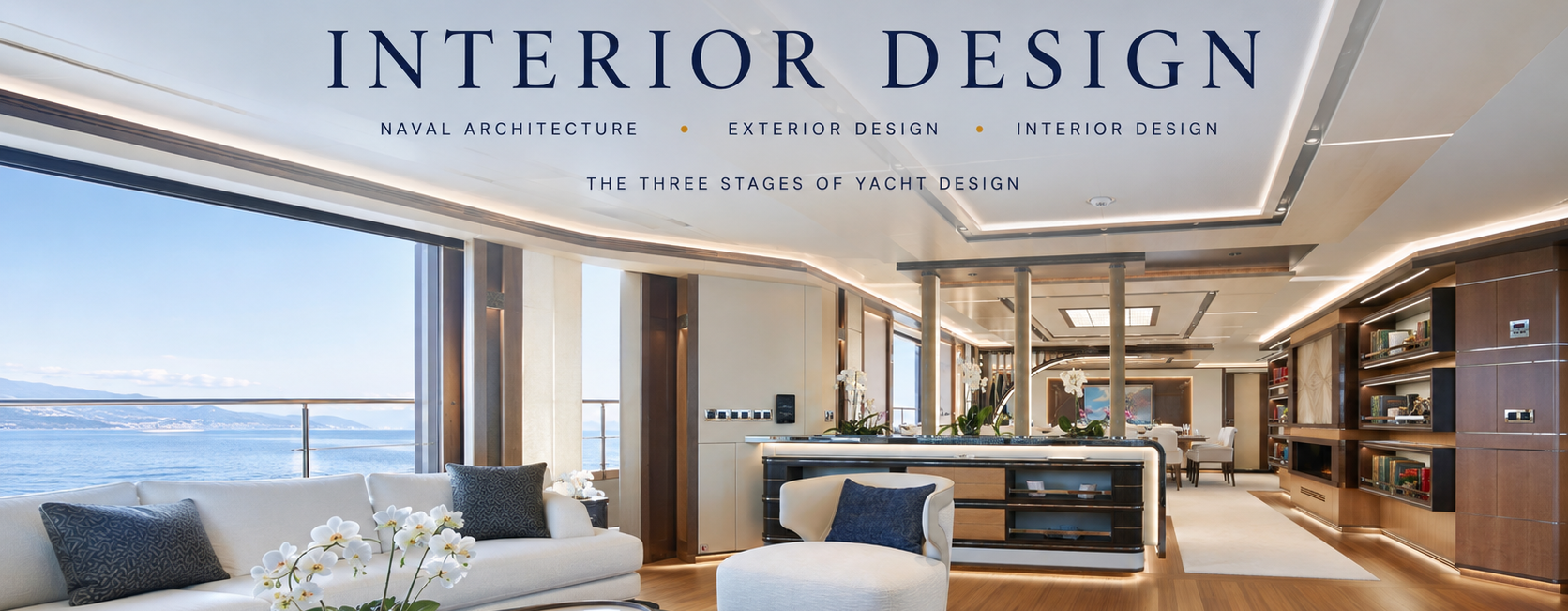
Interior Design
Interior Design covers internal architecture, accommodation, circulation, materials, furniture, lighting and the experience of living aboard.
Interior Design is the specialist discipline covering space planning, owner and guest areas, crew spaces, circulation, furniture, joinery, materials, lighting, ergonomics and integration with the yacht's technical requirements.
How interior spaces are distributed, sized and connected across the yacht, balancing owner and guest priorities, service functions, technical zones, circulation and available volume.
Explore subjectDesign of owner accommodation and private areas, including suites, offices, lounges, dressing rooms, bathrooms, private circulation, views, privacy and connections to exterior spaces.
Explore subjectPlanning and design of guest cabins and suites, including sleeping, storage, bathrooms, circulation, privacy, comfort, views, flexibility and relationships with shared guest spaces.
Explore subjectInterior architecture of salons, lounges and social spaces, including furniture planning, views, circulation, spatial character, entertaining functions and links to exterior areas.
Explore subjectDesign of dining rooms, bars and entertaining spaces, including seating, service circulation, lighting, storage, adjacency to galleys and the transition between formal and informal use.
Explore subjectInterior design of spas, treatment rooms, saunas, steam rooms, gyms and wellness spaces, including guest flow, privacy, materials, technical interfaces and changing facilities.
Explore subjectDesign of cinemas, games rooms and specialist leisure interiors, integrating furniture, acoustics, lighting, equipment, viewing geometry, circulation and the overall guest experience.
Explore subjectInterior planning of galleys, pantries and service areas, balancing professional workflow, hygiene, storage, equipment, crew circulation, guest separation and connections between decks.
Explore subjectDesign of crew cabins, messes, offices and working spaces, considering habitability, privacy, storage, operational efficiency, circulation and separation from owner and guest areas.
Explore subjectInterior planning of corridors, stairs, lifts and vertical circulation, balancing spatial drama, efficient movement, service separation, accessibility, escape requirements and available volume.
Explore subjectSelection and detailing of timber, stone, metals, glass, fabrics and specialist finishes, considering appearance, durability, weight, installation, maintenance and marine constraints.
Explore subjectDesign and integration of loose and built-in furniture, fixtures and equipment, including ergonomics, securing, storage, service access, visual composition and marine operating conditions.
Explore subjectInterior lighting design for architecture, atmosphere, task performance and artwork, including natural light, decorative lighting, controls, concealed sources and integration with ceilings.
Explore subjectInterior approaches to acoustic separation, vibration perception, privacy and physical comfort through layouts, partitions, doors, finishes, furnishings and coordination with technical systems.
Explore subjectHow ventilation, air conditioning, ducts, grilles, cabling, pipework, access panels and technical services are incorporated without compromising the intended interior architecture.
Explore subjectDetailed interior planning of wardrobes, cupboards, service storage, concealed equipment and everyday functional elements that make yacht accommodation practical without visual clutter.
Explore subjectHow accessibility, safe circulation, escape routes, fire boundaries, doors, handrails and other safety requirements are integrated into refined interior architecture.
Explore subjectInterior redesign and restoration of existing yachts, including retained joinery, changed layouts, new materials, technical upgrades and the constraints of working within an existing vessel.
Explore subject