A weather-aware late-October superyacht shore guide to Acadia National Park: yacht landing logistics, Cadillac Summit Road after its 2026 reservation period, the Rockefeller carriage roads, Jordan Pond and Maine's rugged coast.
Why Acadia belongs on an autumn yacht itinerary
Approaching Mount Desert Island by sea gives Acadia National Park an entirely different sense of scale. Granite headlands rise from a working Maine waterfront, forested ridges sit behind coves, and the small town of Bar Harbor offers a practical shore gateway for guests who want the national park without turning the yacht itself into a tour bus. In late October, the reward is space and a distinct New England mood rather than the bustle of midsummer.
This is a shore programme best designed as a sequence of contrasting experiences: a sunrise viewpoint, a quiet walk on the historic carriage-road system, an unhurried stop above Jordan Pond, and a return to the harbour for dinner aboard. None requires trying to land a large vessel on a park shoreline. A yacht can remain a carefully managed base while the guest experience moves inland with an appropriately briefed driver and guide.
Although photographs often give the impression of a single wilderness, Acadia is a patchwork of mountains, shoreline and communities on Mount Desert Island and neighbouring islands. That complexity is part of its appeal for repeat visitors: the eastern side offers iconic landmarks, the western side feels gentler and less trafficked, and the offshore perspectives remain an attraction in their own right. The itinerary should preserve a margin for weather because North Atlantic autumn cannot be programmed to a fixed timetable.
Plan the landing before planning the excursion
Bar Harbor is the natural starting point for many yacht parties, but local marine operations need advance coordination. Visiting masters should speak directly with the municipal Harbor Master about current berthing, mooring, permitted tender access and available services; a website listing a pier is not permission to berth a large yacht there. The town publishes its Harbor Master contact details and office hours, while local harbour professionals can advise on practical draft and manoeuvring questions.
Do not treat a national-park pass as permission to anchor or land a tender anywhere along Acadia's coast. Harbour arrangements belong to the relevant port authorities, and park land access follows separate National Park Service rules. For a large yacht, the refined approach is to settle the marine plan first, allocate a realistic tender-transfer window, and send luggage-free guests ashore to a vehicle that is ready to depart.
A credible late-season plan is deliberately short on fixed connections. Use the morning for inland activities when conditions cooperate, reserve the afternoon for a scenic drive or village visit, and leave the captain free to alter tender movements as wind and swell evolve. The practical luxury here is time: avoiding a packed schedule means guests can stop to take in a view without threatening the next appointment.
Cadillac Mountain after the 2026 reservation season
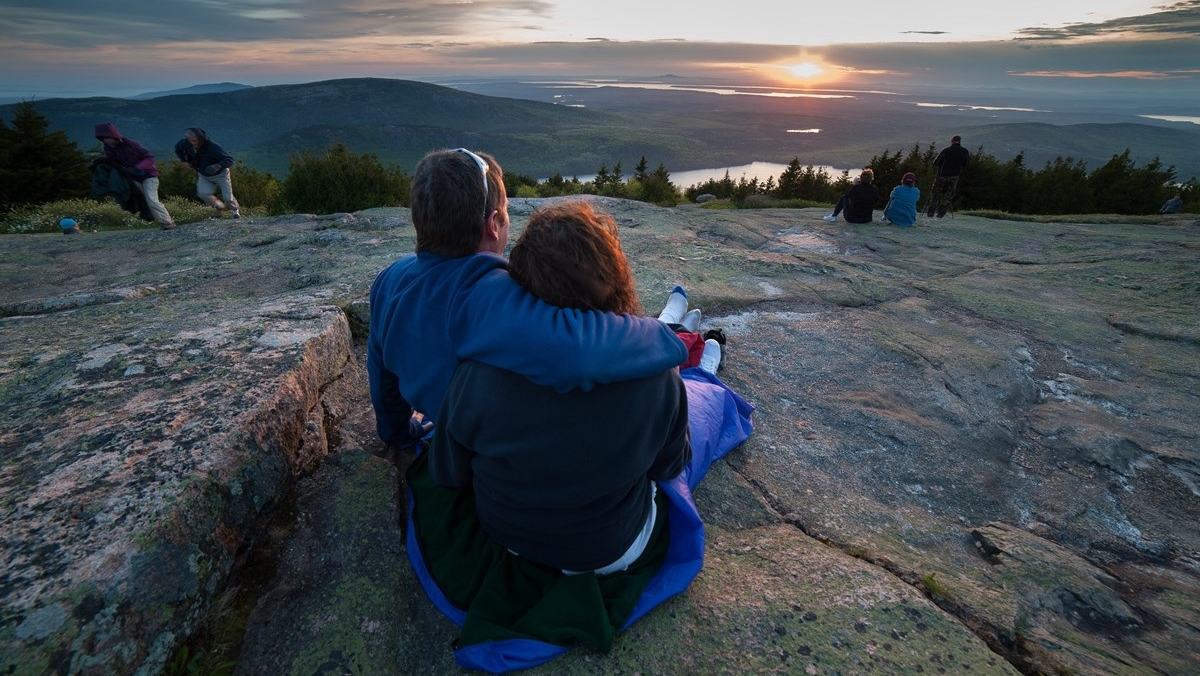
Cadillac Mountain is the conspicuous summit above Bar Harbor, and its exposed granite makes the passage from sheltered yacht to mountain top feel dramatic. The National Park Service states that special vehicle reservations for Cadillac Summit Road were required from 20 May through 25 October 2026. As of 26 October that particular seasonal reservation window has ended, although ordinary park entrance requirements and any current road closures or safety notices still matter.
Visitors should not confuse the end of the timed-entry season with guaranteed access in every weather condition. Fog can remove the view entirely, wind can be severe at the summit and a late-season storm can disrupt road travel. Rather than promise a sunrise photograph, ask a local driver to check the official road and weather status that morning and keep a second destination ready if the mountain is cloud-covered.
For guests drawn to photography, there is something worthwhile beyond the classic horizon shot. Moving over bare rock changes the foreground continuously, while Mount Desert Island's bays and distant offshore contours provide context for the yacht lying somewhere below. A patient visit that leaves room for changing light is more rewarding than a hurried roadside stop arranged around an inflexible timetable.
The Rockefeller carriage roads and Jordan Pond
The park's forty-five miles of historic carriage roads are one of the most distinctive heritage landscapes accessible from the coast. The National Park Service credits John D. Rockefeller Jr. and his family with creating these motor-free routes between 1913 and 1940, using carefully designed gradients and stone bridges to fit the terrain. They remain shared spaces for walkers, cyclists and horse-drawn carriages, so a quiet private visit should respect other users rather than assume exclusive use.
Choose a modest section of carriage road for the season and the guests' fitness instead of treating the entire network as a sporting challenge. An outfitter may be able to arrange suitable bicycles when conditions permit, but walking often gives the better chance to notice bridge masonry, changing leaves and the interplay of woodland with water. Weather, wet leaves and trail conditions should decide the pace, not an itinerary written in the saloon.
Jordan Pond offers a natural second stop, with the rounded Bubbles rising over a clear lake and paths that vary in difficulty. This is a protected drinking-water supply, and the park explicitly prohibits swimming in it. The shore programme should distinguish an easy viewpoint or partial lakeside walk from the full pond circuit, ensuring that children, older guests and anyone with mobility limitations can enjoy the scene without being pushed into unsuitable terrain.
A quieter coast: Bass Harbor, Schoodic and the outer view
On the western side of Mount Desert Island, the Bass Harbor Head Light Station provides an alternative to the eastern park's famous overlooks. It is a working coastal landmark rather than a marina attraction, so reaching it means respecting trail access, parking limitations and any posted restrictions. For guests who appreciate maritime heritage, a lighthouse visit makes an engaging complement to the technical sophistication of the yacht.
The park's Schoodic Peninsula lies across the water on the mainland side and offers granite shoreline and wider exposure to the Gulf of Maine. Reaching it involves meaningful overland travel or season-dependent transport, so it fits a generous full-day programme better than a short shore leave. Guests should also understand that strong surf along exposed ledges is part of the scenery, not a safe invitation to approach the edge for photographs.
The National Park Service also identifies Isle au Haut and outer islands as distinct parts of Acadia, but these are not interchangeable with central Mount Desert Island attractions. Access methods, public services and seasonal transport differ, and an offshore yacht tender is not a substitute for checking landing rights. A thoughtful charter concierge can present these as separate future-day possibilities instead of promising every remote island within a single afternoon.
A late-October itinerary that remains honest about the season
The calendar matters in 2026. The Hulls Cove Visitor Center is among the seasonal facilities approaching its annual closure. The park lists 31 October as its last regular opening day and 27 October for the Rockefeller Welcome Center; other interpretation desks close earlier. Those dates make the last days of October especially sensitive to small mistakes in planning. Confirm the individual visitor facility before sending guests there, since the park itself remains an attraction after many seasonal desks close.
The National Park Service says the motor-vehicle portion of Park Loop Road normally closes for winter from around 1 December to 14 April, subject to conditions and exceptions. A late-October visit can still offer road-based access, but guests should be prepared for temporary restrictions caused by weather or works. Park entrance fees apply throughout the year, independently of the Cadillac Mountain seasonal vehicle-reservation system.
A balanced day might begin with a weather-led Cadillac summit visit, move to a brief carriage-road walk, pause beside Jordan Pond and end with a slow return through Bar Harbor. Another party might prefer one long walk and a simple lighthouse stop, leaving the yacht to provide the evening's sense of occasion. Neither version should depend on an exclusive experience that the park has not authorised.
Private guiding, commercial photography, organised events or other business activities on federal parkland may have their own authorisation requirements. Captains and guest-services teams should confirm whether an activity provider is appropriately authorised instead of assuming that hiring someone privately waives those rules. The aim is to leave Acadia as intact as it was found, with wildlife untroubled, paths respected and marine operations handled with care.
For official planning, consult the National Park Service's current Acadia pages for Cadillac reservations, facility dates, carriage roads and road conditions, alongside the Bar Harbor Harbor Master for marine arrangements. Hero photograph: NPS Photo by Kent Miller, showing visitors on Cadillac Mountain, supplied through the National Park Service's Acadia pages.