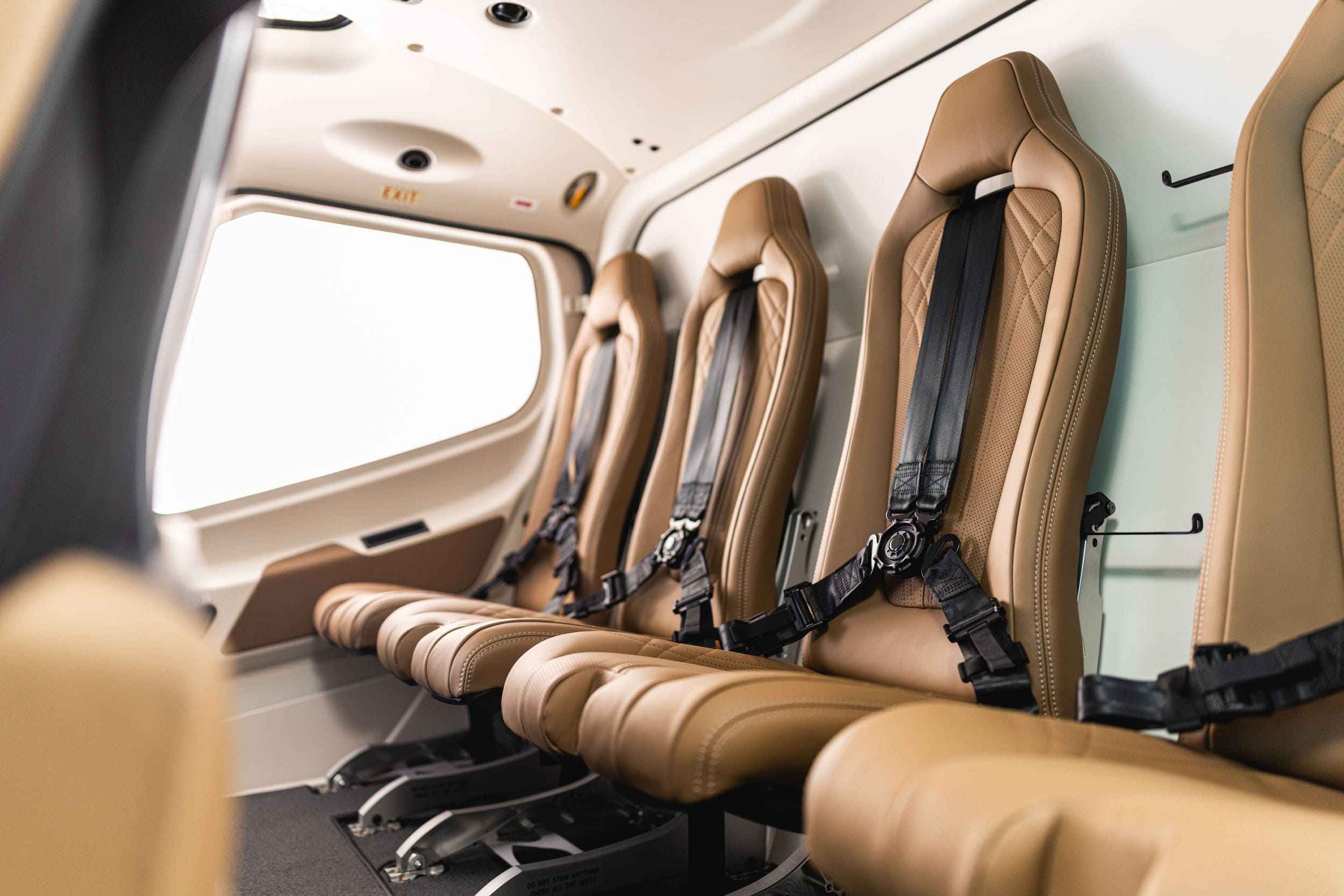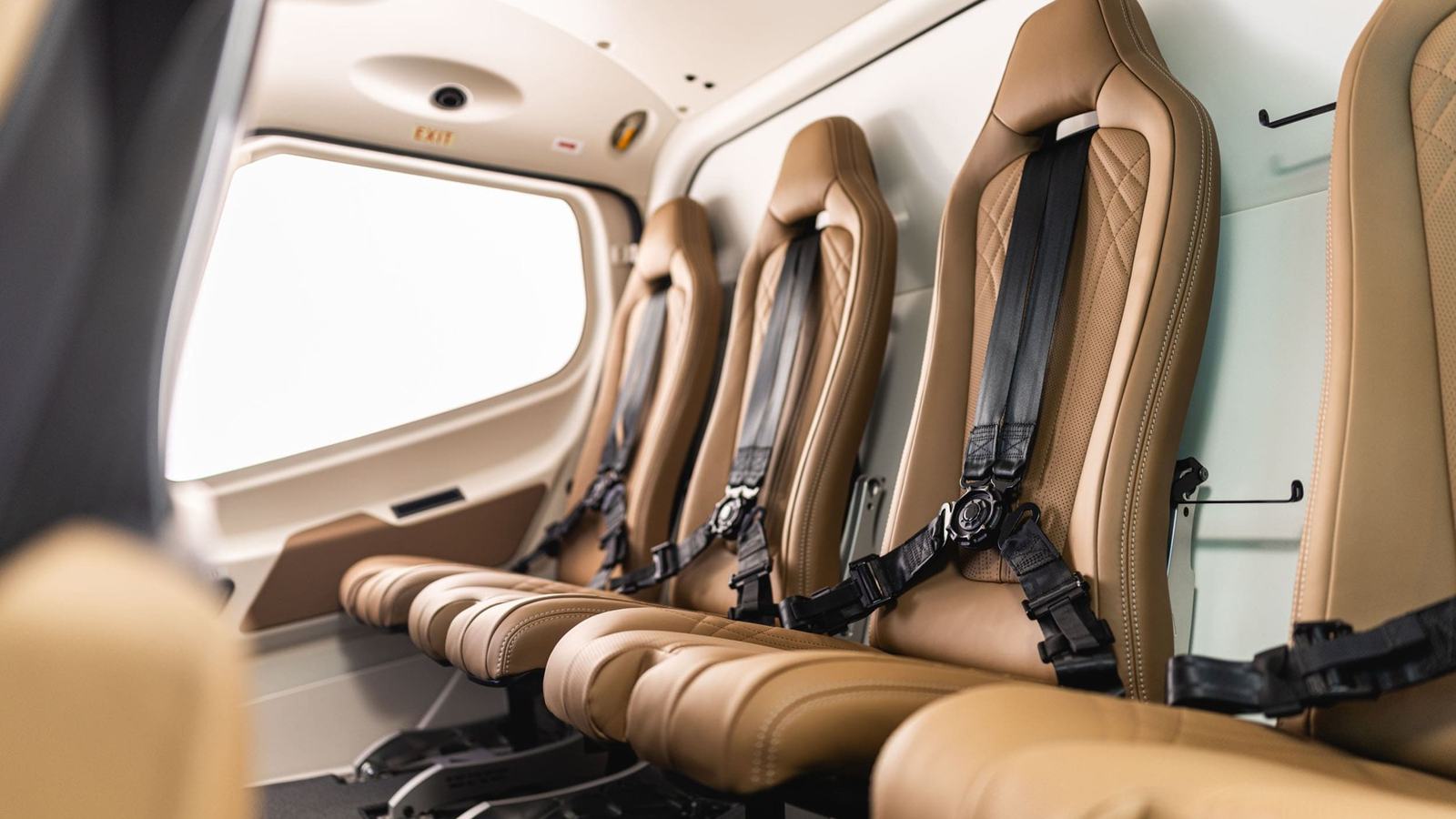
Airbus Corporate Helicopters introduces its new ACH Line cabin on the ACH130 in the Dolomites, with engineering and interiors work by Italian and specialist partners.
A unified cabin design makes its operational debut
Airbus Corporate Helicopters has introduced a new ACH Line interior on the ACH130, taking the cabin design first presented in concept form for the ACH140 into an existing aircraft family. The manufacturer's release, distributed on 13 November 2026, identifies an event at Sappada in northern Italy as the occasion for the unveiling. The new cabin is intended to establish a consistent design identity across the private and corporate helicopter range, while making the interior useful for a variety of passenger journeys.
The development is relevant to yacht owners because flying from a helipad to a residence, airport or resort can be the most time-sensitive part of an otherwise carefully arranged itinerary. A short helicopter journey is a different experience from a long flight in a business jet. Passengers encounter the cabin's access arrangements, seating, storage and visibility in a much smaller space, with less time to adjust to their surroundings. The aircraft's usability therefore deserves the same attention as the finish of the upholstery. In a successful cabin, design helps rather than complicates the movement of people and their belongings.
Turning a design concept into an actual aircraft interior
ACH had previously presented a full-scale expression of its new cabin philosophy for the ACH140. The introduction on the ACH130 is a notable step because the design has moved beyond the environment of an exhibition mock-up into an operational setting. Guests at the Italian event experienced demonstration flying in the Dolomites, according to the release. The company does not identify the delivery arrangements or serial numbers of every aircraft that will receive the interior.
The distinction between a concept cabin and an aircraft fit-out is essential for prospective owners. In a mock-up, a designer can concentrate on the relationship between surfaces, colours and passenger spaces. Installation in a real helicopter requires consideration of the aircraft's weight limits, its systems, emergency access, applicable airworthiness requirements and the way components are secured. A cabin is not simply furniture fitted into a moving room. Its fittings form part of a regulated aircraft, and the design must coexist with the practical requirements of flight. The achievement of a compatible interior is therefore a different milestone from the display of an attractive prototype.
Specialists in engineering and cabin outfitting
Airbus Helicopters in Italy led the engineering and certification work, collaborating with F/LIST and Maison Borghino. That allocation of responsibilities is worth understanding. Luxury interior firms offer knowledge of craftsmanship, materials and the detailed production of bespoke assemblies. The aircraft manufacturer must integrate their contribution with the engineering and regulatory obligations of the underlying platform. The announcement credits both partners but does not specify the price or full configuration of every available cabin option.
The best specialist collaboration produces an interior that has been designed with production and continued use in mind. A decorative treatment that looks excellent at delivery can become more difficult to preserve if its covering cannot readily be cleaned or replaced. Owners who expect to use aircraft regularly should establish which finishes are offered, how damage can be repaired and whether maintenance requires a particular approved facility. Those matters are especially relevant where a private aircraft may travel between different seasonal bases. A knowledgeable completion team should provide accurate descriptions of the chosen materials, attachment arrangements and maintenance requirements as well as their appearance.
Ergonomics matter more than additional decoration
The announcement places emphasis on the functional quality of the new cabin. The actual experience of boarding a helicopter depends on details such as how easily a passenger can step to their seat, reach a restraint and place personal belongings where the crew permits. A passenger may be wearing formal clothing on one journey and practical outdoor clothing on another. An interior that works for both should feel intuitive without requiring the operator to provide constant explanations during ordinary use.
In the confined environment of a rotorcraft, seemingly modest choices in the location or shape of fittings may have noticeable consequences. A seat that provides good support for a brief transfer can be less satisfactory if its position makes boarding awkward. Storage should not encourage passengers to leave unsecured objects where they might interfere with movement. No particular adjustable seating function, luggage capacity or cabin dimension is confirmed in the release reviewed for this report. Those are matters to examine in the actual aircraft being offered, rather than assuming that every element of a rendered design will be identical in every configuration.
A helicopter transfer within a superyacht itinerary
A privately arranged flight can extend the range of experiences accessible from a coastal itinerary. It may connect a metropolitan airport with a landing site closer to a marina, or make it possible to include an inland destination in a programme otherwise centred on the sea. The convenience depends less on the theoretical speed of the helicopter than on how the whole journey is organised. Ground transfers, landing permissions, baggage handling and crew availability can determine the value of a short airborne leg.
Owners should not interpret the new interior as an indication that any ACH130 can operate from any yacht. For an onboard helicopter operation, both the vessel and the aircraft must be appropriate to the proposed use. The relevant considerations include the yacht's certified landing arrangements where required, operating procedures, aircraft dimensions and weight, environmental conditions and relevant authorities' requirements. Many owners instead choose to use established shore-based landing sites. In either case, the aircraft operator and yacht's captain should agree their respective responsibilities before passengers arrive. The new cabin is an interior development, not a new maritime operating approval.
What the demonstration in Italy tells prospective clients
Sappada offered a setting for introducing the cabin through actual flights in an Alpine environment. Air Delta's chief executive, Maicol La Regina, was among the attendees, and the manufacturer describes Air Delta as a launch customer representative. The presence of such an operator illustrates that the equipment is intended for professional flying activity, not simply static display. It does not amount to a published schedule of charter flights or a confirmation of availability in any particular geographic market.
The mountains also provide a useful reminder that the value of a helicopter is inseparable from the conditions under which its pilot is asked to operate. Weather, visibility, available landing sites and aircraft performance must be assessed for each journey. A programme that seems straightforward in a brochure may not be achievable under particular conditions on the day. Private clients should welcome clear decisions from operators about whether a planned transfer can proceed. The most sophisticated service is one that appropriately values the judgement of its flight crew and offers reasonable alternatives where a journey has to be changed.
Comparing a private aircraft purchase with managed access
A person interested in the ACH130 may approach the market as an aircraft owner, a charter client or someone using a managed helicopter service through another business. Each model has different implications for configuration. Owners can make choices about how the aircraft suits their regular passenger requirements, but take responsibility for arrangements such as scheduled maintenance, storage and qualified crew. Charter clients are generally choosing among available aircraft and established operators rather than specifying all aspects of the cabin.
In either situation, the most useful comparison begins with a realistic picture of typical journeys. A principal who frequently travels with two other people may have needs quite different from a family group carrying large amounts of luggage. An itinerary that regularly includes distant landing sites is distinct from a service based around a single airport. The aircraft's actual approved configuration and performance should therefore be considered before commissioning extensive cabin customisation. The ACH announcement confirms a design development, but does not publish a universal operating cost or suggest that the helicopter is suitable for every private travel requirement.
A recognisable design language with practical consequences
Airbus Corporate Helicopters has said it intends the ACH Line identity to be recognisable across its aircraft. Consistency of design can be a useful advantage for clients and operators encountering several aircraft types, provided that it does not prevent each cabin from responding to the characteristics of its own airframe. A successful range will have a coherent visual identity alongside the particular solutions appropriate to different capacities and operating needs.
The current announcement establishes that the refreshed interior has been introduced on the ACH130, that it was engineered with specialist partners in Italy and that the launch was demonstrated to guests in the Dolomites. Detailed configuration choices, delivery timing and commercial terms should be confirmed with Airbus or an appropriate operator. For superyacht owners, the significance is a renewed attention to the experience of short private flights and to the integration of craftsmanship with aircraft engineering. The interest lies not merely in how the cabin appears in a photograph, but in whether it enhances real journeys while meeting the requirements of safe, professionally managed aviation.
Primary source: Airbus Corporate Helicopters press release distributed by Vertical, 13 November 2026.
Airbus Corporate Helicopters — official new cabin photograph supplied with its November 2026 press release. Official source.