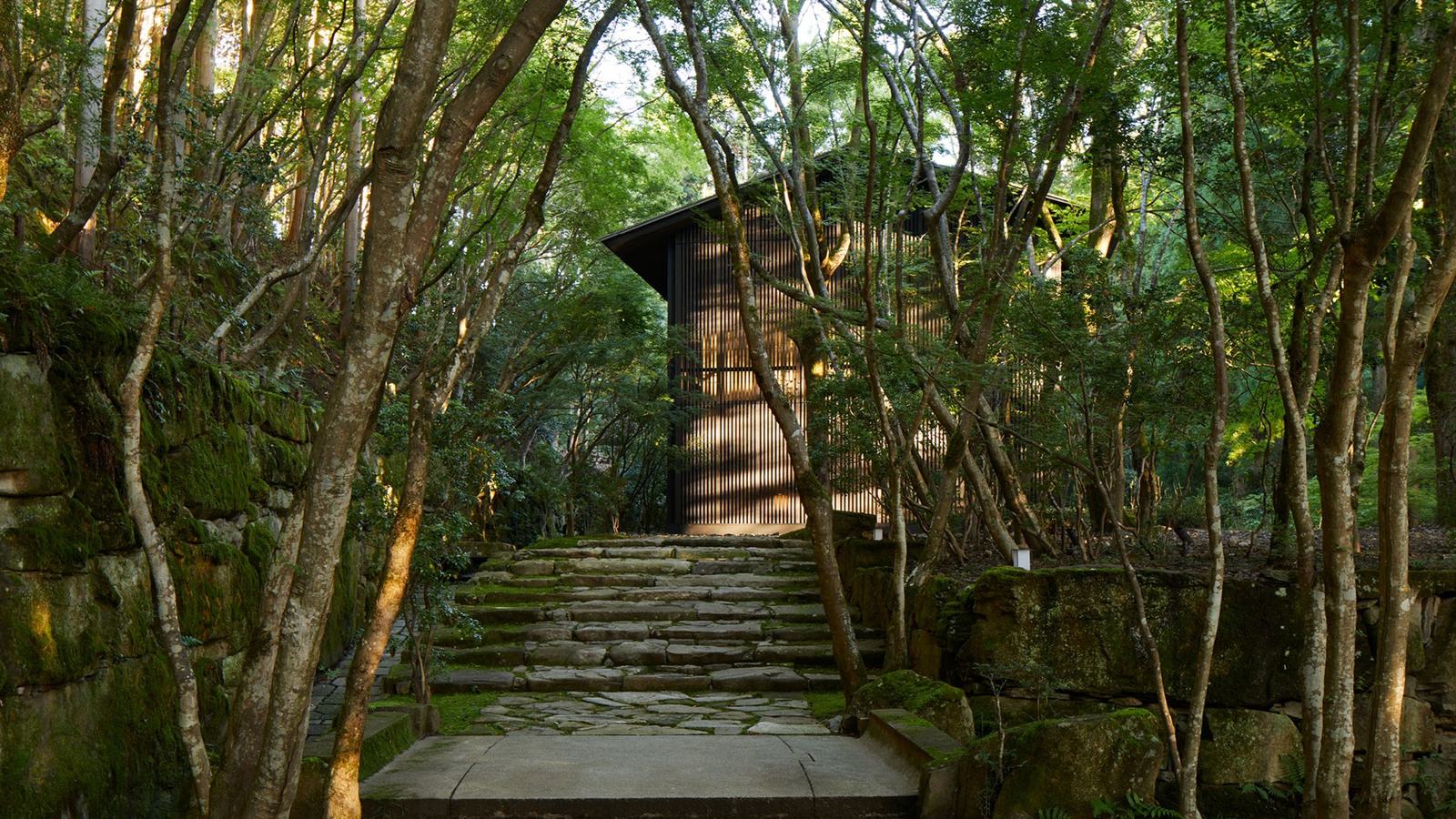
Hidden in Takagamine, Aman Kyoto combines a secluded forest garden with Japanese-inspired accommodation, onsen bathing and cultural access to the ancient capital.
Kyoto beyond the expected city itinerary
Aman Kyoto occupies a secluded garden setting in Takagamine, away from the crowded central streets of Japan's ancient capital. The property offers an unusual proposition: stay within reach of Kyoto's celebrated architecture and traditions while spending much of the day in an environment defined by trees, moss, stones and carefully composed quiet. The surrounding forest is not incidental decoration. It shapes how the buildings, paths and outdoor spaces are experienced, allowing a visit to feel closer to a private Japanese retreat than to a conventional international city hotel.
Kyoto remains one of Japan's most culturally significant destinations, and proximity to well-known sites such as Kinkaku-ji is a meaningful practical advantage. Yet the immediate neighbourhood and the garden are part of the reason to choose this address. Visitors who already know the city may find its slower, more reflective approach especially attractive. New arrivals can use the same setting as a base, provided they reserve enough time for travel to temples and cultural appointments instead of assuming every attraction lies a few minutes away.
Architecture that respects its wooded setting
The resort's accommodation expresses a restrained, Japanese-influenced vocabulary. Natural materials, carefully framed views and an absence of unnecessary visual noise help focus attention on the landscape. Aman describes rooms and suites conceived with an appreciation for traditional Japanese design, although guests should assess each category for its particular outlook, floor plan and relationship to the garden. The luxury is intended to be spatial and tactile, not simply a list of technology and decorative finishes.
For travellers accustomed to larger private homes or expansive yacht cabins, this deliberate simplicity can be a rewarding contrast. Storage, circulation and the balance between indoor and outdoor space may matter more than sheer floor area. It is worth asking for the precise category plans before arrival, particularly for couples travelling with additional family members. A refined architectural concept works best when it also accommodates the daily details of the guest's stay.
A garden made for unhurried exploration
Aman Kyoto's walking paths lead through a forest garden whose textures change with light and season. Moss-covered surfaces, carefully placed stone and the irregular lines of trees give the resort a different visual character from the formal lawns and broad swimming pools of many luxury hotels. A short walk becomes an experience in observing detail: the shape of a branch, an unexpected clearing or the way a path reveals an architectural corner. Those details are part of the property's appeal rather than activities requiring advance tickets.
Seasonality is important. Autumn colour, winter stillness, spring growth and summer humidity will produce quite different visits, and the garden should not be presented as looking identical in every month. Weather can also affect the comfort of extended outdoor time. An itinerary that includes flexible walks, indoor rest and carefully selected excursions is likely to be more satisfying than a rigid schedule dependent on perfect conditions. The location rewards visitors who treat the surroundings as somewhere to inhabit, not merely photograph.
Onsen bathing and a more mindful rhythm
The resort's wellness offering draws on the Japanese tradition of onsen bathing. The emphasis is on relaxation and ritual, with treatments and quiet periods intended to complement the garden setting. Guests unfamiliar with onsen etiquette should ask about bathing procedures, privacy arrangements and any access restrictions before arriving. A Japanese bathing experience is not interchangeable with a Western swimming pool, and its cultural conventions deserve to be approached respectfully.
Wellness at a property like this can be most valuable when it is allowed to determine the pace of the day. A morning exploring Kyoto's temples might be followed by a quiet treatment and a slow evening meal, rather than several unrelated appointments. Prospective guests should confirm treatment availability and any advance reservation requirements, particularly during Japan's busy travel seasons. The aim is continuity between the physical surroundings and the way time is spent within them.
Dining as part of the cultural experience
Aman Kyoto's dining programme includes Taka-An, associated with Japanese culinary traditions, alongside other resort hospitality spaces. The Tea House Senkutsu adds another connection to the wider language of Japanese architecture and ceremony. These venues should be regarded as distinct experiences rather than interchangeable dining rooms: the character of a formal meal differs markedly from a quieter tea-focused visit. Guests should discuss dietary preferences and the kind of occasion they want to mark well in advance.
For travellers planning a culturally rich stay, food and tea can offer as much insight as a heavily scheduled museum afternoon. They also provide welcome pauses between excursions. Reservations, opening arrangements and menu formats may vary, so the hotel remains the authoritative source for details on any particular date. A carefully chosen dinner is most rewarding when visitors have time to appreciate it rather than rush from another appointment across the city.
The practical appeal for private travellers
Kyoto is accessible by rail from other Japanese centres, and international arrivals commonly connect through Osaka-area airports before continuing onward. Aman provides transfer guidance for the final journey to Takagamine, but times should be treated as approximate because traffic, flight connections and rail schedules vary. A traveller combining Kyoto with Tokyo, Osaka or a coastal yacht itinerary should organise those legs separately and verify the most sensible sequence for their particular dates.
Aman Kyoto's strongest proposition is the ability to move between one of the world's richest urban cultural landscapes and an unexpectedly private forest address. Neither element would have the same impact alone. The hotel makes most sense for travellers who appreciate design, landscape, dining and quiet as integral parts of a luxury holiday. Rather than competing with Kyoto's landmark temples, it offers somewhere contemplative to return to after seeing them.