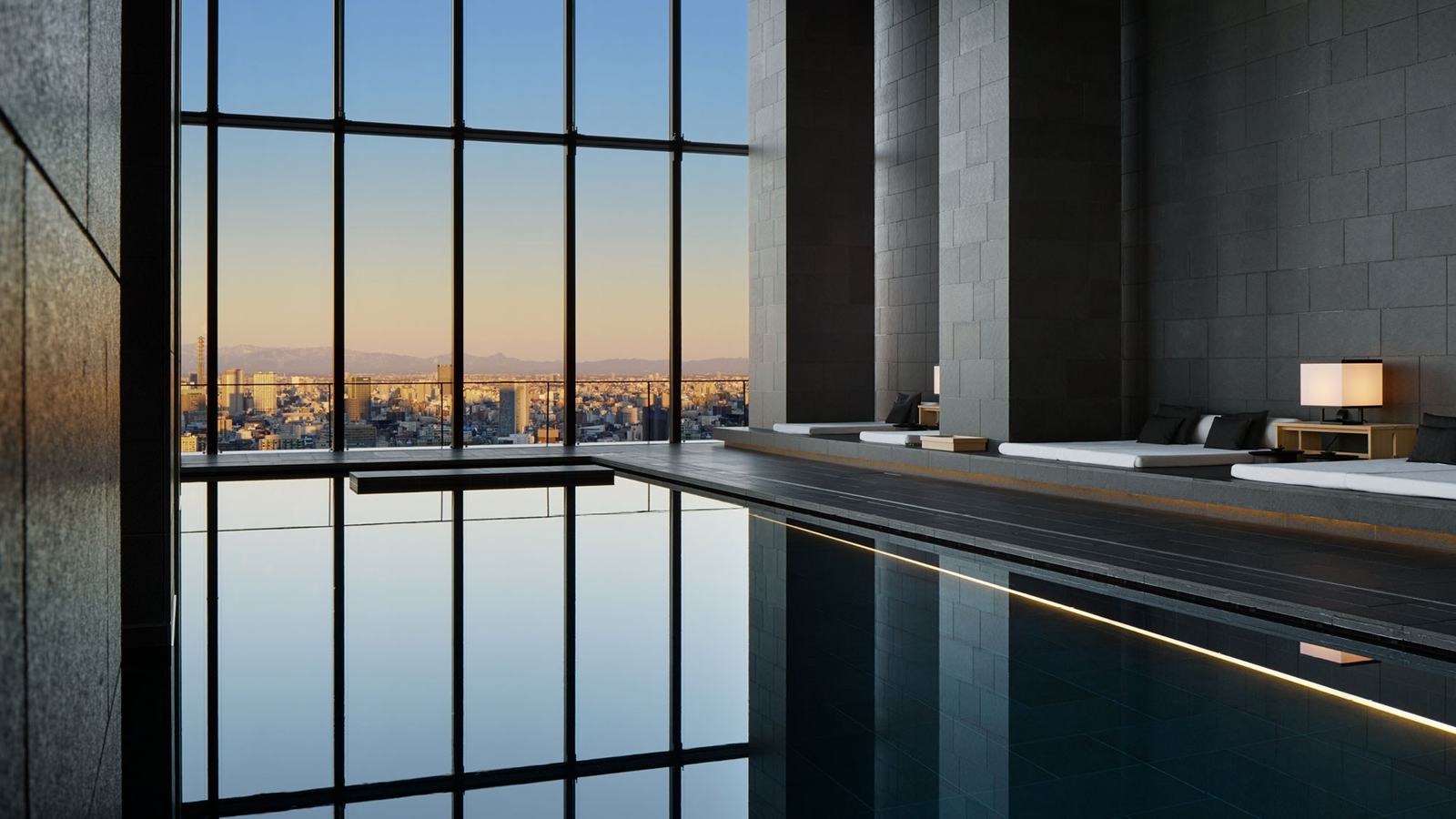
High above Tokyo’s Otemachi district, Aman offers expansive suites, Japanese bathing rituals and an indoor pool as part of a quietly luxurious city retreat.
A serene perspective above the capital
Aman Tokyo occupies an elevated position within Otemachi Tower, giving guests views across the city while protecting them from much of its street-level activity. The hotel draws on Japanese spatial traditions and the restraint of a ryokan, translated into rooms and public spaces of unusual scale for central Tokyo. For travellers who are accustomed to the privacy and calm of a large superyacht, this approach can make a demanding business stop feel restorative.
The official accommodation catalogue describes eighty-four Suites and Signature Suites, with natural materials including wood, stone and washi paper. Their interiors are designed around generous open spaces, deep soaking tubs and expansive windows. Depending on weather and suite position, the outlook can include city districts, the Imperial Palace Gardens and distant Mount Fuji. These are possibilities rather than guaranteed views from every category and in every season.
Tokyo is at its best when guests move beyond a single luxury address. Otemachi provides access to museums, specialist retailers, distinctive neighbourhoods and a culinary culture that rewards careful exploration. An ambitious itinerary can quickly become exhausting, however, especially after a long flight. A useful rule is to reserve time in the hotel between appointments rather than attempting to conquer the entire city in one day.
Accommodation shaped by Japanese design
The suites borrow from an architectural vocabulary of filtered light, natural surfaces and a deliberate sense of space. A large bath and seating area can be as important as the bed, allowing guests to transition from travel or meetings into a quieter evening. The hotel’s most substantial categories are appropriate for longer city stays, but a family should examine sleeping arrangements and connection options before treating any suite as a self-contained residence.
Japanese hospitality is often characterised by small, carefully coordinated details. These can include the manner of arrival, the sequence of a meal and the way service is delivered without interrupting a guest. At Aman Tokyo, the real value for a discerning visitor may be the reduction in friction during a busy trip. Those requiring specialised dining, personal security or private meeting arrangements should give the team clear instructions before arrival.
Although visually open, a suite’s furnishings and circulation may not suit every guest equally. Those travelling with young children or with mobility limitations should discuss bathroom access, connecting rooms and lift routes. Floor plans provide more reliable information than photographs alone. They also help when a private assistant or family office must coordinate several rooms across a group arriving at different times.
Wellness above the streets of Tokyo
Aman highlights its extensive wellness facilities, including Japanese-style bathing spaces, steam rooms, a fitness centre and a thirty-metre indoor swimming pool. These amenities offer a clear alternative to spending every moment outside. For travellers recovering from a long-haul journey or managing time differences, a quiet swim and carefully scheduled treatment may do more for the quality of a visit than another formal reception.
Guests should still make individual choices about treatments and exercise. A hotel wellness programme is not a medical service, and suitability depends on personal circumstances. Spa reservations, privacy arrangements and available instructors should be checked in advance. The strongest experience may be a modest daily routine that guests can maintain while attending to professional and cultural commitments.
Food is another part of the Japanese experience that rewards curiosity. Tokyo offers everything from intimate counter dining to elaborate tasting menus, often with precise booking requirements. Travellers with dietary needs should communicate them clearly, especially where traditional preparations rely on ingredients that are not obvious in translation. A trusted local guide or concierge can help select venues for genuine culinary interest rather than simply for an exclusive reputation.
Planning an efficient and rewarding Tokyo stay
International arrivals may involve lengthy airport transfers, immigration formalities and significant luggage. A family or group travelling by private aircraft should still plan around the rules of the selected airport and the practical timing of ground transport. City traffic and weather can affect a supposedly straightforward journey. An arrival day with few commitments allows the hotel to perform the role of a restorative refuge.
A thoughtful programme might combine professional meetings with a private art visit, an architectural tour and free time to explore a neighbourhood on foot. Such experiences must be arranged within venue policies and should respect the privacy of residents and other visitors. Discreet travel is not the same as unrestricted access. The hotel’s value is partly its ability to help guests navigate those distinctions with ease.
Aman Tokyo stands out for the coherence of its design and its substantial wellness offering in the middle of a vast city. It does not need a remote coastline to feel exclusive: elevation, considered interiors and the rhythm of Japanese hospitality supply the sense of retreat. For superyacht travellers crossing between international destinations, it can provide a peaceful urban interval that feels very different from life aboard.