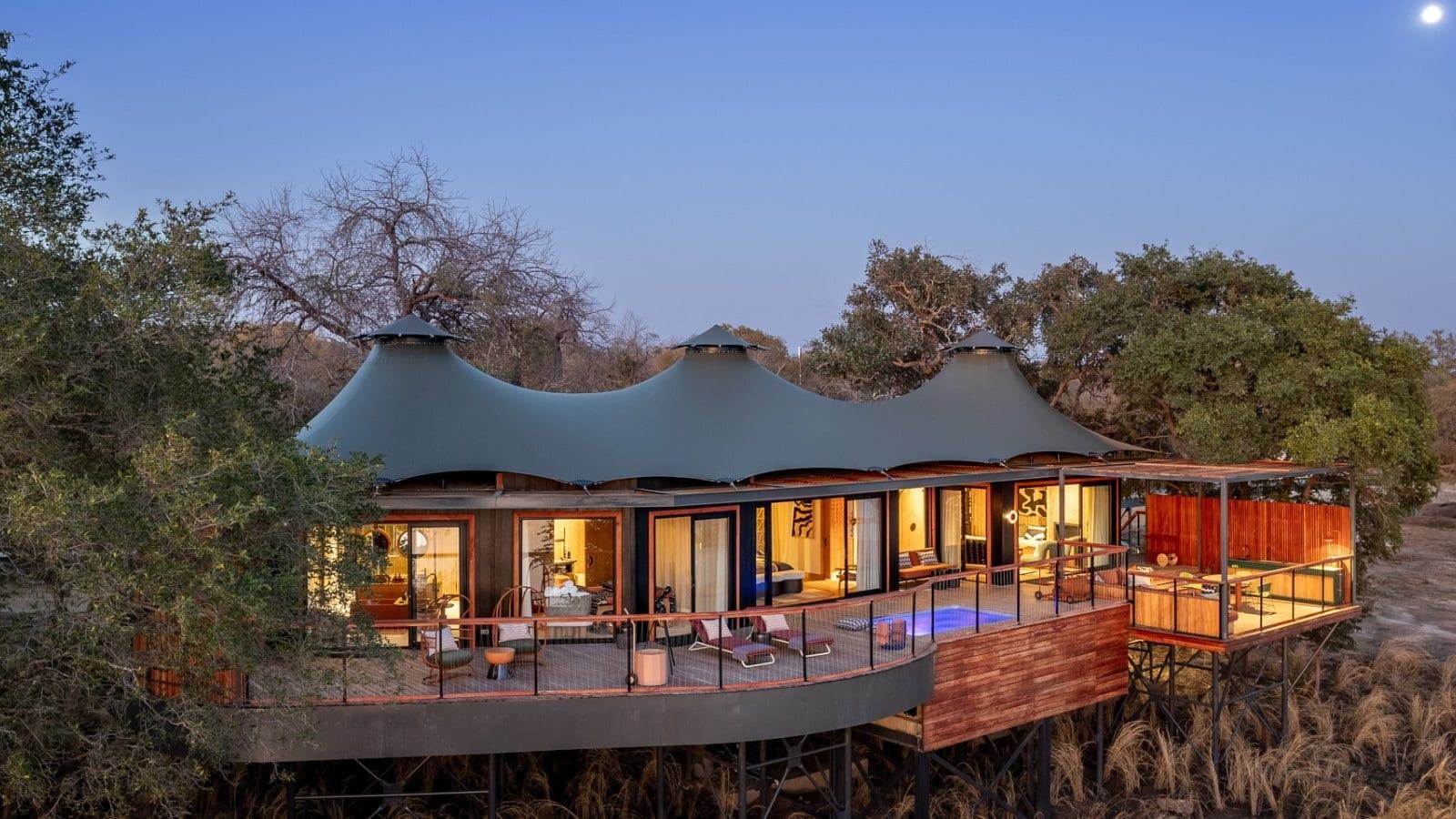
Anantara offers a secluded 13-key river safari camp in Zambia, combining elevated private suites, plunge pools, conservation programmes and bespoke wellness.
A small lodge in a very large wilderness
Anantara has introduced a thirteen-key tented safari camp within Zambia’s Kafue National Park, describing a deliberately intimate alternative to crowded wildlife-viewing circuits. Its October 2026 presentation places the camp on the Kafue River, where river journeys and private game drives can be arranged around a guest’s interests. The proposition is based on landscape, space and experienced local guidance rather than a busy programme of conventional resort entertainment.
For well-travelled families accustomed to private yachts and exclusive lodges, the attraction is access to nature with a defined personal base. Yet remoteness should be understood before booking. Road and air transfers, the season of travel, wildlife movement and the nature of the private concession will shape each stay. A luxurious room does not remove the practical requirements of travelling responsibly within a protected ecosystem.
Three elevated Horizon Terrace Suites
The camp’s three Horizon Terrace Suites are presented as particularly unusual accommodation, positioned approximately 14.3 metres above the ground. A glass lift provides access to the elevated living spaces, while a separate upper deck includes an outdoor star bed. The operator describes each suite as approximately 110 square metres, with wide views towards the river and a lower terrace suited to private meals or unhurried morning observation.
The dramatic height can create a memorable sense of immersion in the landscape, but it calls for sensible assessment by travellers with limited mobility or a fear of heights. Prospective guests should confirm the lift’s operation, access at night and arrangements during severe weather. Outdoor sleeping is dependent on conditions and personal comfort; it should be treated as an option, not a guaranteed element of every night.
Pool and Bush Villas make the river private
Nine Pool and Bush Villas stand on raised platforms roughly 3.5 metres above the surrounding ground, an approach the operator says helps preserve movement beneath the structures. Each is approximately 115 square metres and incorporates a heated plunge pool and an indoor massage room. The private pool gives guests somewhere to remain near the river without joining a shared swimming area, while the massage room turns wellness into part of the accommodation itself.
A villa with a pool beside a wilderness waterway is not the same as a fenced beach residence. Guests should follow every instruction about wildlife, deck access and evening movement, rather than assuming a beautiful photograph tells the whole safety story. Questions about mosquito protection, temperature control, drinking-water provision and the means of contacting a host are practical signs of thorough planning, especially for longer stays.
A Presidential Villa with boat access
At the top of the range, Anantara describes a Presidential Villa of approximately 400 square metres, elevated above the riverbank and arranged for private entertaining. The operator lists a poolside deck, an indoor massage area, mature shade trees and direct arrival by boat. The scale should allow a small party to make the villa a genuine gathering place rather than simply a large sleeping suite with a view.
Private access is attractive for guests who value discretion, but boat transfers depend on river conditions and the camp’s operating procedures. A family considering the Presidential Villa should request its exact bedroom configuration, guest capacity, child policies and whether its dining and wellness services require separate reservations. The difference between included service and chargeable arrangements can be substantial on a bespoke safari.
Safari experiences developed with conservation partners
The property says its guided wildlife experiences have been developed alongside African Parks, which works in the wider conservation landscape. Game drives, river safaris, walks and birdwatching offer different perspectives on Kafue, a large protected area where species and habitats vary with water level and season. The release refers to elephants, hippos, predators, antelope and a particularly rich bird population without promising that every guest will see every animal.
Responsible wildlife tourism should set expectations before a trip. Guests can ask how vehicles are routed, how guides avoid crowding animals, what limitations apply to night activity and how the concession supports wider restoration. A reputable guide will sometimes decide not to approach an animal. That restraint can be as important as the quality of a photographic encounter, particularly in recovering ecosystems.
Solar power and lighter infrastructure
Minor Hotels describes an operation based on solar power, on-site water treatment and elimination of single-use plastics. Prefabricated construction was selected in part to minimise the removal of mature trees, while low-intensity red lighting is intended to reduce disturbance to nocturnal wildlife. These are specific design decisions that merit attention because a remote luxury lodge must balance demanding guest expectations with its environmental setting.
No sustainability claim should be taken as a complete environmental audit on the strength of a press release. Travellers who care about the impact of their trip may ask about generator backup, waste removal, laundry arrangements, staff transport and measurable conservation contributions. Private charter flights can make access easier but carry their own footprint; a thoughtful itinerary considers the entire journey, not only the lodge’s on-site technology.
Dining, wellness and an unusual floating gym
The camp’s dining offer includes Luzuba Harvestry and Twalumba Bar & Lounge, with river-based meals described on a floating pontoon. The operator also identifies a floating Technogym fitness platform and treatments arranged in the privacy of accommodation. These facilities allow a guest to move between active days and restorative hours without travelling to a conventional spa complex or fixed dining room.
Food preferences, allergies and any medically relevant accessibility concerns should be communicated before arrival because supplies in a remote concession cannot necessarily be sourced at short notice. Guests should establish which meals, drinks, treatments and activities are included in the booked arrangement. A floating venue may be unavailable in poor conditions, so the ability of the team to adapt calmly matters more than a rigid schedule.
Planning a private Zambian safari
Anantara describes access by private charter from Lusaka or Livingstone towards Chunga airstrip, with alternative overland arrangements. Travellers should confirm current flight options, transfer times, baggage allowances and any restrictions on children before paying a deposit. Safari seasons influence temperature, vegetation, navigation and wildlife viewing; the best dates are those that suit the guests’ priorities rather than a generic promise of peak sightings.
This property’s appeal lies in its small room count, unusually elevated accommodation and river-focused exploration. It makes sense for guests who value silence, wildlife and personal service, but less for those expecting an urban luxury resort or unrestricted movement after dark. The operator’s official information is a useful starting point; a confirmed itinerary and clear safety briefing are essential parts of the experience.
Primary source: official company announcement. Further property information: official operator or developer website. Information and prices reflect published details reviewed on 31 October 2026; confirm current terms directly.