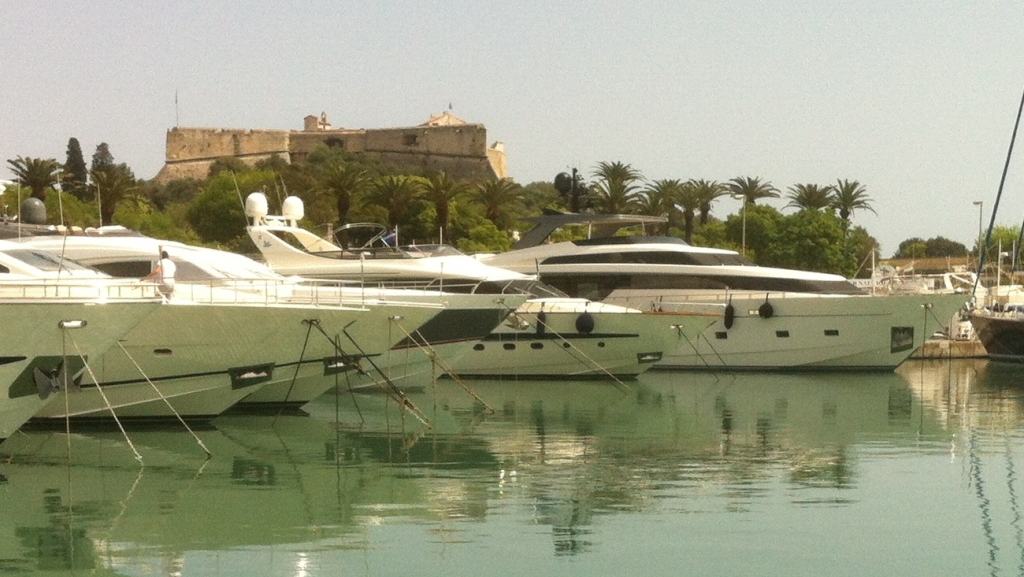
A carefully planned shore visit to Antibes' Fort Carré links the city's superyacht harbour with its maritime defences, historic streets and Riviera setting.
A fortress that still explains the harbour
Antibes is often introduced to a yacht guest through the extraordinary view across a crowded harbour. Tall masts, polished superstructures, working quays and the line of the old town create a dramatic first impression, but there is a more revealing landmark above the water. Fort Carré stands on the headland overlooking the eastern side of the port, where its geometry and elevated position tell the story of a coastline once watched as carefully for security as it is now for navigation. For owners and guests arriving aboard a superyacht, the fort makes an unusually coherent first shore excursion: the landmark visible from the water becomes the subject of the afternoon ashore.
The official Antibes Juan-les-Pins tourism office identifies the fort as a protected historic monument and maintains visitor information, including seasonal hours and guidance on access. That is the right starting point because a private yacht itinerary should not depend on a general travel article's assumption that a building is always open. Weather, special events, maintenance and seasonal schedules can all change the practicality of a visit. The fort is not an exclusive attraction made for the luxury market; its value is precisely that it belongs to the city's shared history. A good yacht itinerary respects that public character and gives it enough time to be understood.
Reading the coastline as a place of defence
Seen from a tender or from the superyacht's upper deck, Fort Carré is striking because of its ordered shape and commanding situation. Its walls offer a counterpoint to the contemporary scale of the superyacht harbour below. The shape was intended to make the site defensible, not simply decorative. That distinction matters when interpreting the architecture: an appealing panorama was once a field of observation, and the approaches now used by leisure vessels formed part of a maritime frontier. A guided or well-researched visit gives guests a richer reason to look at the horizon than a quick photograph from the quay.
The tourism office's heritage material also places Fort Carré within the wider walking landscape of Antibes. Around the fort, the experience changes from the urban bustle of a marina to the physical texture of stone, vegetation and the exposed headland. Comfortable footwear, protection from the sun and an allowance for slopes are more relevant than formal resort clothes. The owner who wants a relaxed afternoon should resist compressing the entire stop into half an hour. An unhurried walk, with the harbour visible below, allows the history of the fort to unfold rather than becoming a brief name checked off a shore programme.
From the passarelle to the old town
A superyacht visit can use the fort as one part of a broader Antibes day. The old town offers narrow streets, local markets, small squares and an architectural scale entirely different from the marina. The temptation is to begin with shopping and add the fort only if time allows. Reversing that order often makes sense for a cultural programme: the exposed, elevated visit is easier earlier in the day, while the old town lends itself to a shaded late lunch or an afternoon return. This is an editorial planning suggestion, not a promise that every route, transfer or shop will operate at the same hours.
Yacht crew should confirm the access route from the actual berth rather than assume that two points which look adjacent across water connect quickly on foot. Some parts of a large harbour require a longer circuit than a chart or drone image suggests. A dedicated vehicle or guide may be helpful for guests with limited mobility, while confident walkers may prefer a more gradual exploration. The port, public roads and heritage site each have their own arrangements. Good shore management leaves space between them for sensible transfers, security checks and the ordinary rhythm of a busy Riviera town.
Why the stop belongs on a superyacht itinerary
For a 24-metre-plus yacht, the Antibes call is often surrounded by larger logistical decisions: berth availability, crew movements, technical support, provisioning and arrangements for guests joining or leaving the vessel. That is exactly why a simple, meaningful shore programme has value. The fort needs no elaborate production to be memorable. It connects a place the guests are already using — the harbour — with the reasons that place mattered long before superyachts existed. The result is a genuine sense of location rather than a generic luxury activity that could be repeated in any port.
Captains and pursers can build the outing as either a short focused visit or the first movement of a longer Riviera day. A historian or local heritage guide brings context to fortification features and the changing political geography of this coast. Families may prefer a mixture of storytelling and open-air views; collectors and architecture enthusiasts may value more time on construction, conservation and the shape of the site. Neither approach requires suggesting that a public historic monument is a private club. Its appeal is that it offers something substantial outside the exclusive spaces of the yacht.
Practical details to verify before arrival
The official tourism listing should be checked on the day the itinerary is confirmed, particularly for opening periods, the final admission time and any reservation requirements. Guides who work in Antibes will be familiar with busy yacht-show periods, school groups and the effects of high summer heat. A tender schedule must also allow for the marina's traffic management and the yacht's own guest embarkation arrangements. Nobody should assume a private tender can land wherever an image shows open water or a convenient-looking wall. The captain and local agent must agree the authorised landing and transfer arrangements in advance.
The fort experience can be sensitive to weather in ways a restaurant reservation is not. Strong wind, rain or high heat can change the comfort of the visit, even if the attraction remains open. Guests who require step-free routes should ask the site directly about the accessible parts of the monument and grounds rather than rely on broad descriptions of access. An excursion is successful when the spectacular view is matched by an honest account of physical demands. It is better to shorten the programme with care than to discover that a promised route cannot be completed comfortably.
A different Riviera perspective
Antibes' international yachting identity is important, but it should not erase the older maritime city. From the fort, guests can consider how a defensive headland became the backdrop to a harbour associated with some of the world's largest private vessels. On the waterfront, the contrast is tangible: stone defences, contemporary marine infrastructure, working local businesses and pleasure craft coexist in one confined landscape. Those juxtapositions make Antibes a more interesting story than a simple list of luxury boutiques. They are also visually rewarding without requiring the crew to manufacture a photogenic experience.
The most effective shore programmes usually have one strong idea and leave room for discovery. Here, the idea is straightforward: follow the shoreline from a modern superyacht berth into the history that shaped it. Time with a knowledgeable guide can sit alongside a leisurely lunch, a walk through the old town or a return to the yacht before sunset. The fort deserves accurate interpretation and practical planning, not inflated claims about access or exclusivity. For a Riviera itinerary that risks becoming predictable, that makes Fort Carré a particularly worthwhile pause.
The quiet work of a well-prepared crew
A strong outing often depends on small checks the guests never notice. The purser can confirm the site information, the captain can agree the authorised transfer, and the local guide can advise on a route that makes historical sense. The crew can then brief guests on appropriate footwear and the likely duration without making the afternoon feel regimented. If the owner prefers an early return, the day can be shortened at a natural point. The measure of success is not how many locations were visited but whether the guests experienced Antibes as a place with a story rather than simply as another attractive stop on the Riviera.
It is also worth making the photo credit and context clear. A view that includes the fort and superyacht harbour illustrates the relationship between past and present, but it should not be used to imply a particular vessel has endorsed the article or booked a visit. The historic monument provides its own identity. Keeping the editorial story, photograph and practical arrangements distinct protects accuracy while giving the reader a realistic idea of what can be enjoyed ashore.
Photograph: SergeNice / Wikimedia Commons, CC BY-SA 4.0; Fort Carré and Antibes harbour. Image resized for web. Original photograph and creator; Creative Commons licence.

Primary source: Antibes Juan-les-Pins Office of Tourism. Opening hours, rules, berthing and visitor arrangements should always be reconfirmed with the responsible local authorities.