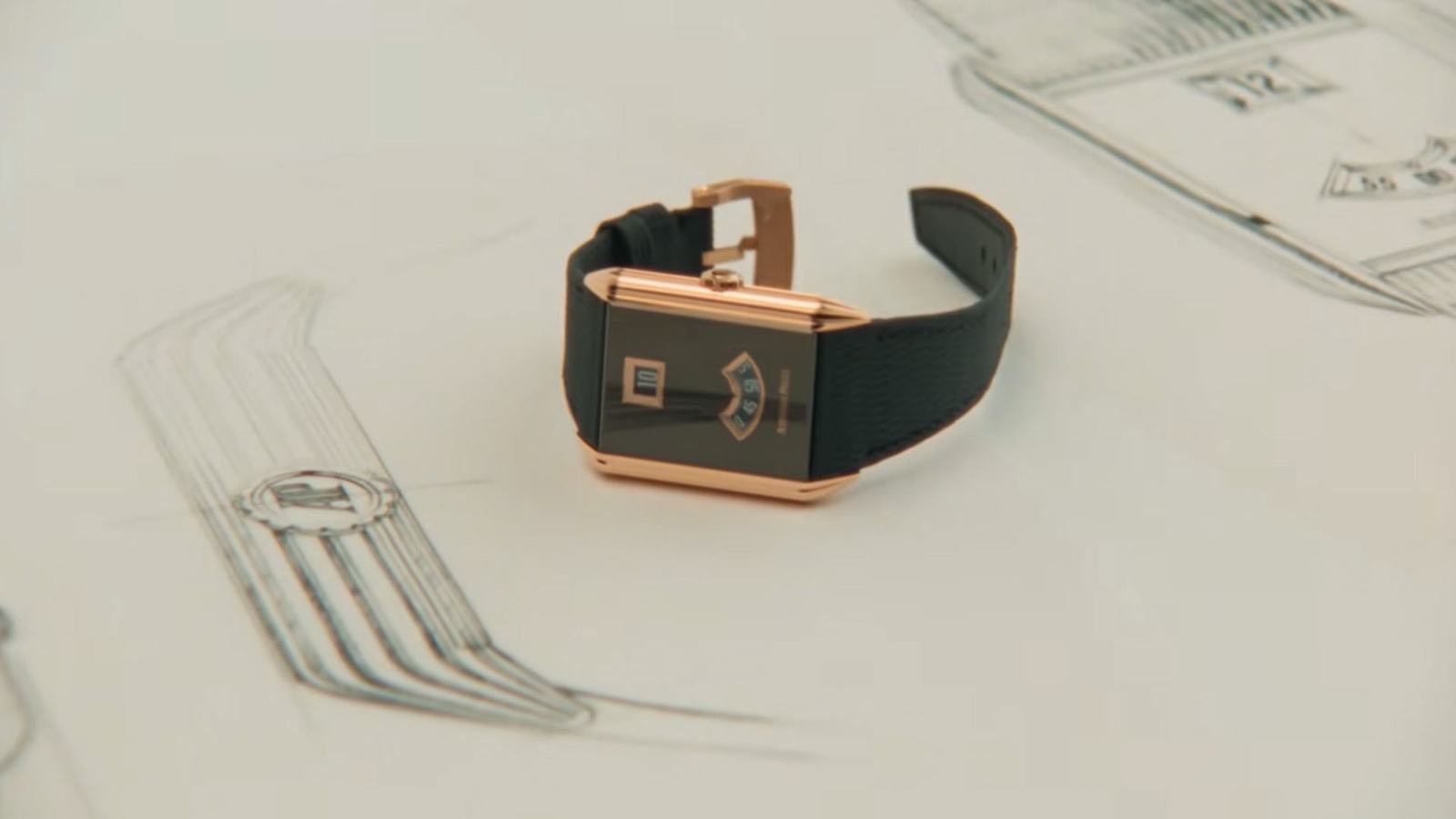
Audemars Piguet’s Neo Frame Jumping Hour combines Art Deco proportions with the manufacture’s first selfwinding jumping-hour movement and a 52-hour reserve.
Audemars Piguet has revisited the jumping-hour display with the Neo Frame, using a watchmaking idea that replaces conventional hour hands with a numeral that changes instantaneously every 60 minutes. The result looks deliberately vintage, but the mechanism and case construction are contemporary rather than an archival reissue.
Calibre 7122 makes the display selfwinding
The Neo Frame is powered by Calibre 7122, which Audemars Piguet describes as its first selfwinding jumping-hour movement. It combines the instantaneous hour change with a 52-hour power reserve and modern requirements for precision and shock resistance.
Pink gold and sapphire reshape a 1930s idea
The case combines pink gold with sapphire, using gadroons and aerodynamic lugs to reference the geometry of shaped watches from the interwar period. A black sapphire dial carries dual apertures, so the digital-style indication becomes part of the architecture rather than sitting on top of a conventional dial.
The complication predates the wristwatch
Jumping-hour mechanisms can be traced back to the seventeenth century, while Audemars Piguet points to its own work with the format in the 1920s. Early examples needed metal to protect fragile glass, whereas the Neo Frame makes sapphire a visible part of the modern construction.
Archive influence without direct repetition
The watch arrives alongside an AP Talks discussion about how vintage forms can influence new objects without simply reproducing them. For collectors, that distinction is important because the Neo Frame uses historical cues as a design framework while giving the complication a new automatic movement and material treatment.
Source
Audemars Piguet