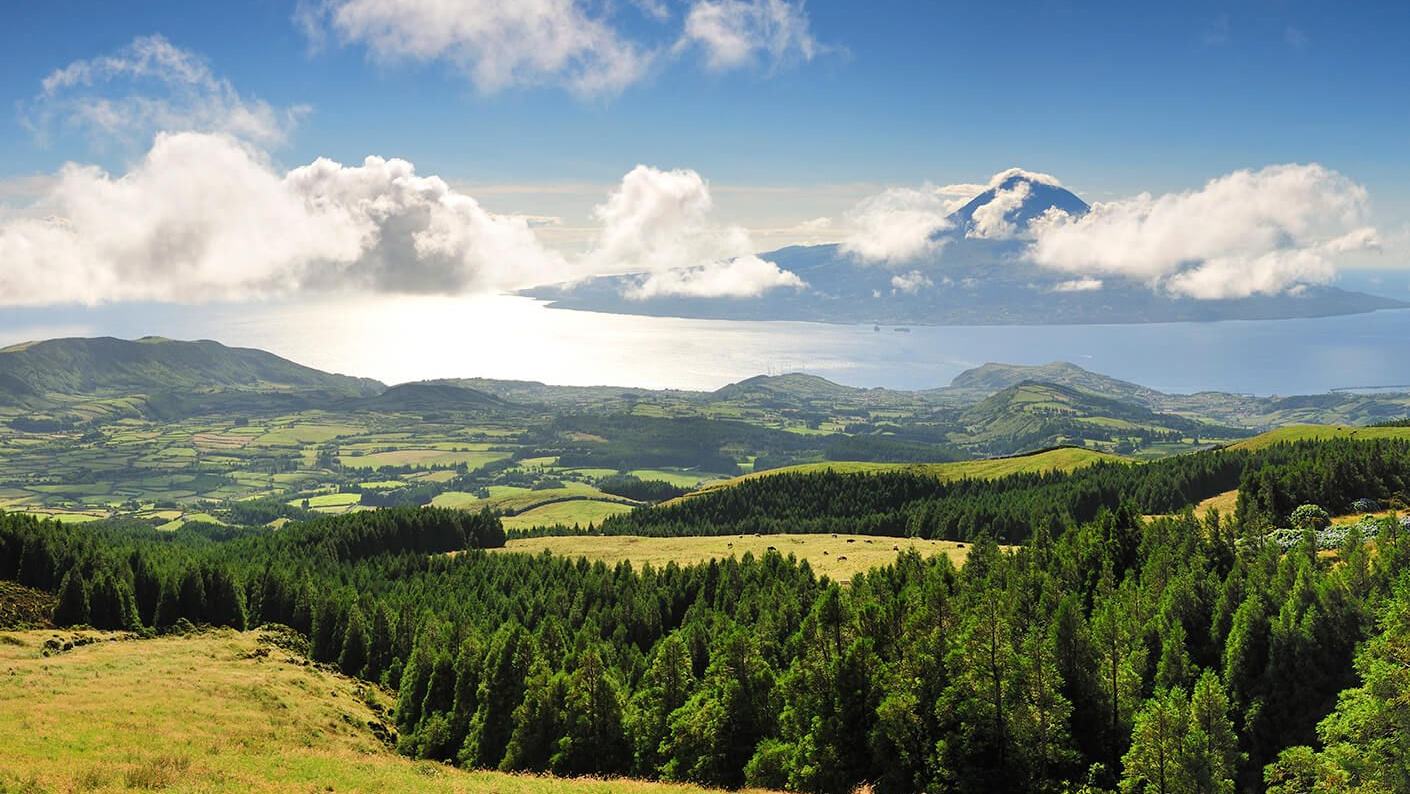
An original two- to three-day superyacht itinerary centred on Horta, Faial and Pico, covering harbour-access planning, Atlantic maritime history, volcanic excursions and UNESCO-listed vineyards.
The Azores as a deliberate superyacht destination
The Azores sit far enough into the Atlantic to feel like a destination rather than a brief diversion from the usual Mediterranean circuit. For a superyacht visiting Portugal's mid-ocean archipelago, the central islands of Faial and Pico offer an especially compelling pairing. Horta has long been known among ocean-going sailors, while the volcanic island across the water protects a remarkable tradition of wine-growing in fields of black basalt. Together they create a two- or three-day stay in which maritime history, geological landscapes, food and local culture have equal weight.
The strongest approach is not to treat the islands as a quick succession of anchorages. Atlantic weather, swell and the requirements of a large vessel mean that a captain should agree the entry plan and shore programme before guests commit to fixed arrangements. With those fundamentals settled, the reward is substantial: a chance to see a cruising region whose landscape and atmosphere are quite different from the superyacht capitals of the south of Europe. This is a shore-experience itinerary, not a substitute for up-to-date navigation information.
Day one: arrive at Horta and understand the harbour
Horta is the natural starting point for this itinerary because the city and harbour have been associated with Atlantic yacht passages for generations. The official Portos dos Açores operator describes the marina as a major stop for sailors travelling from the Caribbean towards Europe and records a long tradition of painted boat emblems on its walls. The local tourism authority also calls it the archipelago's principal recreational harbour. Those hand-painted signs of passage are part of the waterfront's appeal and a reminder that the town's relationship with visiting vessels is older than modern luxury tourism.
For large yachts, it is critical to distinguish the leisure marina from the commercial port. The marina operator lists 240 berths and publishes an entrance-draft figure of 4.0 metres, while the separate Port of Horta listing describes commercial quays, pilotage arrangements and vessel services. These are not interchangeable facilities, and neither page guarantees accommodation for a particular yacht. A captain should contact the operator with verified length overall, beam, draft, manoeuvring requirements and arrival details, then obtain the assigned berth or anchoring plan from the competent authorities.
Once safely alongside or otherwise accommodated, guests can explore Horta on foot or by prearranged transfer. The waterfront's sailor-made murals form an informal outdoor gallery, with layers of colour and names recalling transatlantic voyages. A slow walk followed by an unhurried lunch creates a more meaningful introduction than hurrying straight towards a distant sightseeing stop. In a maritime town of this kind, the harbour itself is one of the things worth seeing.
The other face of Faial: Caldeira and Capelinhos
Faial's volcanic interior offers a striking contrast to the yachts and cafés of Horta. The island's tourism materials describe the central Caldeira as a vast volcanic depression with vegetation along its slopes, and the western Capelinhos area as a landscape reshaped by eruptions in 1957 and 1958. Those eruptions added land and changed lives, making this an excursion with both visual drama and human history. It is worth arranging a local guide who can explain the geology, the effects on settlements and the relationship between these islands and the Atlantic.
The Capelinhos interpretation centre and historic lighthouse are among the places associated with that story. Access arrangements, openings and routes may change, so confirmation through local tourism services is wiser than assuming every viewpoint or building can be entered. In the Caldeira area, paths and weather conditions deserve equal attention. Clouds, rain and wind can arrive quickly, and an impressive view does not justify straying from marked or permitted routes.
A carefully chosen half-day on Faial can give guests a feel for how relatively young volcanic landscapes gradually support vegetation and daily life. A photographic expedition is appealing, but there is just as much pleasure in pausing to understand the contrast between dark rock, open pasture and the cultivated settlements. The point is not to collect every viewpoint in an afternoon. It is to return to the yacht feeling that the landscape has acquired a story.
Day two: Pico and the vineyard landscape of black stone
Across the water, Pico provides one of the Azores' most distinctive cultural experiences. UNESCO recognises the Landscape of the Pico Island Vineyard Culture as a World Heritage property covering 987 hectares. The site is famous for long basalt walls that divide the coastal ground into thousands of compact plots called currais. These enclosures shelter vines from wind and salt spray in an environment that might otherwise seem an improbable place for growing wine grapes.
The system has roots in cultivation beginning in the fifteenth century and survives as a working heritage landscape rather than a decorative reconstruction. UNESCO identifies areas near Criação Velha and Santa Luzia as important examples of the tradition. A guided visit offers a chance to see how generations adapted their farming practices to volcanic ground, including buildings, narrow paths and low-walled vineyards that connect agriculture to the sea. The protected status should shape how guests move through the landscape: stay on recognised paths and respect working plots.
A tasting with a local producer can provide a natural conclusion, but the best experiences do not require the traveller to become an expert in grape varieties. Ask about the relationship between the stone walls, maritime climate, labour and the styles of wine made from the island's harvest. For guests used to conventional estate vineyards, the sight of vines enclosed by black rock is memorable precisely because it presents a different answer to the same agricultural challenge. Every glass has a landscape behind it.
Food, local scale and an Atlantic sense of place
The character of a successful island visit often comes from details that are not especially grand: fish served simply, bread shared at a small table or an afternoon spent looking towards the water. Horta's seafaring tradition brings one kind of conviviality, while Pico's vineyard landscape suggests a quieter rural rhythm. Guests accustomed to the service arrangements aboard a large yacht may find the opportunity to join a small local experience refreshing rather than limiting.
Private dining and guided excursions are sensible where available, but arrangements should respect the scale of the islands. A charter party should coordinate arrival and transport times with local providers, and not assume a restaurant can accommodate a large last-minute group. The same applies to wine tastings, specialist guides and photography access. Spending locally and arranging services directly through legitimate island businesses makes the visit both more satisfying and more respectful.
There is no need to fill each hour. A two-day programme may consist of a waterfront walk and a volcanic excursion on Faial, then an organised Pico visit focused on the UNESCO vineyards. A third day can serve as a welcome weather margin or a quiet day aboard. This is an editorial suggestion rather than an advertised excursion package, and a captain may recommend a different order based on harbour movements and the forecast.
Cetaceans and the importance of a responsible encounter
The Azores are widely associated with whales and dolphins, and a marine-life outing may appeal to guests with a genuine interest in the Atlantic environment. However, a private yacht should not assume that the presence of animals permits an unrestricted approach or that a sighting can be guaranteed. The responsible course is to use properly authorised operators, follow regional rules and put the animals' wellbeing ahead of a photograph.
Expect the timing, route and duration of any encounter to depend on conditions and wildlife movements rather than a fixed promise. Guests may enjoy the experience more when guided by people who understand identification, animal behaviour and the reasons for maintaining suitable distances. The educational value can be greater than the size of the animal photographed. Even an outing without a close sighting can reveal a great deal about the sea and its ecology.
For yacht crews, wildlife observation should form part of the vessel's environmental approach. Avoid sudden changes in speed or course around marine mammals, prevent noise and disturbance where possible, and defer to authoritative local instructions. The aim is to leave these waters as an equally good habitat after the visit. A respectful encounter is a privilege, not an entitlement attached to a charter fee.
A practical captain's checklist for Horta and Pico
The published port information contains several points a superyacht captain should verify before arrival. The Portos dos Açores marina page refers to tidal currents in the Faial Channel and provides recreational-marina contact and radio information, while the port page describes arrangements relevant to larger ships, including pilotage. These details make clear why current harbour instructions must take precedence over a scenic itinerary. This article deliberately does not reproduce entry bearings or recommend a specific quay without a yacht's dimensions and an assigned plan.
Clearance procedures, nationality of guests and crew, waste disposal, provisioning, berthing costs and shore-access rules all require case-specific confirmation. Larger yachts may need commercial-port arrangements rather than a conventional marina berth, and the booking decision belongs with the operator and local authorities. At the planning stage, provide the correct paperwork and keep a realistic weather window. An Atlantic archipelago is a place where a flexible itinerary is a mark of professional seamanship.
Ashore, build in contingency time for local transfers and inter-island movement. Do not assume a tender crossing is automatically the best means of reaching Pico, especially in deteriorating conditions. An authorised ferry or other approved transfer may be more appropriate for a group whose priority is sightseeing rather than operating its own small craft. The captain and local representatives should decide the safe, lawful option.
Why the central Azores merit time on a superyacht itinerary
Faial and Pico are not rivals for attention. Horta offers the human story of the Atlantic crossing and an engaging waterfront, while the volcanic interior and UNESCO-listed vineyards add deeper cultural texture. These places are best enjoyed with guides who can explain their history and residents who can bring it to life. The contrast between a sophisticated vessel and a working maritime landscape is part of the experience, not something to be smoothed away.
For owners and charter guests seeking a destination with integrity, a carefully planned two- or three-day stop here can be more memorable than a crowded sequence of fashionable ports. The essentials remain firm: confirm yacht access through the harbour operator, respect Atlantic conditions, and choose shore experiences that benefit from local expertise. With those principles in place, Horta and Pico reveal an unusually rich intersection of navigation, geology, craftsmanship and hospitality.
Sources: Visit Azores official Faial guide, Visit Azores Marina of Horta, Portos dos Açores recreational marina information, Portos dos Açores commercial-port information, and UNESCO Pico Vineyard Culture. The hero photograph comes from the official Azores Promotion Board.