Hirsch Bedner Associates renews five Premier Duplex and two Family Premier suites, with energy-saving features and a Balinese design perspective.
A celebrated architectural landmark adapts
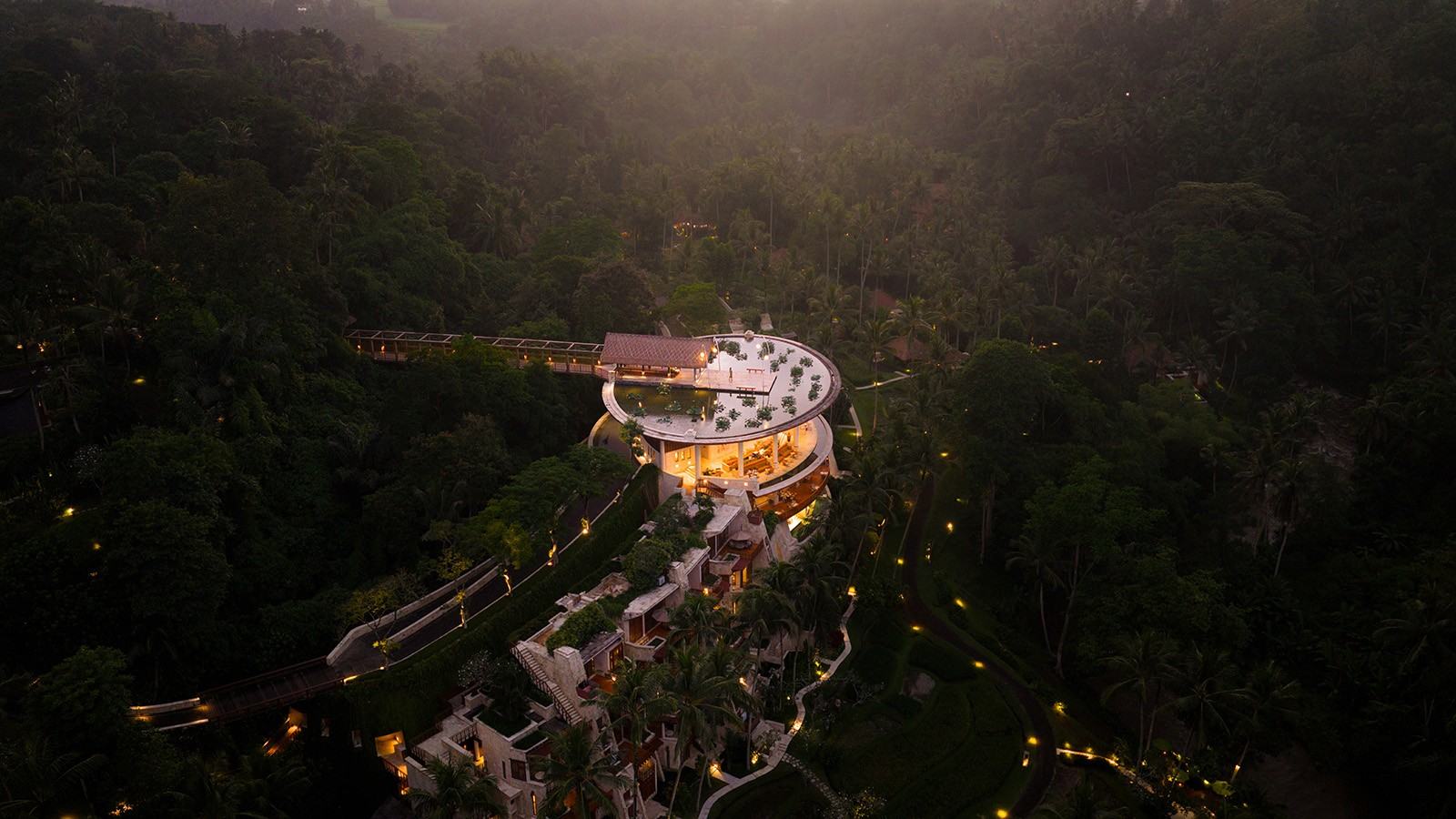
Four Seasons Resort Bali at Sayan has renovated seven suites in Ubud’s Ayung River valley while keeping the architectural character that made the property distinctive when it opened nearly three decades ago. The work concentrates on five Premier Duplex Suites and two Family Premier Suites, a targeted intervention rather than an attempt to rebuild the jungle resort around a completely different design concept.
Hospitality design practice Hirsch Bedner Associates has collaborated on the refresh, introducing new furnishings and updated systems while responding to the property’s views of rice terraces and rainforest. The resort’s dramatic suspended entrance architecture remains part of the experience, so the challenge is to provide contemporary accommodation without making the wider setting feel newly manufactured.
Materials and textiles tell a local story
The suite interiors combine earth-coloured fabrics with dark stained wood and textiles informed by Balinese craftsmanship. The restrained palette is intended to sit alongside the paddy fields and river valley rather than compete with them. Visitors familiar with elaborate international luxury interiors may find that quiet relationship to the surrounding landscape is precisely what makes the rooms distinctive.
The redesign updates function as well as appearance, including integrated Lutron lighting controls that allow guests to adjust the room environment. Automated lighting is useful where changing natural light affects reading, conversation and sleep, but successful integration also means controls remain understandable to first-time guests. The best technology in an accommodation suite supports everyday comfort without becoming the centre of attention.
Refurbishment rather than unnecessary replacement
The resort says it has retained and refurbished materials where possible and chosen additional items with durability and local sourcing in mind. New LED lighting and updated air conditioning using energy-saving refrigerants form part of the project. These are specific operational measures, not sufficient evidence on their own to certify the environmental impact of the entire property.
Reusing an existing building framework can preserve architectural integrity and reduce demand for fresh materials. However, the scale of any overall carbon saving would require independently documented assessment, which the announcement does not supply. Buyers of luxury hospitality experiences should distinguish tangible energy-efficiency upgrades from broad sustainability claims.
Ayung Terrace and Jati Bar change too
Accommodation is only part of the makeover. The resort’s Ayung Terrace restaurant introduces grey river-facing sofas, wooden chairs and marble-topped tables, while Jati Bar adopts natural green and grey tones in its updated seating. Both venues retain their views of the valley, so the changes are more about how people occupy them than about creating a new outlook.
That continuity is valuable to repeat guests, who may return specifically for a familiar dining atmosphere and landscape. A restaurant can feel transformed through furniture and lighting even when the kitchen or architecture remains in place. The refresh is therefore a gradual evolution of the guest experience rather than a claim that the restaurant concepts themselves are entirely new.
A thoughtful choice for a Balinese stay
For superyacht owners visiting Indonesia, Sayan offers a land-based counterpoint to time on the coast. It lies in the inland Ubud landscape and should be understood as a cultural and wellness stay, not a marina hotel with direct access to visiting vessels. Transfers and any onward journeys to the boat require their own arrangements.
The seven updated suites began welcoming guests from July 2026, making the news an assessment of an already launched refurbishment. The important facts are its limited scale, the HBA design work and the measures to preserve the resort’s established identity. Room-category availability and individual facilities still need confirmation with the hotel.
Source
Four Seasons Press