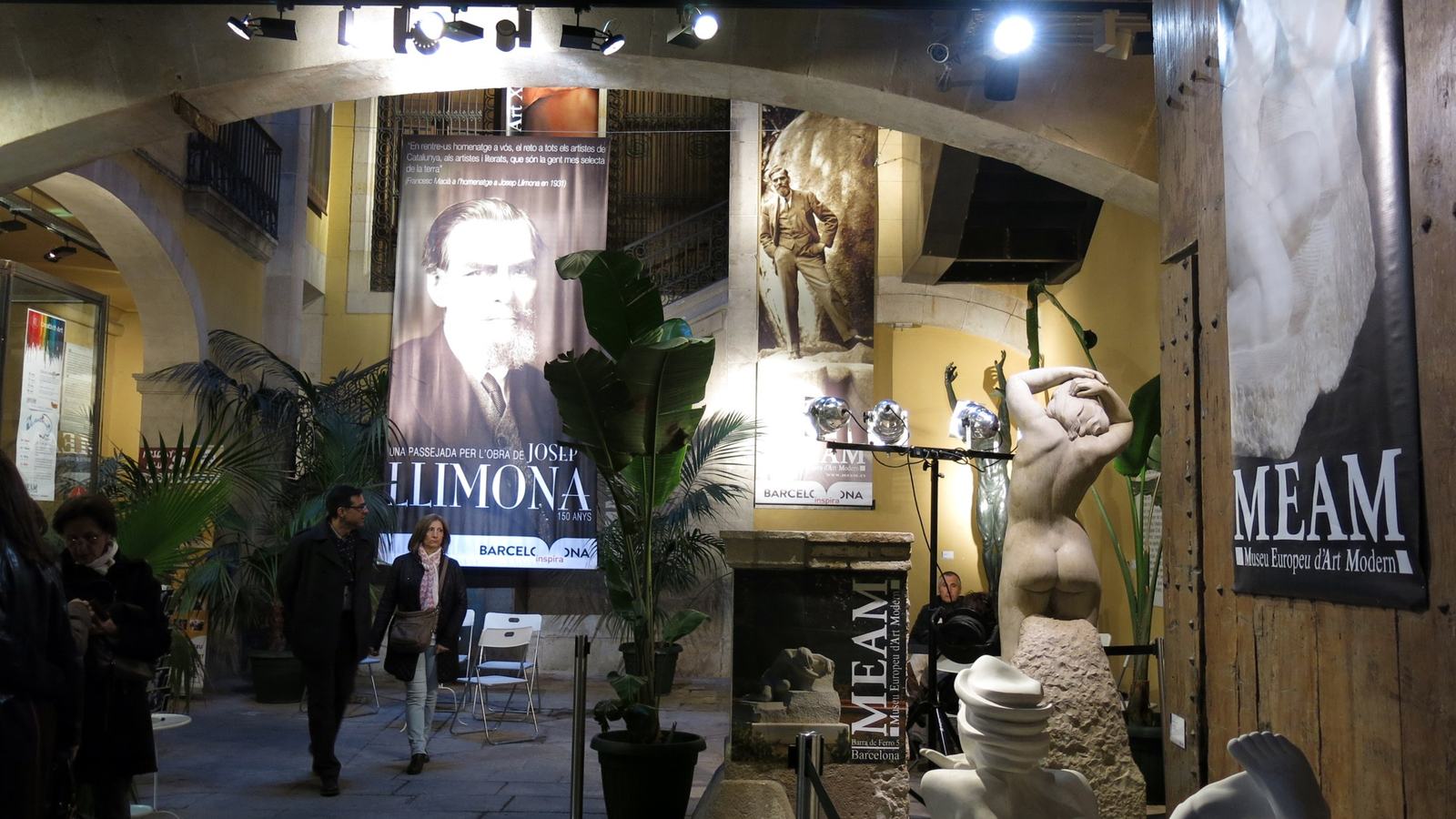
The European Museum of Modern Art in Barcelona opens a dialogue between Goya's Disasters of War and Gottfried Helnwein's modern responses, with public admission from 7 November 2026.
A new dialogue opens in Barcelona
Barcelona's European Museum of Modern Art, known as MEAM, has brought together the work of Francisco de Goya and the contemporary artist Gottfried Helnwein in an exhibition entitled The War Continues. Its opening event was scheduled for Friday 6 November 2026, followed by public admission from Saturday 7 November, with the programme due to continue until 7 February 2027. The timing makes the exhibition a current cultural event for visitors planning an autumn or winter stay in the city, rather than an announcement about a collection that may appear years from now.
The museum is deliberately staging an encounter between artists whose lives are separated by roughly two centuries. Goya recorded the human brutality associated with the Napoleonic era in Spain; Helnwein approaches contemporary violence through painting and mixed media. MEAM describes the connection as a confrontation with images that many viewers would prefer to avoid. For travellers interested in art, design and collecting, the important point is not simply that famous names appear together. It is that two different visual languages ask whether seeing suffering can deepen understanding or merely turn horror into another spectacle.
The historical weight of Goya's prints
According to MEAM, the presentation places approximately eighty etchings from Goya's The Disasters of War opposite Helnwein's work. The museum dates the making of those wartime images to the period from 1810 to 1816. Their subject is not a dignified military parade or a triumphant admiral. Instead, Goya's series is associated with injury, fear, deprivation and the destruction that armed conflict visits upon people with little control over events. That focus is why the series continues to matter far beyond the particular war from which it emerged.
A print is an intimate object compared with a large painting. Its scale often requires a person to approach closely, slow down and scrutinise what an artist has chosen to show. The medium also raises questions about editions, paper, states, impressions and the difference between a historical matrix and a later reproduction. Visitors should not assume that every impression on display is from the same period or that the museum's exhibition description establishes provenance for individual sheets. Anyone investigating a possible acquisition would need detailed records from the relevant seller or institution, not a general exhibition summary.
Helnwein's modern response
Gottfried Helnwein began a series also called The Disasters of War in 2007. MEAM identifies painting and mixed-media work as central to that response, particularly the themes of exploitation, violence and the vulnerability of children. The reference to Goya is explicit, but the later artist is not merely reproducing nineteenth-century scenes. His hyperrealistic approach borrows from the visual language of modern popular culture, where an apparently recognisable face or familiar fictional character can become unsettling when placed in a disturbing context.
The museum notes the appearance of comic imagery, manga-like figures and characters drawn from widely recognised entertainment culture. Their use matters because such symbols commonly arrive with associations of childhood, amusement and commercial comfort. Bringing them into proximity with suffering unsettles the viewer's expectations about what an image should do. The resulting works may be physically striking, but their purpose is not decorative harmony. A prospective visitor should understand that the exhibition addresses difficult human subjects and may be unsuitable for someone seeking a gentle gallery visit with young children.
Why the pairing is more than an art-historical exercise
A comparison between these artists tests a basic assumption about progress: that advances in technology, politics and communication should have made representations of cruelty less necessary. Goya worked at a time when a printed image could carry disturbing testimony beyond the immediate scene. Helnwein works in an environment saturated with photography, streaming video and rapid circulation on digital platforms. The contrast is fertile because the difficulty of looking has changed, while the underlying questions about responsibility and suffering remain stubbornly recognisable.
MEAM frames the exhibition around the legitimacy of depicting horror and the danger of treating violence as entertainment. There is no simple answer that can be given on behalf of the visitor. A difficult image can expose events that public language conceals, yet repetition can also leave audiences numb. The strongest way to approach the exhibition may be to pause at the works that resist immediate interpretation and consider the circumstances in which they were made. That is a more thoughtful response than judging them only by visual impact or market value.
A cultural stop for a Barcelona itinerary
The exhibition offers a reason to make time for Barcelona beyond a restaurant reservation or a familiar sightseeing circuit. MEAM occupies Casa Gomis in the historic centre, and its programme gives cultural visitors an opportunity to explore representational art in an intimate museum setting. The museum lists general opening hours from Tuesday to Sunday, normally from 11 in the morning until 7 in the evening, with later closing at 8 on Friday and Saturday. Those times should be checked shortly before arrival because exhibition installation, private functions and holidays can affect access.
For owners or guests arriving aboard a yacht, the city's port and marina arrangements are separate matters from museum admission. A private vessel's berth, clearance, tender plan or security requirements cannot be inferred from an exhibition timetable. The practical lesson is to organise ground arrangements independently and book any timed museum access directly through the institution. Barcelona can support a rich itinerary of architecture, design, gastronomy and galleries, but ambitious schedules are most enjoyable when enough time remains to engage with each place rather than racing between appointments.
What art-minded collectors should examine
Exhibitions often stimulate interest in collecting, and the pairing of a historical master with a living artist is especially likely to prompt comparisons of technique, influence and value. Yet an exhibition is not, by itself, an endorsement of an object offered for sale elsewhere. For Goya-related material, the distinction between an original print, a later impression, a facsimile and an ordinary reproduction is essential. Attribution, condition, edition information, documented ownership and independent specialist judgement should all be assessed before any financial commitment is made.
The same principle applies in a different way to Helnwein's work. A painting, mixed-media piece, drawing and authorised print can occupy very different positions in an artist's practice. Medium, scale, execution date and accompanying documentation matter, as does confirmation that a particular object was produced or authorised by the artist. The museum's official presentation confirms the subject of the exhibition, not the authenticity or investment merits of objects on the open market. Responsible collecting begins with looking carefully, asking precise questions and accepting that visual attraction is only one part of a considered purchase.
A museum experience rather than a luxury commodity
For a luxury-lifestyle audience, an exhibition of wartime suffering might seem an unexpected choice. It is nevertheless entirely appropriate to the broader idea of cultural travel. A sophisticated itinerary need not consist only of beautiful interiors, flawless beaches and reassuring images. Encounters with art can challenge comfortable assumptions and deepen conversations long after a journey is over. The value of such a visit lies in the visitor's attention and reflection, neither of which can be purchased as a packaged experience.
The exhibition also highlights how museums shape meaning through juxtaposition. Goya's prints and Helnwein's newer works differ in material, social setting and historical context, yet the museum presents them within one argument about how people look at violence. That curatorial decision is itself open to discussion. Some visitors will find the relationship compelling; others may prefer to examine the artists separately. Both reactions are legitimate, provided the works are approached on their own terms and the troubling subject is not reduced to a decorative theme for an outing.
Dates, source and the image on this page
MEAM's official listing identifies the opening event on 6 November and opening to the public on 7 November 2026, with the run scheduled through 7 February 2027. The artist's own website also identifies the collaboration, which offers a useful cross-check of the participants and overall concept. The published schedule is an announcement rather than a guarantee against later changes. Anyone making a special journey should check the current programme, ticketing arrangements and accessibility information directly with the museum before setting out.
The accompanying lead image is an earlier architectural photograph of Casa Gomis, the building housing MEAM, taken by Enric in 2015 and shared on Wikimedia Commons under Creative Commons Attribution-ShareAlike 4.0. It illustrates the museum location, not the Goya or Helnwein works on display. No claim is made that Superyacht Guide photographed the exhibition or secured reproduction rights to the artworks themselves. Keeping that distinction explicit is part of responsible cultural reporting: evidence for the opening comes from the institution, while the illustrative picture has its own traceable author and licence.
Primary source: MEAM official exhibition programme: The War Continues | Helnwein and Goya, opening event 6 November, public opening 7 November 2026. Secondary first-party confirmation: Gottfried Helnwein, official artist website.
Lead photograph: archive exterior of Casa Gomis, MEAM Barcelona, by Enric / Wikimedia Commons, licensed Creative Commons Attribution-ShareAlike 4.0; resized for editorial use and shared under the same licence. The photograph does not depict the artworks in the 2026 exhibition.
