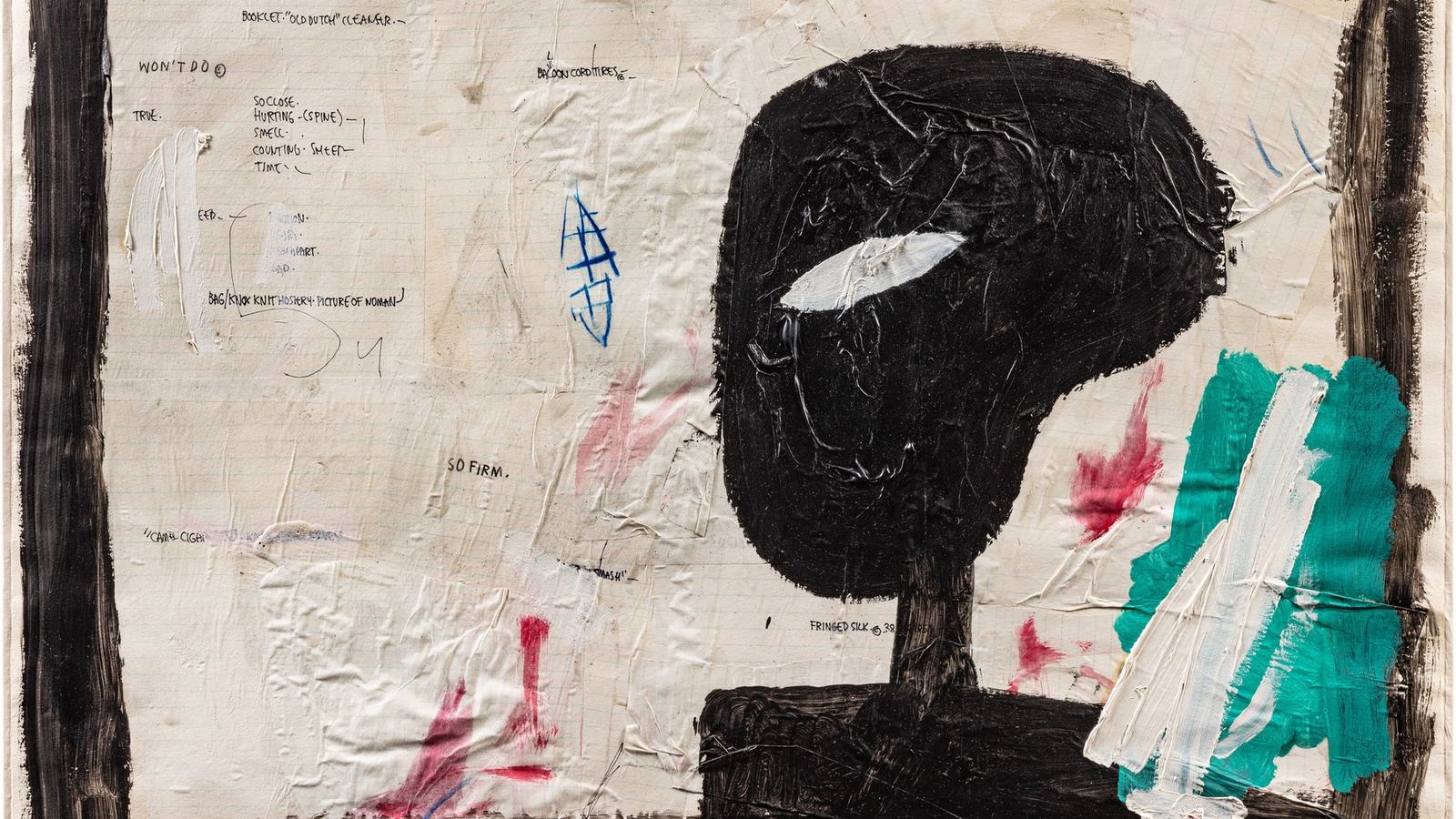
A signed Basquiat work from 1985 combining acrylic, collage, crayon and Xerox is estimated at €2m–3m ahead of Sotheby's Paris Modernités auction.
A mixed-media Basquiat from a crucial decade
Sotheby's Paris will offer an Untitled work by Jean-Michel Basquiat dating from 1985 as part of its Modernités sale on 23 October 2026. The piece combines acrylic, paper collage, crayon and Xerox elements on paper laid onto a backing, bringing several of the artist's working methods together within one relatively compact composition. The interplay of borrowed material and original marks makes this kind of work especially rewarding when studied at close range. Photography may flatten the individual layers, obscuring distinctions between crayon, paint and the edges of pasted paper.
Measuring approximately 57 by 77 centimetres, the work carries an estimate of €2 million to €3 million. Its materials and small scale differ from those of many large Basquiat canvases, making close examination particularly important for understanding its visual language.
Words, images and copied fragments
Basquiat frequently placed text, drawing and symbols in dialogue rather than separating writing from images. Xerox and collage techniques can introduce fragments of reproduced information whose altered context becomes part of the artwork.
Such methods belong to a period when artists were exploring the relationship between mass communication and personal mark-making. A viewer may see the work differently after recognising how its layers were assembled, including passages that appear partly concealed or deliberately interrupted.
Documented authenticity
Sotheby's states that the work is accompanied by a certificate dated 6 October 2004 from the Authentication Committee of the Estate of Jean-Michel Basquiat. This documentation is an important part of the published lot information and should be reviewed alongside the work itself.
Authenticity research cannot be reduced to a signature alone. For artists whose images are widely reproduced, provenance, materials, exhibition records and expert documentation help establish the identity of an individual object.
From galleries to museum exhibitions
The published provenance includes Larry Gagosian Gallery in Los Angeles, sales in New York and Versailles, and subsequent Paris gallery and private ownership. Sotheby's also records the work in a 1993–94 Paris exhibition and a presentation at Vienna's Albertina.
These references provide opportunities to trace how the work was understood after Basquiat's death in 1988. Exhibition catalogues, photographs and collection documents may also contribute information about its physical state at particular moments.
Preservation challenges of mixed media
Works containing paper, copied imagery and different paints can require careful conservation because each component reacts differently to light and moisture. The backing and any adhesives may also matter to the stability of the assembled object.
A collector should obtain a specialist condition report rather than assuming that a framed work is fully protected. Long-term display may call for controlled lighting, stable humidity and mounting choices that respect the work's materials.
Pre-sale estimates and collecting decisions
The estimate is not a guaranteed transaction price, and the final cost to a purchaser can include fees, taxes and specialist transportation. A work of this significance merits careful independent research before bidding.
The appeal of the lot lies in a documented 1985 example of Basquiat's practice, not simply the value associated with his name. Examining the particular mixture of line, words and reproduction helps place it within the creative intensity of his short career.