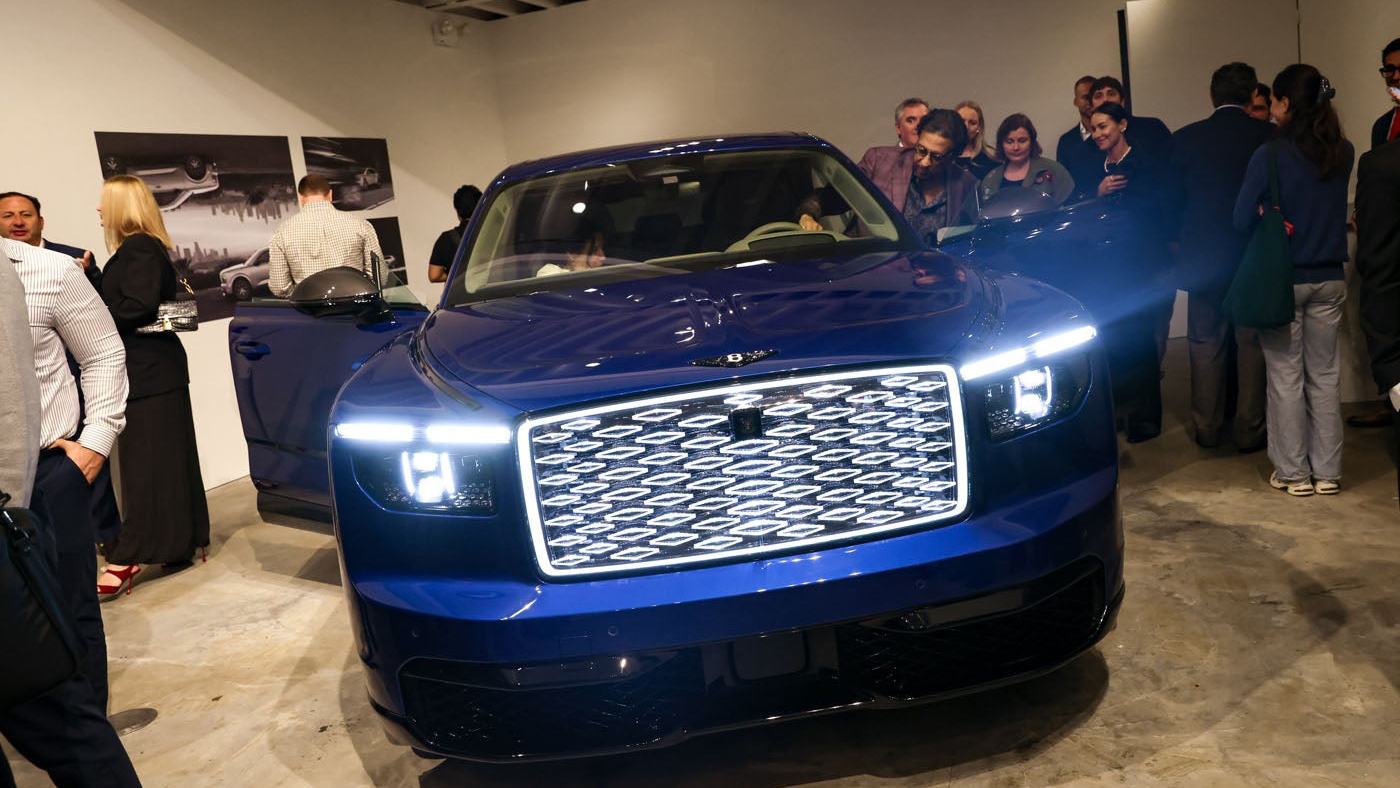
Bentley's new electric Torcal and Death Spray Custom's glow-in-the-dark Flying Spur Art Car shared a one-night Manhattan gallery event highlighting bespoke automotive design.
Bentley brings two interpretations of light to Manhattan
Bentley Motors has presented its new Torcal electric SUV alongside a glow-in-the-dark Flying Spur Art Car at an evening gallery event in New York's West Village. The one-night presentation at CART Department on 13 October 2026 combined the first New York appearance of the Torcal with the American debut of a work by British artist David Gwyther, known as Death Spray Custom. It was an exhibition rather than a second global launch for the electric model.
Both vehicles placed light at the centre of their visual identity, although the approaches were very different. The Torcal incorporates illumination into its production design language, while the one-off Flying Spur uses special painted surfaces to create a dramatically changing appearance. The event connected the traditions of hand-built luxury cars with contemporary art and experimentation.
A phosphorescent Flying Spur becomes a canvas
Gwyther developed the art car's graphic treatment over a dark body finish, building layers of colour with carefully applied phosphorescent pigments. The composition combines sharp, high-contrast shapes and colours including white, blue, green and purple. Under different lighting conditions the surface appears to shift from an assertive daytime pattern to an illuminated work of art.
The artist has previously worked on racing helmets, motorcycles and vehicle liveries associated with motorsport. That background gives the Flying Spur an aesthetic closer to experimental racing graphics than conventional two-tone luxury coachwork. It also illustrates the potential for a large, elegantly proportioned saloon to provide an unexpected surface for a genuinely individual commission.
The Torcal makes its East Coast appearance
The Torcal was shown in the United States earlier this autumn, but its appearance at CART Department brought Bentley's first fully electric production range to a different American audience. A Torcal S First Edition, finished in Sequin Blue, was selected for the New York presentation. Bentley uses the model to introduce a more progressive exterior treatment while retaining visual cues associated with the company's long history.
One of the most distinctive features is its illuminated diamond grille. The familiar diamond form, long used in Bentley upholstery and other decorative details, is translated into a lighting element that gives the front of the electric car a recognisable signature after dark. This is a production design feature rather than the phosphorescent artwork applied to the separate Flying Spur.
Contemporary art enters the commissioning conversation
The presentation was staged in partnership with the cultural platform CART Department, whose founder Larry Warsh joined the discussion around the gallery event. Gwyther and cultural commentator Carlo McCormick also contributed to a conversation linking creative work, vehicles and the use of light. The format was closer to a private exhibition than an ordinary automotive showroom preview.
Such events are relevant to collectors because commissioning a distinctive vehicle increasingly involves artistic and cultural references. Yet the difference between a commissioned one-off and standard equipment remains important. A dramatic art car should not be mistaken for a finish offered routinely across every Bentley model, and any similar project would need separate agreement about production and maintenance.
Craftsmanship as an expression of individuality
Bentley is using the Torcal to demonstrate how its traditional emphasis on material quality and careful finishing can extend into an electric model. The Flying Spur Art Car provides a different demonstration, treating the completed car as a form of artistic expression. Both rely on specialist design and technical skills, although neither alone establishes how a vehicle will perform during everyday ownership.
Collectors are likely to assess the art car through the identity of its creator, the documentation of the commission and the condition of the painted surface. Unusual finishes can carry particular repair and preservation requirements. Owners commissioning similarly individual work should understand how a specialist coating will be maintained, what documentation accompanies it and how future repairs might affect its appearance.
What the Manhattan event establishes
The event's commercial significance lies in presenting Bentley to people interested in design, contemporary culture and collecting as well as motoring. A West Village gallery can reach audiences whose usual encounter with an automotive marque would be through a dealer or car show. It also gives Bentley a way to show its electric future alongside the work of an individual artist.
The confirmed news is the New York display of the Torcal and the American debut of the Flying Spur Art Car. The presentation did not disclose a sale of the artwork, an official limited-edition production series or new orders for either vehicle. Its impact will depend on how the brand develops these relationships beyond a memorable evening.