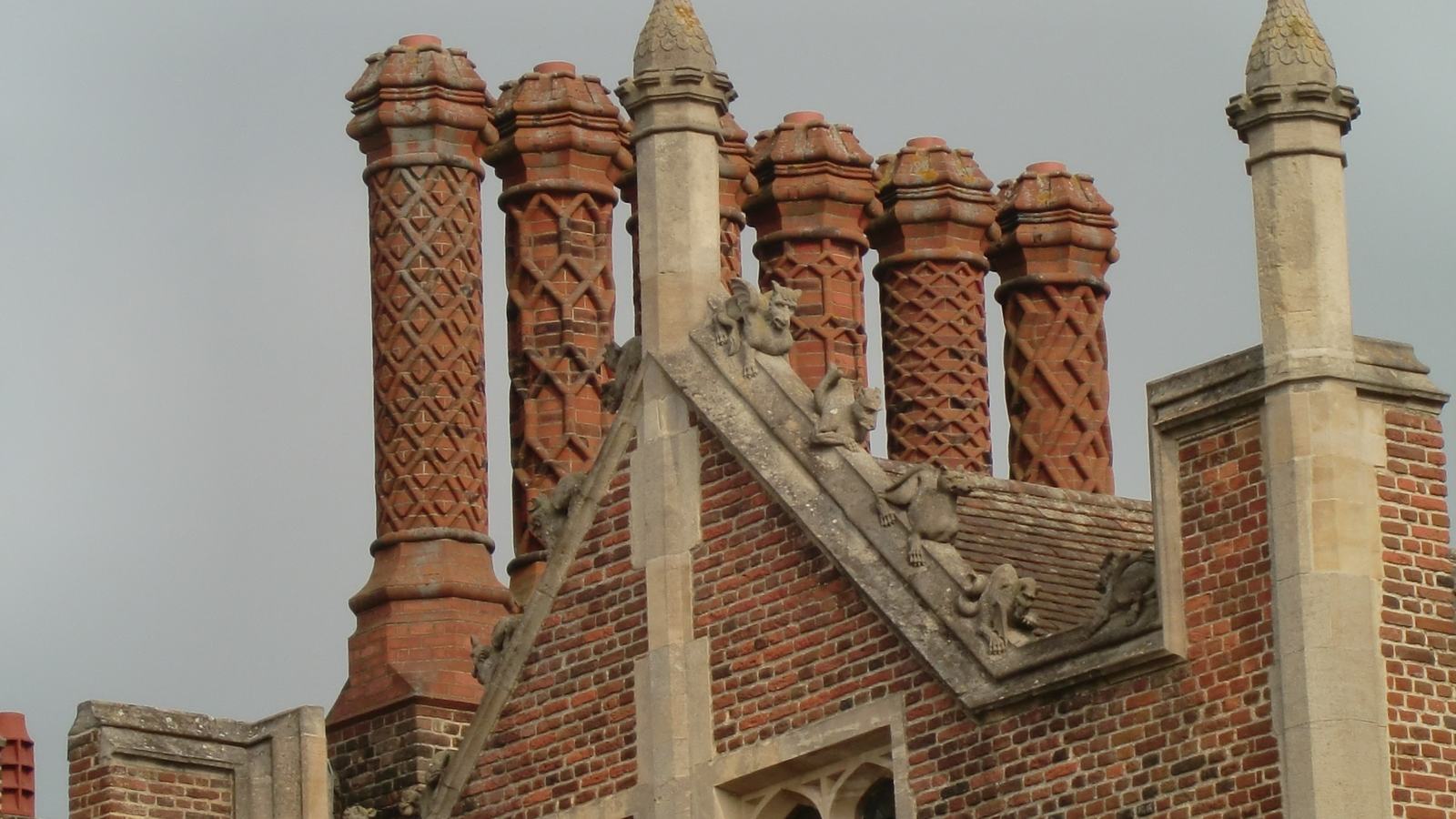
Boodles interprets Hampton Court Palace’s historic chimneys in an articulated high jewellery collar with 43 Argyle pink diamonds and 346 components.
An architectural silhouette can be as distinctive as a jeweller's signature. Boodles has made that connection explicit in the Tudor Pink Skyline suite created for Harrods' 2026 High Jewellery Celebration. Forming part of the British company's Palace Collection, developed in association with Historic Royal Palaces, the design takes its inspiration from the ornamental chimneys of Hampton Court Palace. The centrepiece is an articulated diamond collar incorporating forty-three pink diamonds from Australia's Argyle mine. Platinum, rose gold and several distinct diamond cuts contribute to its construction. Rather than treating the royal residence simply as the backdrop to a collection, the jeweller has examined the geometry of a small but characteristic part of the building and translated it into a wearable object. For private collectors interested in the relationship between architecture, design and craftsmanship, the result offers an opportunity to consider how a historical reference can survive a change of scale and material.
Looking above the principal rooms of Hampton Court
Boodles identifies the palace's 241 distinctive chimneys as the starting point for Tudor Skyline. Their geometric ornamentation and varied brickwork give the roofs of the historic building an identity that can be appreciated without entering its ceremonial interiors. The chimneys combine a necessary architectural function with decorative expressions of wealth and status. They are an important example of how apparently subsidiary architectural components can become part of the character of a major building.
This is a fruitful subject for a jewellery designer because the inspiration is already contained in an arrangement of repeatable but individually varied forms. The transition from brickwork to precious stones does not require a miniature reconstruction of a complete palace. Instead, the designer can examine the relationships between individual elements: how lines change direction, how light defines the relief of a surface and how rhythm emerges from repeated geometric units. Owners commissioning objects for a private yacht or residence may find this approach particularly interesting. An intelligent historical reference does not need to duplicate an earlier decorative object, provided the maker has identified the qualities that give the original its distinction.
From the geometry of brick to the facets of a diamond
The jeweller's account describes the use of specially cut diamonds to evoke the angular decoration visible on the historic chimney stacks. The accompanying Tudor Skyline designs illustrate the relationship between cushion, square and elongated diamond shapes. In a collar, their combination provides the opportunity to establish a recognisable pattern across the individual sections of the piece.
Each diamond cut brings its own visual properties. A faceted stone with a broad central area can produce a different pattern of reflection from one divided into a larger number of smaller facets. Stones with elongated outlines can give direction to a composition, while relatively compact shapes may help articulate the points at which the design changes direction. Selecting complementary stones becomes especially important when adjacent sections create a pattern extending around the neck.
The collector should examine the whole collar under different conditions of lighting rather than assess its constituent gemstones exclusively in isolation. Their relationship within the design is central to the purpose for which they were brought together. The character of a jewel intended to be worn also changes according to its movement, the clothing against which it is placed and the angle at which other people see it. The geometric idea behind the collar therefore has to work in quite different circumstances from those of the comparatively fixed architectural details that inspired it.
Forty-three pink diamonds from a finite source
One of the most distinctive features of the Harrods suite is the identification of forty-three Argyle pink diamonds in the collar. The association with a specific source matters to collectors of coloured diamonds, particularly because the mine in Western Australia ceased production in 2020. Its cessation limits the supply of newly mined diamonds attributable to it, but does not establish the market value of every existing stone associated with Argyle.
In a piece that incorporates numerous smaller coloured diamonds, the overall arrangement deserves particular attention. The individual stones may be selected not merely for the maximum possible intensity of colour, but for the way variations in hue and tone contribute to the complete jewel. The combination of pink stones with colourless diamonds and the warm appearance of rose gold can create a different effect from that of a single larger coloured diamond displayed in a ring.
A purchaser seeking to establish the characteristics of the individual diamonds should ask what origin documentation and grading information accompany the piece. The name of a mine is not a substitute for examining each stone's documented characteristics, and stones of different sizes may not all be accompanied by the same form of laboratory report. Establishing what evidence applies to the coloured diamonds is part of understanding an acquisition of this kind. The jewellery house can explain the records supporting the provenance and the design decisions governing their placement.
The relationship between platinum and rose gold
The collar brings together platinum and eighteen-carat Single Mine Origin rose gold. These two materials serve a visual as well as a practical role. Platinum provides a relatively neutral metallic setting against the diamonds, while the warmer alloy can complement the coloured elements. The contrast establishes another means of differentiating parts of the design without relying entirely on the shape of the gemstones.
The substantial amount of work required to integrate the metals should not be underestimated. A jewel that curves around the neck has to maintain a coherent outline while allowing sufficient movement to respond to the body. Components must retain their intended relationship without producing uncomfortable points of pressure or unnecessary stiffness. The settings need to hold individual stones while preserving the visual continuity of the composition.
The maker's reference to Single Mine Origin gold is a sourcing statement, not a description of the entire jewel's environmental impact. Clients interested in documenting material provenance can ask the jeweller about the particular system of traceability associated with the gold and the other components. The physical origin of a precious metal represents one part of the wider history of a manufactured object. It is useful to record that information alongside the documents describing the completed design rather than assume that a sourcing designation alone explains every stage of the manufacturing process.
Why 346 components matter
According to Boodles, the collar contains 346 individual components and required more than 350 hours of design and workshop activity. The figure encompasses computer-aided design and bench work, rather than representing solely the time spent setting the diamonds. These are substantial commitments of specialist labour for an object whose final appearance depends on the close integration of many relatively small elements.
Computer-aided design can assist in defining geometry, checking the relationship between parts and developing the structure needed to accommodate individual stones. It does not eliminate the need for the jeweller's decisions concerning the preparation of components, assembly and finishing. The transition from an accurately specified digital form to a jewel that moves comfortably when worn is itself an important part of the craft.
For a collector inspecting the finished collar, the most revealing points may be those where neighbouring sections meet. Those junctions determine whether the appearance of the diamond pattern is maintained as the piece follows the body. The reverse of the collar also deserves attention because much of the technical work required to establish that flexibility may not be visible from the front. A private viewing is an opportunity to understand these aspects of the design through the assistance of a knowledgeable representative rather than relying entirely on a studio photograph.
The wider Palace Collection and an architectural approach to collecting
The Harrods exclusive belongs to a collection informed by several aspects of Britain's royal residences. Boodles has developed other designs through reference to the Great Vine at Hampton Court, historic porcelain associated with the royal family and decorative interiors. These subjects offer different possibilities for the selection and arrangement of precious materials. The architectural geometry of a chimney differs fundamentally from the branching form of a plant or the decorative pattern of a porcelain object.
A collector may wish to acquire pieces that reflect a particular interest in architectural history rather than assemble a complete series simply because the objects bear the same collection name. It is possible to build a more personal relationship with high jewellery through the development of an identifiable collecting interest. An owner who commissions interiors, acquires historical objects or supports the conservation of important buildings may recognise a relationship between those activities and the acquisition of a particular jewel inspired by architecture.
The historical partnership does not imply that the original buildings, artefacts or their fabric form part of the jewellery. The design remains a contemporary interpretation created by Boodles. Understanding that distinction allows both the historical source and the modern maker's contribution to be appreciated on their own terms.
Private viewing, provenance and care
Boodles identifies the suite as an exclusive created for the Harrods celebration and describes a separate purplish-pink diamond ring displayed alongside it. The collar's individual asking price is not stated in the journal announcement. Anyone interested in acquisition should establish present availability directly with the jeweller, along with the particulars of the specific piece, its dimensions, fitting arrangements, certificates and aftercare. The fact that this design was selected for the celebration does not establish that it remains available today.
For an owner travelling between residences and a superyacht, the arrangements for carrying, insuring and storing an articulated high jewel are also worth careful consideration. The flexibility of a collar depends on comparatively small components that should be protected against inappropriate force. Its storage should follow the maker's guidance, and a convenient method of securing the piece aboard a yacht should take account of the different environment in which it is kept. Professional assessment after an impact or an observed change in fit may be preferable to continuing to wear the piece without examination.
A contemporary jewel informed by a historic building
The Tudor Pink Skyline suite illustrates how a jewellery designer can draw on a familiar architectural landmark without restricting the finished object to a conventional commemorative motif. The decorative brickwork of Hampton Court provides an organising principle for the arrangement of diamonds and precious metals. At the same time, the collar's complex construction responds to the practical requirements of a wearable jewel rather than a stationary architectural ornament.
Its significance lies in the decisions necessary to sustain that relationship throughout the work: the selection of stones, the proportion of individual components and the integration of different materials within a coherent design. For the private collector, those decisions can be appreciated alongside the provenance of the pink diamonds and the historical associations of the collection. The result is a distinctive example of contemporary British high jewellery in which architectural history is not merely a marketing theme but a visible source of the design's geometry.
Primary source: Boodles official journal, Tudor Pink Skyline, 2026 Harrods High Jewellery Celebration.
Jonathan Cardy, Chimney and roof detail front of Hampton Court Palace.jpg, Wikimedia Commons, CC BY-SA 3.0. Resized and re-encoded; image remains CC BY-SA 3.0. Contextual architecture photograph, not the jewellery. Official source.

