A carefully sourced, superyacht-specific guide to Buck Island Reef National Monument, separating current NPS permit notices from older management text and explaining strict lagoon access and anchoring limits.
A reef monument that rewards preparation
Buck Island Reef National Monument sits off St Croix in the United States Virgin Islands, where a small green island is ringed by extraordinarily varied shallow marine habitat. For guests cruising the Caribbean aboard a superyacht, the temptation is to treat the turquoise lagoon and white beach as an obvious stop. The reality is more interesting: it is a carefully protected destination with daylight visiting hours, specific watercraft size limits and a tightly controlled approach to anchoring.
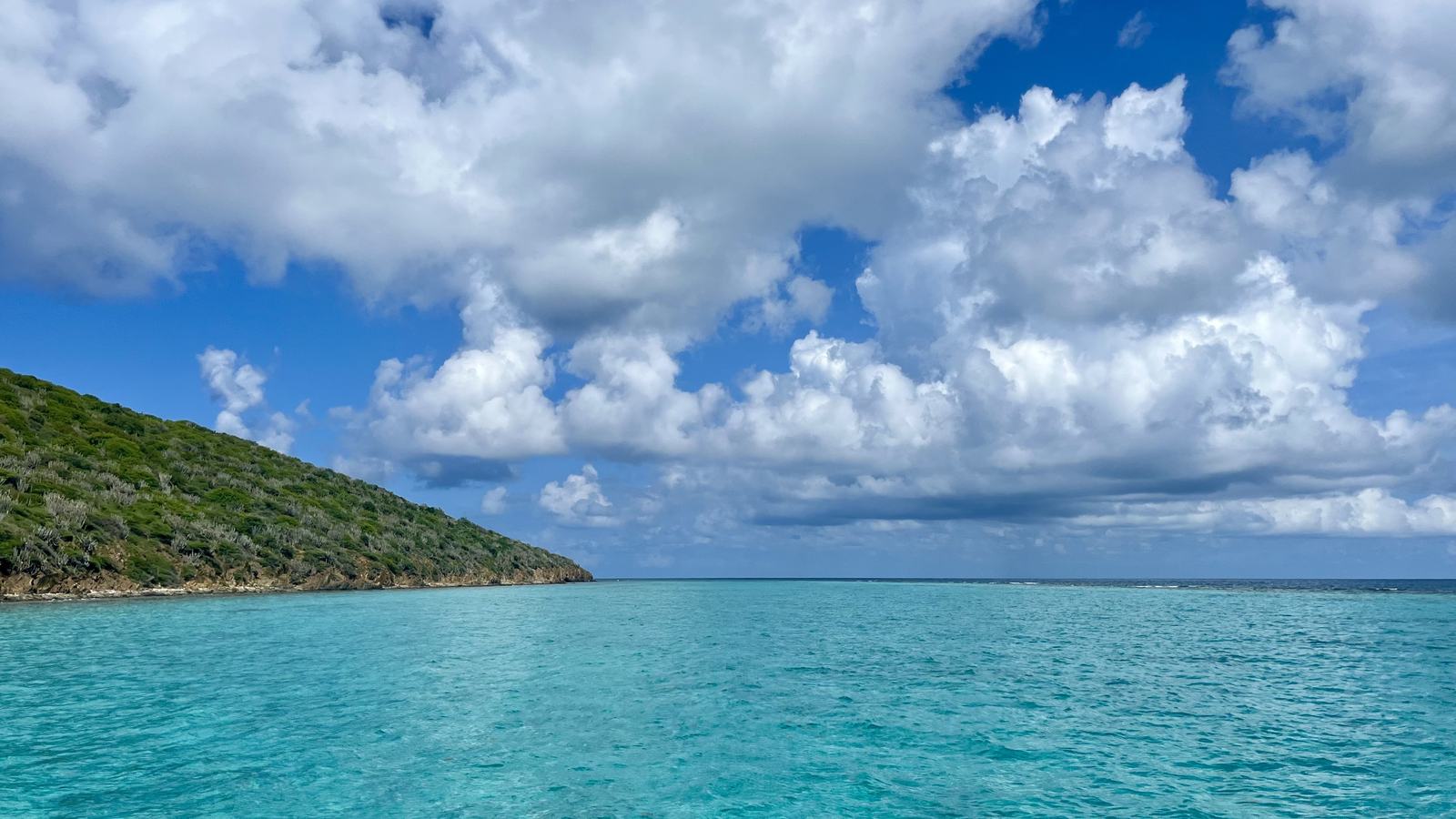
The National Park Service places the monument about five and a half miles by boat from Christiansted and describes its surrounding waters as a landscape of barrier reef, coral gardens and seagrass. The best visitor experience begins by deciding where the mothership may lawfully and safely remain, then arranging a suitable smaller craft for authorised landings and reef activities. That sequence allows guests to appreciate the site without placing the yacht or fragile habitat at risk.
Daylight access is the foundation of the itinerary
The park's current published guidance specifies opening hours of 7 a.m. to 5 p.m. Atlantic Standard Time for Buck Island and its waters. It includes West Beach, the lagoon, the underwater trail and the wider monument. Camping is not allowed, and the island closes at night in part to protect nesting sea turtles. Overnight anchoring is likewise excluded in the park's published management rules.
This is a day excursion, not an overnight anchorage dressed up as a beach getaway. A captain should allow sufficient time for the run from St Croix, any tender transfer, the weather forecast and a conservative return before closing. Sunset hospitality aboard the mothership may still be delightful, but it belongs at a suitable authorised berth or anchorage outside the monument's time-limited visitor area.
The 42-foot lagoon limit excludes the mothership
The National Park Service's Know Before You Go guidance states that vessels over 42 feet long may not enter the lagoon. Older management provisions also restrict craft at or above that length from the protected lagoon and Marine Garden areas. Whatever the minor wording differences in those published documents, a yacht over 24 metres falls well beyond both thresholds.
Large-yacht itineraries should therefore avoid planning any entrance into the shallow lagoon by the mother vessel. A compliant tender can take guests toward authorised visitor features when sea conditions, draft and any mooring rules permit, but its skipper must still observe the closed swimming-trail areas and local signage. The existence of a charted navigational gap does not eliminate the conservation area rules or make a large yacht's entrance safe.
West Beach: the only general anchoring area
Buck Island's current NPS visitor guidance says anchoring is permitted only in the marked area off West Beach, with no anchoring in the lagoon. The park's management material adds a restriction particularly important to superyachts: vessels 91 feet and longer may not use the usual West Beach anchoring area. The compendium refers larger vessels to deeper positions authorised directly by the National Park Service.
These are significant limits for an owner of a 30-, 40- or 60-metre yacht. A 25-metre vessel may be shorter than the 91-foot threshold but remains subject to the designated area, day-use conditions, depth, seabed and other rules. Vessels exceeding 91 feet should not approach the West Beach anchorage expecting to find a general exception. They must obtain the park's specific direction about any alternative deeper-water position, or stage the visit from elsewhere.
A current permit notice differs from older park instructions
There is a visible discrepancy in the National Park Service's own publicly accessible material, and it matters to visitors. A permit notice dated 20 May 2025 says private craft did not need a permit to anchor in the designated West Beach area as of 17 January 2025, pending further procedures. Current visitor activity guidance repeats that a permit was not then required for that defined location.
However, the park's Laws and Policies compendium and sections of its Basic Information and Directions pages still describe an anchoring-permit requirement. The safest editorial conclusion is not to pretend these statements are identical or to assume the relaxation applies to every vessel and location. Captains should telephone the park at its officially published number or contact the permit office to confirm the rules in force for their vessel, intended position and trip date before relying on the more permissive notice.
Lagoon moorings are not a substitute for an anchor
The monument permits use of established lagoon moorings for suitable smaller craft within the site's operating rules, while forbidding lagoon anchoring. The National Park Service explains that the Marine Garden and underwater trail are protected places where anchors and chains can destroy living coral and interpretive features. Rafting multiple boats together on one mooring is prohibited, and a skipper must not treat an available buoy as an unrestricted group berth.
Before a snorkelling stop, the tender operator should confirm that the buoy is designed for that craft and that its pennant and ground tackle appear serviceable. Passengers should board and disembark without driving propellers across the reef or drifting into swimmers. For superyacht guests this careful approach is an opportunity to discover the lagoon more quietly, rather than an inconvenience caused by excluding larger boats.
The underwater trail gives the excursion its signature moment
The National Park Service describes a marked underwater trail through the monument's coral environment. Visitors can encounter reef formations and colourful marine life, while interpretive signs help explain the ecosystem rather than leaving the experience to a succession of underwater photographs. The protected trail is a daytime attraction and should be explored only in conditions appropriate for swimmers and snorkellers.
For luxury yacht guests, a private briefing by a knowledgeable licensed guide can add considerable value. The programme might explain coral architecture, fish behaviour and the recovery challenges facing Caribbean reefs, then give each guest time to observe without touching anything. Less-confident swimmers should receive an honest assessment of current, visibility and available safety support before entering the water; the itinerary should be adapted to their experience.
Beach time comes with conservation responsibilities
West Beach offers a rare combination of Caribbean sand, coastal scenery and a protected reserve's sense of place. Park facilities include picnic space and basic visitor amenities, but there is no reason to assume the island can provide all the services a superyacht guest programme might need. The Park Service asks visitors to bring fresh water, food and suitable sun protection, and to take responsibility for their own impact.
Collection of shells, coral and other natural resources is prohibited, as are fishing and hunting within the monument. Sea turtle and shorebird nesting areas deserve particular care; visitors should not disturb nest sites or leave food or litter behind. The absence of a permanent resort is part of Buck Island's appeal, and good crew preparation allows guests to enjoy it without expecting the coastline to be altered for their convenience.
Jet skis and tow toys belong elsewhere
The National Park Service's management rules prohibit personal watercraft such as jet skis and a variety of powered towing and high-impact activities in the monument. Those restrictions extend to familiar superyacht toys including water-skiing, wakeboarding and towing inflatables behind a motorised craft. Paddleboarding and kayaking are among the activities the management guidance identifies as possible, provided all current local conditions and zones are observed.
A crew accustomed to unloading an entire water-toy garage at each anchorage should have a separate Buck Island activity plan. Brief the guests before arrival, leave restricted equipment aboard and select water-based experiences that are compatible with a protected coral habitat. A restrained programme of snorkelling, kayaking and wildlife interpretation is more fitting to the monument than a motorised display.
Weather, tender choice and guest safety
The distance from Christiansted is modest for many yachts, but a short passage in the Caribbean should not be equated with benign conditions. Trade winds, breaking reef seas, current and changing visibility can make particular landings or underwater sites unsuitable. The skipper of a smaller tender should assess conditions independently of the mothership, with suitable navigation equipment, emergency communications and a realistic fuel margin.
Guest transfers should be planned around shore-access rules and the comfort of those boarding and alighting. The tender may need to avoid shallow patches, keep clear of coral and turn back if conditions deteriorate. A prudent operator always has an alternative for the afternoon, perhaps a sheltered itinerary elsewhere around St Croix, rather than treating a prearranged snorkelling activity as a commitment that overrides seamanship.
A responsible itinerary based on confirmed permissions
An exemplary Buck Island day begins with the park authority's latest position on anchoring permissions and vessel-size restrictions, not with a photograph of West Beach. It then identifies a lawful offshore staging point or an approved deeper-water location where applicable, chooses a compliant smaller craft, confirms daytime access and briefs guests on coral protection before anyone enters the monument's waters.
The result can be extraordinary: a small boat gliding across blue water, an educational reef encounter and time on a tropical beach where the protected landscape remains the main attraction. The National Park Service's conservation objectives give the experience its shape. With accurate information and respectful operations, Buck Island becomes a highlight of a St Croix superyacht cruise without asking the island to absorb the environmental costs of the yacht itself.