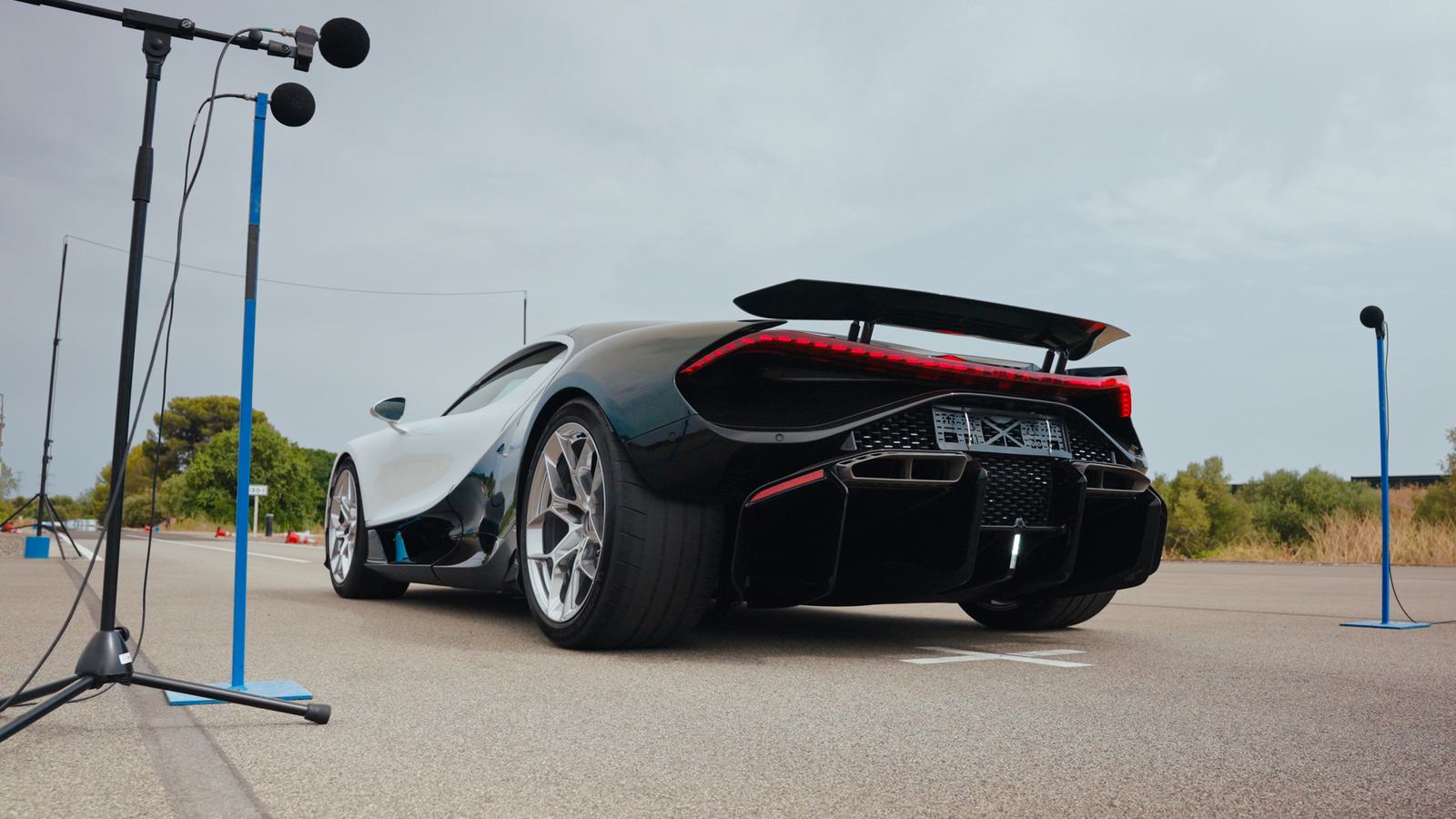
Bugatti describes how engineering teams developed Tourbillon's naturally aspirated V16 voice as part of the car's mechanical character.
A hypercar's sound can be as recognisable as its silhouette, particularly when the engine departs from prevailing technology trends. Bugatti has opened up the development story behind the Tourbillon's naturally aspirated V16, explaining why its character is generated by the engine rather than an artificial cabin soundtrack.
The mechanical instrument at the centre
The V16 represents a fresh engine layout for the marque and was designed to provide an individual acoustic signature across its operating range. Its sound is therefore linked to the combustion process and engine speed, rather than being treated simply as an entertainment feature.
Sound is engineered alongside performance
Acoustic development requires attention to the intake, exhaust and surrounding mechanical systems, with engineers balancing character against technical and regulatory requirements. Bugatti presents the result as a deliberate part of Tourbillon's identity, not an accidental by-product of a powerful drivetrain.
Why sound matters to collectors
As electrified high-performance cars increasingly share some quiet-running characteristics, a distinctive combustion soundtrack becomes another aspect of an individual model's sensory appeal. Tourbillon's V16 offers owners a mechanical experience that cannot be inferred from power figures alone.
Source
Bugatti