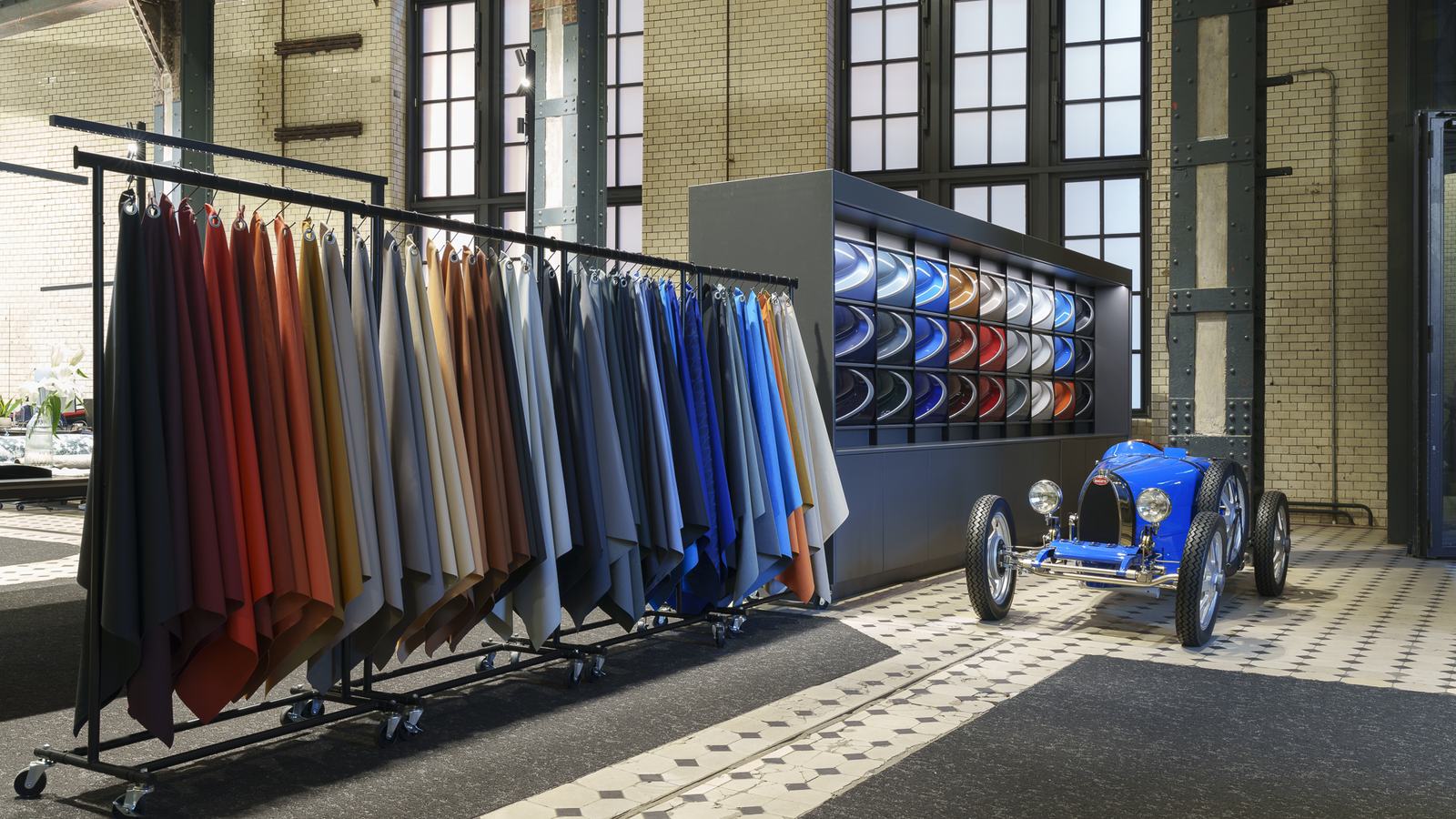
Bugatti is expanding Tourbillon personalisation with fashion-derived textiles, hand-woven Kyoto material, softer leather, coloured glass and bespoke paint development.
Bugatti is treating the Tourbillon’s colour, material and finish programme as automotive couture, borrowing techniques and suppliers from the fashion world to widen the scope of personalisation. Customers can work with new fabrics, specially developed leather, coloured glass and highly individual paint through private configuration sessions with the marque’s design team.
Fashion suppliers enter the automotive material palette
Bugatti’s colour, material and finish team has researched companies that normally create textiles for the fashion industry and adapted their work for automotive use. Fabrics have not previously formed part of Bugatti’s material palette in this way, making the Tourbillon a significant change in how the marque approaches cabin personalisation.
The process is more demanding than transferring a decorative fabric directly into a car. Materials must withstand heat, sunlight, wear and long-term use while preserving the tactility and visual depth that made them interesting in the first place, so development becomes a joint exercise in design and engineering.
Kyoto craftsmanship brings a new texture to the cabin
One of the most distinctive options is a hand-woven textile made in Kyoto that combines metallic yarn with strips of washi paper. Bugatti is also using knitted fabric with metallic yarn to create three-dimensional reflective surfaces, and customers can define patterns developed specifically for their own cars.
This moves the conversation beyond choosing from a fixed swatch book. The stronger analogy is with couture or a yacht interior commission, where the owner and designer can shape materials for one project and create a result that cannot simply be ordered by the next customer.
Leather, metal and glass are being reconsidered together
Tourbillon leather uses a new tanning process intended to produce a softer finish, while aluminium remains prominent in the controls, centre console and watch-inspired instrument cluster. The interchangeable back plates for the cluster draw on haute horlogerie and are developed with the Swiss manufacturer responsible for the analogue dials.
A single formed glass element also runs through the centre console and can be produced in different colours. Developing that component required specialist material work, illustrating how even a seemingly decorative decision can demand engineering effort when the objective is to preserve quality over the life of the car.
Sur Mesure pushes the idea toward true one-off specification
Bugatti says clients can go further by commissioning unique colours or materials through its Design Studio and Sur Mesure programme. Paint can incorporate unusual effects, while interiors can be composed around fabrics, glass, leather and metals selected to express an individual owner rather than a standard trim level.
For collectors, this degree of involvement is increasingly part of the value of an exceptional car. The finished Tourbillon matters, but so does the process of meeting designers, handling materials and making decisions that turn a technically identical model into something with a genuinely personal provenance.
Official sources: newsroom.bugatti.com.
Source
Bugatti