Christie’s is offering the 24-carat Bulgari Pink at its Geneva Magnificent Jewels auction today, with a CHF 10–15 million presale estimate and a programme of additional historic and modern jewellery.
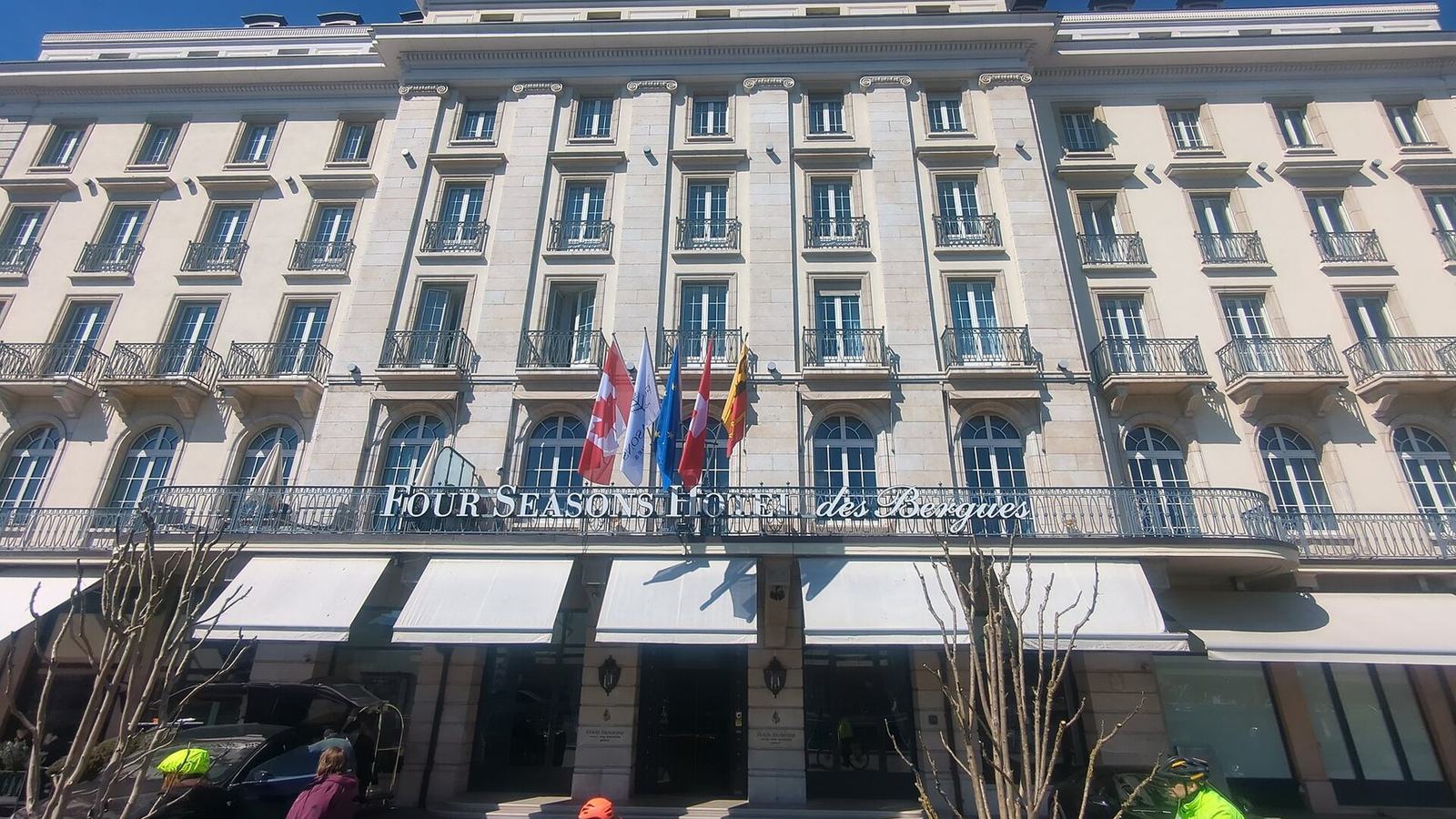
Luxury auction preview, 10 November 2026. Christie’s published the presale estimate and auction details; no sale result or winning bid is stated here. The featured photograph shows the announced venue, not the diamond.
A remarkable pink diamond on the Geneva calendar
For collectors spending time in Geneva this November, one object has become the focal point of Christie’s Autumn Luxury Week: a 24.00-carat Fancy Intense Pink diamond mounted in a Bulgari ring. Christie’s has scheduled its Magnificent Jewels auction for Tuesday 10 November 2026 at the Four Seasons Hotel des Bergues. The auction house estimates the ring at CHF 10 million to CHF 15 million, equivalent in its October announcement to approximately US$12 million to US$18 million. An estimate is neither a guaranteed value nor an auction result.
The sale is a natural subject for a superyacht lifestyle audience interested in the intersection of design, collecting, travel and the discreet traditions of fine jewellery. A pink diamond of this size carries unusual visual appeal, but buyers also need to examine the history, documentation and economics of a purchase at this level. We treat the event as a preview of an announced auction, not a report of who has bought the ring or the price it achieved. Such conclusions require confirmed results after bidding.
The story of the Bulgari Pink
Christie’s describes the stone as a 24-carat, emerald-cut Fancy Intense Pink diamond in a ring by the Roman jeweller Bulgari. Its account says the jewel has belonged to a distinguished European noble family for more than 70 years and has not previously been offered at auction. The auction house recounts family lore that an earlier generation acquired the rough stone in India during the 1950s and subsequently commissioned Bulgari to create the ring. The word lore matters: a family account is not the same as independently documented mining provenance.
Bulgari’s design heritage contributes to the object’s appeal, particularly in an era when Rome became associated with international cinema, sophisticated jewellery and bold use of colour. The historical setting does not make every ring from the period equally important. Collectors should distinguish the origin story supplied in the catalogue, the maker identification, the laboratory information and the condition of the actual piece. Each is a separate element of a serious assessment and deserves to be understood before discussing a bid.
What Fancy Intense Pink tells a buyer
Pink diamonds are described through a system that distinguishes their colour and its intensity; Christie’s states that this gem carries a Fancy Intense Pink grade. The house also describes it as a Type IIa diamond, an important gemmological classification. Those descriptions are meaningful, but they are not a complete substitute for examining the grading documentation, the appearance of the stone and the other particulars of the lot. Carat weight records mass; it does not alone establish beauty, clarity, rarity or market value.
An emerald cut places emphasis on broad facets and a clear view into the stone. That can make aspects of colour distribution, proportions and internal characteristics especially noticeable. A specialist buyer should evaluate the actual report, any treatment or origin statements, the setting and how the jewel looks in varied lighting. While auction-house publicity understandably foregrounds exceptional qualities, a prudent collector does not treat promotional language as a technical warranty. Independent expert advice may be appropriate before a purchase of this significance.
The wider Magnificent Jewels selection
The Bulgari ring is not the only item that merits attention. Christie’s describes the Geneva offering as spanning historic and modern jewellery, with pieces associated with Cartier, Harry Winston, Van Cleef & Arpels, JAR and other distinguished houses. It also highlights Art Nouveau creations by René Lalique. This range creates an opportunity to compare different approaches to craft: the structure of a diamond ring, the fluid lines of early twentieth-century design and the experimental use of materials and colour by more recent makers.
Collectors do not need to be in the market for the headline diamond to learn from such a sale. Looking closely at period design, construction, documentation and the way jewellery has been altered over time can sharpen judgment. A necklace may be outstanding for its craftsmanship, a coloured-stone brooch for its setting and an unusual pair of earrings for its artistic concept. The auction catalogue provides information about individual lots, but viewing and condition reports remain essential for anyone contemplating a purchase.
Details worth noticing beyond the headline
In a separate Christie’s preview, specialists discuss a pair of JAR earrings incorporating carved agate and onyx cameos with garnets and diamonds. The published estimate is CHF 80,000 to CHF 130,000. A Van Cleef & Arpels sapphire and diamond brooch from the 1960s is also highlighted; Christie’s identifies a 43.94-carat oval Ceylon sapphire and gives an estimate of CHF 300,000 to CHF 500,000. These are presale descriptions and estimates, not independent valuations by Superyacht Guide.
The difference between these objects demonstrates why a collecting strategy should not be governed by carat weight alone. The artistic decisions of JAR are quite different from the architectural elegance of a mid-century brooch. A buyer attracted to a particular designer may value rarity within that maker’s work, while another may be primarily interested in a gem’s properties. Neither interest is wrong; the important discipline is to understand what is being priced and which assumptions remain uncertain.
The venue: Four Seasons Hotel des Bergues
Christie’s has listed the Four Seasons Hotel des Bergues, Quai des Bergues 33, Geneva, as the venue for the Magnificent Jewels sale. The announced live auction is scheduled for 4pm Central European Time on 10 November, with lots numbered 501 to 613. The final advertised public viewing period on auction day was 9am to 11am, following earlier viewing dates from 5 to 9 November. Visitors should not assume that the viewing remains available once the stated period has closed.
The setting brings a cultural dimension to a Geneva visit. The city is closely associated with watchmaking, jewellery and specialist collecting, but the practical event details should come from the auction house rather than from hotel reception or third-party listings. Access to bidding, viewing, telephone bidding or private appointments may require prior arrangements. This article’s lead image is an independently licensed exterior photograph of the announced venue, not an authorised photograph of the Bulgari ring itself.
How a serious bidder prepares
Before bidding, a collector should read the individual lot description and the sale conditions, request available documentation and clarify whether a condition report can be provided. It is wise to establish how the auction’s estimate relates to the total amount payable, including buyer’s premium, any taxes and later transport or import costs. Currency movements can matter when the bidder’s normal spending currency is not Swiss francs. None of these practical considerations changes the beauty of an object, but they may change the affordability of owning it.
Christie’s describes options for in-room, telephone, absentee and live online participation, subject to its registration arrangements. A collector should confirm eligibility and bid limits in advance instead of assuming a last-minute connection will be adequate. For an expensive object, professional advice on authenticity, gemmology, legal title and insurance may be appropriate. Superyacht Guide does not recommend bidding on any particular lot and does not know the financial circumstances of its readers.
From sale room to vessel: the security question
The ownership of valuable jewellery introduces considerations that should be addressed well before the piece is taken aboard a yacht. Insurance terms, secure storage, transport arrangements and the confidentiality of movements may be more important than finding an attractive place to display a purchase. The procedures suitable for a museum or a jewellery specialist are not automatically the same as those aboard a private vessel with changing destinations and crew. Owners should use qualified, discreet advisers and avoid unnecessary public disclosure of individual holdings.
A captain or purser may need to coordinate protected transport without becoming the person responsible for authentication or valuation. The roles should be clear: a collecting adviser assesses the object, an insurer determines coverage, secure-logistics providers manage movement and the yacht’s responsible personnel follow an agreed access plan. Crew privacy and the privacy of the owner are equally important. An article about an auction should not encourage public speculation about which named yachts or individuals may be bidders.
Jewellery as a cultural experience ashore
Not every yacht guest in Geneva is a prospective bidder. A well-planned visit can focus on the history of design, the contrasts between gemstone aesthetics and the craftsmanship required to set difficult stones. Auction previews can be educational, especially when a specialist explains why two apparently similar pieces differ in rarity or period. That kind of appointment should be organised through the venue’s stated arrangements and should respect photography, access and security rules.
The broader city offers a chance to link an appreciation of jewellery with architecture, watchmaking and a slower shore itinerary. Yet an auction viewing is not an ordinary museum admission: lots may be moved, access may be restricted, and the schedule can be affected by bidding preparations. Guests who wish to view a specific piece should obtain confirmation from Christie’s directly. A thoughtful itinerary gives the objects and their history proper attention without treating the sale room as an unrestricted tourist attraction.
What the estimate does—and does not—mean
The CHF 10 million to CHF 15 million range announced for the Bulgari Pink is a pre-auction estimate set in the context of Christie’s sale. It does not guarantee a final price, and it should not be mistaken for a formal appraisal of a different jewel. Competitive bidding can exceed an estimate, a lot can sell within the published range or it can remain unsold. A final reported hammer price, if announced, may also differ from a total including buyer’s premium and any applicable charges.
For a reader following the market rather than bidding, those distinctions are essential. Headlines often compress a complex transaction into a single number without explaining what it includes. Accurate post-sale coverage needs to identify the currency, whether the sum includes premium and the official source of the result. As this preview is being prepared on 10 November, Superyacht Guide is not asserting that the auction has concluded or that any bidder has acquired the ring.
Why design history belongs in the yachting conversation
Large yachts are often discussed as engineering achievements, but the onboard experience is also shaped by architecture, interiors, painting, sculpture, textiles and personal objects. Fine jewellery occupies a related cultural world in which material rarity and design judgment meet. Owners and guests can encounter it through private collecting, charitable events, design exhibitions and specialist sales while travelling. Coverage is valuable when it explains objects, institutions and dates without simply repeating luxury marketing language.
The Bulgari Pink illustrates that approach. Its reported family history, exceptional colour grade and mid-century maker association give the auction several distinct stories to examine. The responsible editorial position is to explain the basis for each claim, note what remains an auction-house account and avoid inventing a sale price before the bidding has taken place. For collectors, curiosity and caution are compatible; close looking and good documentation generally make the experience richer.
The next information to watch
Following the 10 November auction, the most useful update will be Christie’s verified lot result, accompanied by a clear statement of whether the figure is a hammer price or includes buyer’s premium. Further specialist commentary could then consider how that result compares with similar stones or historic jewellery sales, while allowing for genuine differences in provenance, colour, design and condition. Until such information is confirmed, the published estimate remains the correct figure to report.
For those travelling or arranging a collecting appointment, the auction house’s official sale page is the essential reference for lot details, participation and schedule changes. The announced Magnificent Jewels event is at the Four Seasons Hotel des Bergues in Geneva, with a 24-carat Bulgari ring as its headline object. That is enough to make a compelling cultural story today, without guessing at private ownership, final bidding activity or future market values.
Photo licence and source
Four Seasons Hotel des Bergues, Geneva, the announced auction location; independent archival exterior photograph, not the Bulgari Pink diamond. Photograph by Cd-MaN83, CC0; Wikimedia Commons source. Image resized for web delivery.

Source
Christie’s