A practical superyacht guide to Mallorca's Cabrera National Park using the Balearic government's 2026 guidance: red-buoy rules and charges, exceptional permits for yachts over 35 metres, permitted tender landings, conservation restrictions and rewarding shore experiences.
An extraordinary island reserve with unusually precise boating rules
Ten nautical miles south of Mallorca's Colonia de Sant Jordi lies one of the Balearic Islands' most compelling cruising landscapes. Cabrera National Park protects a maritime archipelago of limestone shores, coves, bird habitats and remarkably clear Mediterranean water. It is an appealing detour for a superyacht itinerary between Mallorca and the wider western Mediterranean, but a visit must be built around the park's authorisation system rather than the familiar assumption that a captain can simply choose an attractive patch of sheltered seabed.
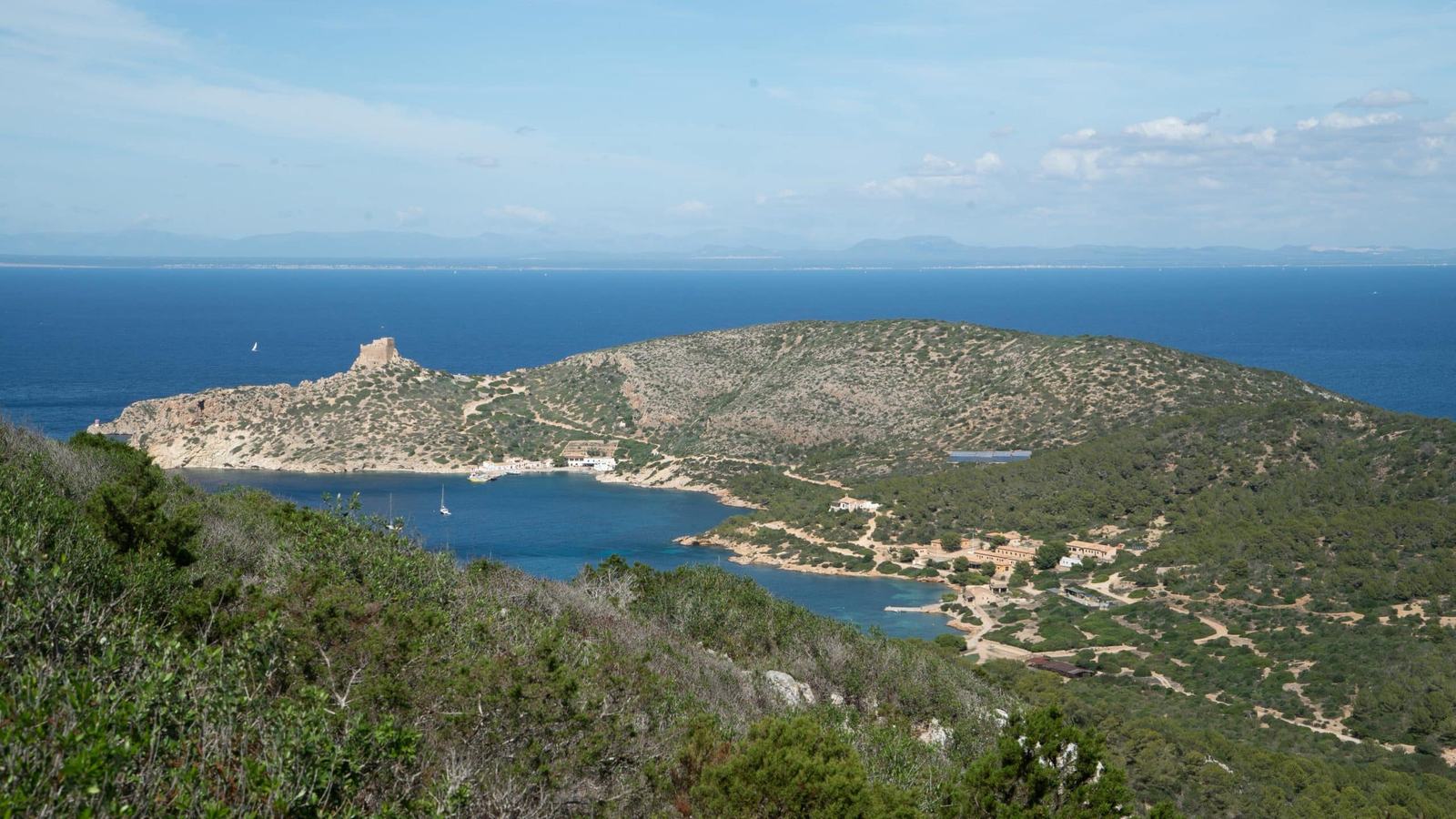
The Balearic government's current park guidance describes a protected area of 90,794 hectares, including 19 islands and islets and a predominantly marine environment. Cabrera Gran is the island open to authorised land visits. While the scenery invites exploration, the principal attraction for a well-run yacht programme is precisely the restraint that has preserved it: limited buoy capacity, narrow landing arrangements and rules intended to protect fragile habitats.
Captains should treat the park as a managed national reserve, not as a conventional marina. Its own government information states that visiting privately requires a navigation permit and that spending the night in Cabrera's harbour requires a separate buoy reservation. Those are different permissions, and holding one should not be mistaken for permission to undertake the other.
The red-buoy rule for 24-to-35-metre yachts
For a superyacht owner, the most important detail in the 2026 published mooring table is the red-buoy category. The Balearic government designates red buoys for vessels longer than 20 metres and no longer than 35 metres. That makes the category relevant to yachts above Superyacht Guide's 24-metre threshold, but the vessel's measured length, the specific booking conditions and its authorised berth must still match the reservation.
On the government's displayed fee schedule, the red-buoy rate is €105 per day from 1 October through 30 April and €275 per day from 1 May through 30 September. These are the authority's published reservation charges, not a quote for fuel, concierge services or local taxes beyond the stated item. Fees and capacity can change, so the crew should confirm the current figure at the official booking point before making any commitment to guests.
The system allows a maximum of 50 boats each day to use the authorised Cabrera moorings, subject to allocation and available spaces. In July and August, a booking may cover no more than two consecutive nights; in the other months, the published normal limit is seven nights. The official buoy occupation window begins at 18:00 on the first reserved day and closes at 17:00 on the final day. A captain must plan arrival and departure around these published hours.
This is not the same as the free daytime-buoy arrangement. The park's general guide reserves its daytime buoys for boats no longer than 15 metres that also hold navigation authorisation, at Es Burrí, sa Coveta Roja and near the harbour. A 30-metre yacht should not plan to take one of those small-craft buoys for a brief lunch stop. Its captain needs to clarify an appropriate authorised option for the vessel's length instead.
Can a yacht longer than 35 metres come to Cabrera?
The published rules contain a significant exception for vessels over 35 metres, but it is not an automatic right to moor. The Balearic government says that the authority managing the mooring systems may grant a special authorisation exceptionally, according to its criteria and after receiving a justification. For an owner with a 40- or 50-metre yacht, that means advance written consultation is essential and a desired booking should never be described as confirmed until the park approves it.
If an exceptional authorisation is granted, the government states that its highest listed buoy tariff applies, corresponding to the red-buoy category. The fee itself does not establish that a particular buoy can safely accommodate the yacht. The relevant authority must agree the location and conditions, and the captain remains responsible for examining the approved mooring, draught, swing room, weather and operational safety.
A prudent alternative is to arrange a culturally rich Cabrera excursion from an authorised base elsewhere on Mallorca, subject to whatever boat and commercial-transport rules apply to the chosen service. That option may serve guests better when the main yacht is too large for a normal red buoy or the limited moorings are fully booked. Even then, any tender, excursion vessel or guide must operate within the permits and locations the park actually allows.
The distinction matters because Cabrera prohibits dropping an anchor throughout the national park. The official rules permit authorised use of designated buoys, not an improvised anchorage nearby when a reservation fails. A crew cannot solve a full booking calendar or an unsuitable mooring simply by looking for a sandy-looking gap on the chart; the protected-area prohibition still governs the sea below.
The shore programme: history, wildlife and strict landings
Once the boat arrangements are properly authorised, Cabrera offers a more thoughtful sort of luxury. The government describes a late-fourteenth-century castle above the harbour, the nineteenth-century Enciola lighthouse, a small ethnographic museum and archaeological traces of far earlier occupation. Rather than selling the visit as another sunbathing stop, an itinerary can connect Mediterranean maritime history with the island's protected plants and wildlife.
Not every heritage site is freely accessible. As of the park's published current guidance, the castle is closed for safety reasons, and access toward Enciola lighthouse is restricted to guided visits while vegetation recovers. Captains and guest planners should verify the day's guided options at the park information office, rather than promising an interior castle tour or an unescorted lighthouse walk.
Landing is tightly controlled as well. The park identifies the main harbour jetty and the landing at Cas Pagès near sa Platgeta as permitted points, with a designated space for tenders at the main quay. The general rule does not authorise a superyacht's tender to put guests ashore at any attractive beach or secluded rocky ledge. Tender masters should receive a clear briefing on the permitted route and landing point before the first shore movement.
The natural history is equally distinctive. The government highlights Posidonia seagrass, seabirds, endemic Balearic lizards and a variety of fish and marine habitats among the reasons for strict conservation. Guests may enjoy selected swimming and snorkelling areas, but being able to see the seabed through clear water does not confer permission to collect shells, touch archaeological objects or anchor in the protected vegetation.
A captain's checklist for a rewarding, compliant visit
The park's guidance makes the operational limitations unusually explicit: the harbour does not supply private boats with fuel, shore electricity, waste collection or a full-service marina. Public toilets exist, but a superyacht planning a self-sufficient stay should carry the stores, water and environmental-management capacity it needs. The crew should manage rubbish and wastewater in compliance with all applicable requirements before and after the park call.
Several restrictions are easy to overlook when planning guest recreation. Dogs and other pets may not be landed; drones are prohibited; recreational fishing is not permitted; and fire and smoking are also barred by the park's published prohibited-activities list. Snorkelling, swimming and appropriate paddling activities belong in authorised areas under the park's instructions, with care around tender and passenger-boat movements.
Guests may find the reserve refreshingly simple. The government's visitor information notes that no cash machine is available and that card payment is not accepted at the island's modest facilities. Appropriate walking shoes, drinking water, sun protection and realistic expectations about access will add more value to the day than an elaborate programme that depends on services Cabrera does not provide.
The practical sequence is straightforward but should begin early: check the yacht's actual length and relevant authorisation class, obtain the park navigation permit, secure a suitable buoy or an exceptional written decision, plan the permitted tender landing and reconfirm conditions before arrival. For a large-yacht itinerary, allow enough flexibility to remain on Mallorca if a legal berth cannot be arranged. The reward is a rare Mediterranean shore experience whose quiet is inseparable from the rules that protect it.
Sources and image credit: Govern de les Illes Balears, Cabrera National Park official park guidance and official navigation and mooring fee schedule. Hero image: Govern de les Illes Balears, official Cabrera National Park photograph; government website states a Creative Commons Attribution-ShareAlike (CC BY-SA) reuse licence in its legal notice. The park's official application channel is linked from the above government pages.