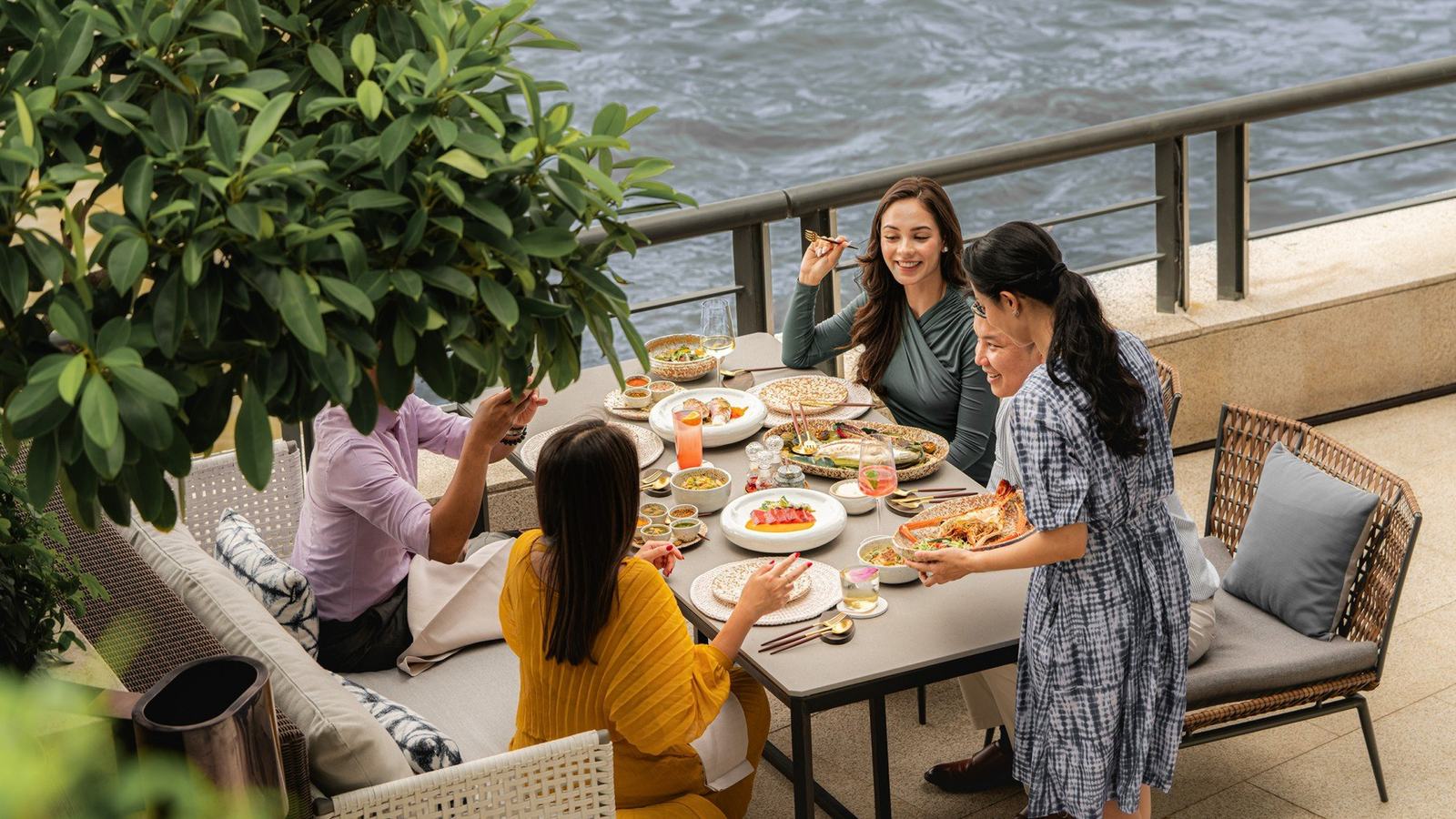
Chao Phraya Terrace at Four Seasons Bangkok reopened on 27 October with a new season of regional Thai ingredients, charcoal grilling and open-air dining beside the river.
An open-air table returns to the river
Chao Phraya Terrace at Four Seasons Hotel Bangkok at Chao Phraya River reopened on 27 October 2026 for the city's cooler season. The riverside restaurant has refreshed its menu around Thai regional produce and charcoal cooking, with Chef de Cuisine Jessada 'Pod' Khruapunt directing the kitchen.
This is not a wholesale change of culinary identity. The restaurant has worked with fire and Thai ingredients for several seasons, and the latest menu develops that approach. For visitors who choose a hotel as much for its dining as its suite, the reopening adds another reason to spend an evening by the Chao Phraya.
Thai regions meet on one menu
The kitchen looks beyond a single city's cooking traditions. Ingredients and dishes refer to the Northeast, the Gulf coast and other parts of Thailand, bringing seafood, beef, herbs and aromatic pastes together without abandoning regional distinctions. The goal is an interpretation of local food culture through a contemporary hotel restaurant.
A plate of cold noodles with smoked tiger prawn combines seaweed, chilli, ginger exposed briefly to flame and bitter orange. Elsewhere, a Korat Wagyu short rib is served in a Massaman-inspired preparation. Those details convey the restaurant's approach more clearly than a generic promise of authentic Thai flavours.
Charcoal is the central technique
Chef Pod uses coconut and lychee wood charcoal in the cooking. The choice of fuel matters because the smoke is not incidental decoration; it shapes the flavour and texture of ingredients that otherwise need relatively little intervention. Controlled fire can give delicate seafood a different character from a slow-braised meat dish.
The restaurant's fire skewers remain a focus, including a Khao Yai free-range chicken wing with turmeric and curry paste. Banana prawns are paired with makrut lime, coconut milk and chu-chee curry, while Korat beef short ribs carry tamarind, palm sugar and seven peppers. Each pairing places a recognisable ingredient at the centre.
A seafood story from the Gulf
Grilled Thai Gulf squid is dressed with yellow curry, pickled vegetables and coconut, linking the cooking to southern coastal traditions. The menu also brings back red grouper with fermented soya bean, reinforcing the role of seafood at a restaurant whose location makes the relationship between water and food particularly resonant.
These dishes should be read as the kitchen's interpretations, not a claim that every ingredient arrives by boat beside the hotel. The source release highlights regional sourcing but does not publish a complete supply-chain list. Diners interested in provenance or specific catches can ask the restaurant directly about the day's availability.
A wider table for different preferences
The new menu does not limit its attention to meat and seafood. Mushroom skewers use tahini, soy mushroom and zucchini; a tofu skewer brings gorlae and cashew; and a lion's mane mushroom dish includes beetroot and red curry. The plant-based selection broadens the ways a group can explore the restaurant's flavours.
This matters at the luxury end of hospitality, where one table may include diners with quite different appetites. A useful menu offers more than a token alternative. Guests with allergies or strict requirements should nevertheless verify preparation and cross-contact procedures with the restaurant before ordering, rather than inferring them from dish names.
The setting is part of the experience
Four Seasons presents Chao Phraya Terrace as a place for sunset dining with river views and evening air, a different proposition from an enclosed fine-dining room. Bangkok's waterways remain active urban spaces, so the restaurant's attraction lies partly in observing the city moving around the table.
An unhurried dinner here can serve as the centre of a private Bangkok evening rather than a stop between other activities. The setting gives a group reasons to linger over shared dishes while the light changes, though reservations and seating requests should be agreed with the hotel rather than assumed.
Tradition without a museum atmosphere
The kitchen also retains familiar dishes including Ratchaburi pork ribs with barbecue influences, showing how Thai cooking can be interpreted in several registers. The combination of time-honoured ingredients and an open-air contemporary restaurant suggests a living cuisine that changes with seasons rather than repeating a fixed menu indefinitely.
Chef Pod's stated approach is to let the season guide a fresh selection while keeping the restaurant's philosophy intact. That leaves room for new creations in later months. A traveller returning to Bangkok should regard the October 2026 menu as a snapshot of the restaurant's current direction, not a permanent list of guaranteed dishes.
Planning a riverside reservation
Four Seasons identifies 27 October as the reopening date and directs reservations through Chao Phraya Terrace and the hotel's guest-contact channels. The hotel sits on the Chao Phraya River in Bangkok, making the dining room convenient for guests staying on property and a destination in its own right for visitors elsewhere in the city.
The reopening is a timely reminder that a restaurant can reveal as much about a destination as a sightseeing itinerary. Chao Phraya Terrace places ingredients from across Thailand beside Bangkok's defining waterway, allowing a single dinner to connect regional cooking, skilled charcoal technique and the capital's distinctive riverfront atmosphere.