A 24-guest November dinner at Pavyllon London will pair seven Château Pavie wines spanning 2006–2024 with a five-course menu at Four Seasons Park Lane.
A single evening devoted to a Bordeaux estate
Pavyllon London, the restaurant at Four Seasons Hotel London at Park Lane, has announced a dinner devoted to the wines of Château Pavie on 27 November 2026. The event will accommodate 24 guests at the restaurant's counter, with seven wines accompanying a five-course menu. According to the hotel, the selection will range from 2006 vintages to wine produced in 2024. The restaurant's executive chef, Benjamin Ferra Y Castell, has developed the accompanying dishes under the direction of Yannick Alléno. The limited size of the gathering is a central part of its appeal. Rather than presenting wines associated with a number of producers, the restaurant and estate will focus attention on the character of the particular producer and how its wines can be experienced alongside food. The announcement places the dinner among the special culinary occasions available in London as the festive season approaches.
A property with an important place in Saint-Émilion
Château Pavie is located within the Saint-Émilion appellation of Bordeaux. The hotel's announcement identifies the estate as one of the two properties holding the highest classification in the current Saint-Émilion system, Premier Grand Cru Classé A. That description refers to the estate's position within the appellation's classification rather than to a separate assessment of each bottle being served. For a collector, the identity of the producer is only one part of the information that can influence interest in a wine. Vintage, production methods, provenance, storage and condition can all affect how an individual bottle is experienced. Differences among vintages are particularly significant for wines intended to develop over extended periods. A tasting focused on a single estate provides a setting in which questions about that development can be considered with representatives who understand the producer's intentions. The restaurant's release does not disclose the full list of seven wines.
A range covering almost two decades
The proposed period from 2006 to 2024 offers a broad context in which to examine different stages of wine development. A mature wine and a recently produced wine can present substantially different characteristics even if both originate from the same property. Over time, some of the aromatic and structural characteristics of a wine evolve as it remains in bottle. Environmental conditions during the growing season also influence the characteristics of the fruit that reaches the winery. The comparative experience is therefore not solely a matter of age. Guests interested in understanding the distinctions should consider the sequence in which the individual wines are presented, the information provided by the estate's representatives and the accompanying preparations developed by the kitchen. Without a confirmed final wine list, it would be premature to identify the particular contrasts that guests will experience between individual glasses. The breadth of the announced period nevertheless gives the organisers considerable scope to explore the subject.
The newly released white wine
One specific wine identified in the announcement is Arômes de Pavie Blanc 2024. The hotel states that Pavyllon London is the first British venue to secure access to serve this recently released wine. That is the hotel's account of its availability at the time of the announcement, rather than a claim about all future distribution arrangements. The inclusion of a white wine adds another dimension to an evening that might otherwise be anticipated primarily as an exploration of mature Bordeaux red wines. The wine can provide guests with a perspective on a different aspect of the estate's production. It may also allow the kitchen to consider combinations that differ from those traditionally associated with structured red wines. The official release does not specify the grape composition, production quantity or the exact course with which it will be paired, so those details should be obtained from the participating sommeliers or the estate itself.
Pairing as a collaboration rather than a formula
With more wines than courses, the organisation of the tasting requires deliberate choices about sequence and emphasis. The kitchen can approach a pairing through the balance of richness, acidity, texture and aroma in the finished dish. Depending on the character of the particular wine, contrasting elements can be as interesting as complementary ones. The same preparation may be experienced differently when tasted alongside a mature wine rather than a more youthful expression. The restaurant has described the menu as seasonal and developed specifically around the selection, but has not disclosed the names of the individual dishes. This provides an opportunity for guests to experience the planned combinations without presuming their composition in advance. Diners with allergies or other requirements should establish directly with the restaurant whether the menu can be adapted, since a tightly coordinated event may offer less flexibility than a conventional à la carte evening.
The open kitchen and the counter format
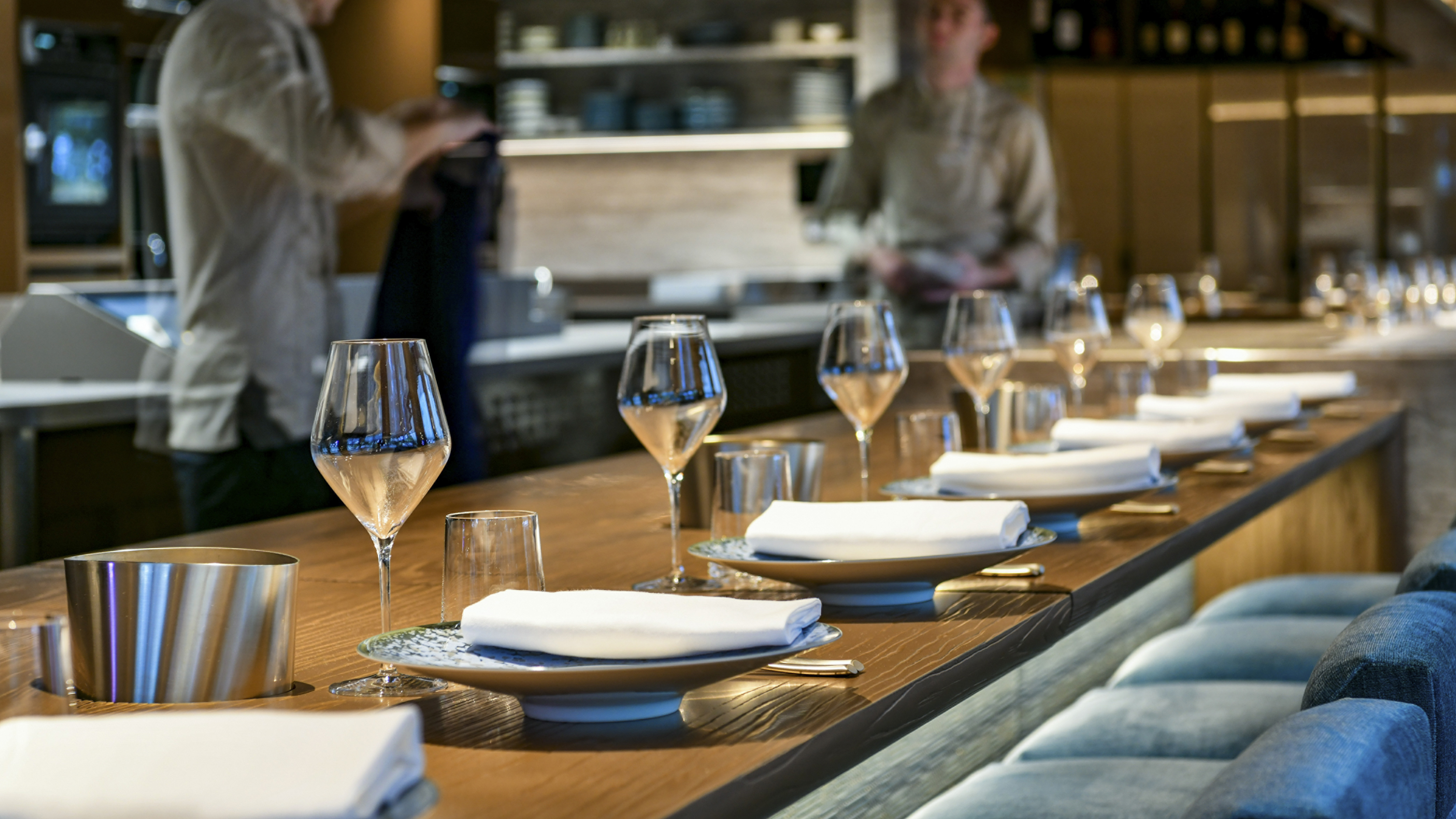
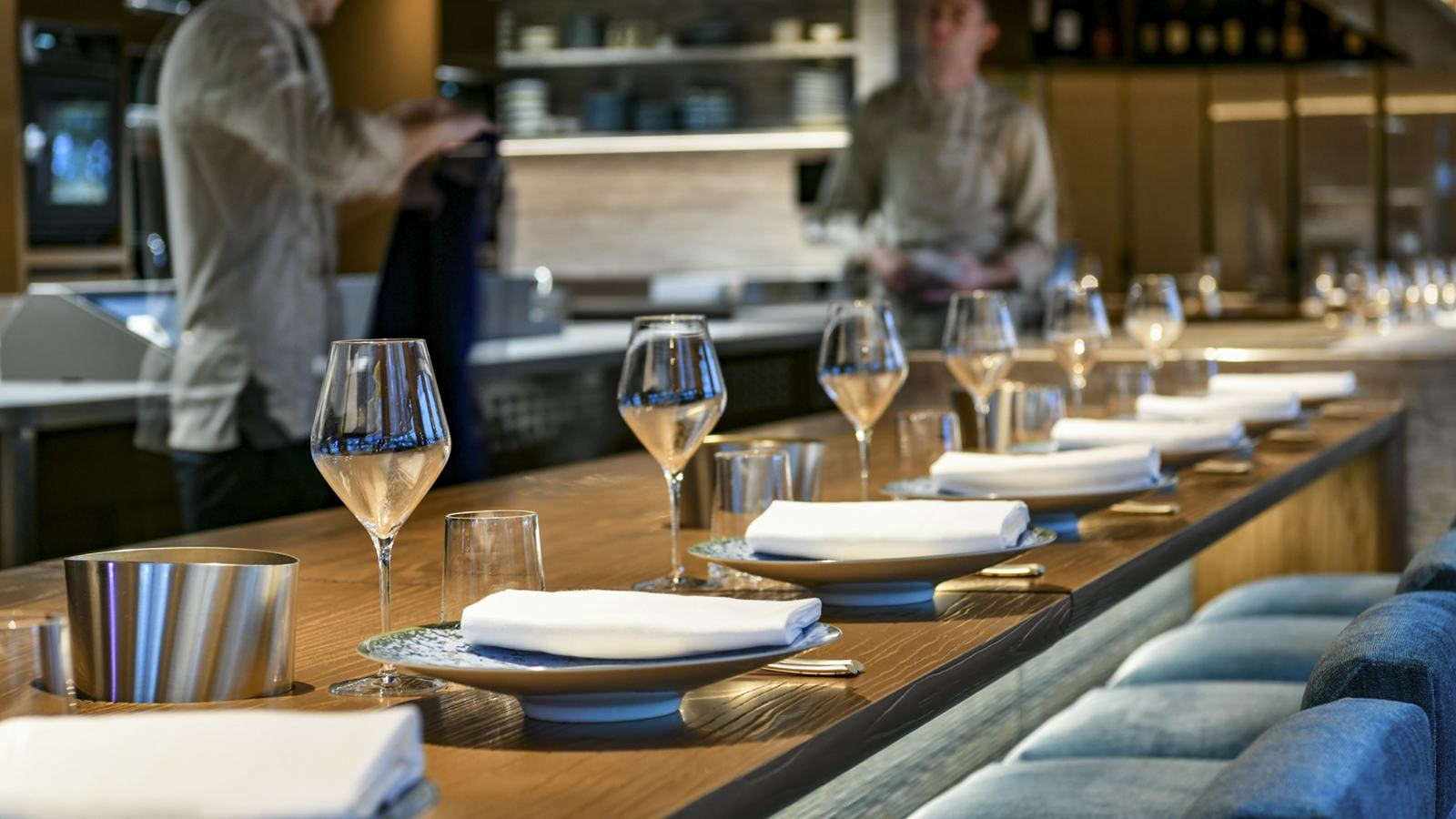
The 24 places are situated at the restaurant's counter, facing the open kitchen. This arrangement creates an experience that differs from a private dinner in a separate room. The preparation and final presentation of dishes can form part of the setting, allowing guests to observe some of the attention that goes into coordinating service. It also brings the participants closer to the operation of the restaurant. For someone accustomed to the separation of formal dining spaces from working areas aboard a yacht, such a setting offers a different perspective on the role of the culinary team. The counter layout can become a natural starting point for discussions about ingredients and preparation. The evening has been designed to combine that environment with specialist wine knowledge, with the restaurant's sommeliers and representatives of Château Pavie guiding guests through the selection. The precise format of these explanations will be determined by the organisers.
Learning from the people responsible for the wines
The presence of the estate's representatives is especially relevant to collectors who wish to understand more than the tasting notes attached to a wine. Discussions may offer insight into the decisions that have shaped the producer's approach, and the differences among the vintages chosen for the dinner. Guests can use the occasion to ask about appropriate conditions of storage and service for wines they already own or may consider acquiring. Such information should be distinguished from the individual experience of tasting a wine on the evening. A bottle's condition can vary according to its particular history, even where its vintage and producer are identical to those of another bottle. A private collector seeking to add mature wines to a cellar should therefore assess provenance and authenticity independently. The dinner represents a focused introduction to selected wines rather than a guarantee concerning the condition or future development of other bottles available through commercial channels.
London as a meeting point for international collectors
Park Lane provides a particularly accessible setting for guests whose travel brings them to central London during the autumn and winter. The city attracts collectors through its auction houses, specialist merchants and galleries as well as its restaurants. An evening devoted to an individual estate can complement those activities without requiring a visit to the region where the wine is produced. The character of the event may also be relevant to yacht owners who commission wines for private hospitality, whether in their homes or aboard vessels where suitable storage arrangements exist. The pairing of different vintages with a considered menu can offer ideas about how a collection might be enjoyed rather than simply held. Care should nevertheless be taken when moving valuable wines between properties or transporting them aboard a yacht, since temperature fluctuations and physical handling can affect their condition. Advice relating to the particular bottles should be sought from appropriately qualified specialists.
The details of the November engagement
The event is scheduled for Friday, 27 November, with tickets announced at £390 per person. Four Seasons describes it as a single evening with a capacity of 24, and the official release directs prospective guests to its reservation arrangements. Availability has not been independently confirmed and the published price should not be taken as evidence that places remain. A guest contemplating the dinner can establish the exact service schedule, inclusions and applicable terms directly through the restaurant before making travel arrangements. The appeal of the occasion lies in the concentration of a number of wines from one recognised Bordeaux property within a comparatively intimate dining format. With the participation of both the estate and the restaurant's culinary and sommelier teams, the evening provides a means of exploring how wine and food can be interpreted together. It is this relationship between the individual producer, the kitchen and the people sitting at the counter that distinguishes the announced engagement from a more conventional seasonal dining experience.
Primary source: Four Seasons Hotel London at Park Lane official press release, 16 November 2026.
Photography: Four Seasons Hotel London at Park Lane, official pressroom imagery accompanying the wine dinner announcement. Official source.