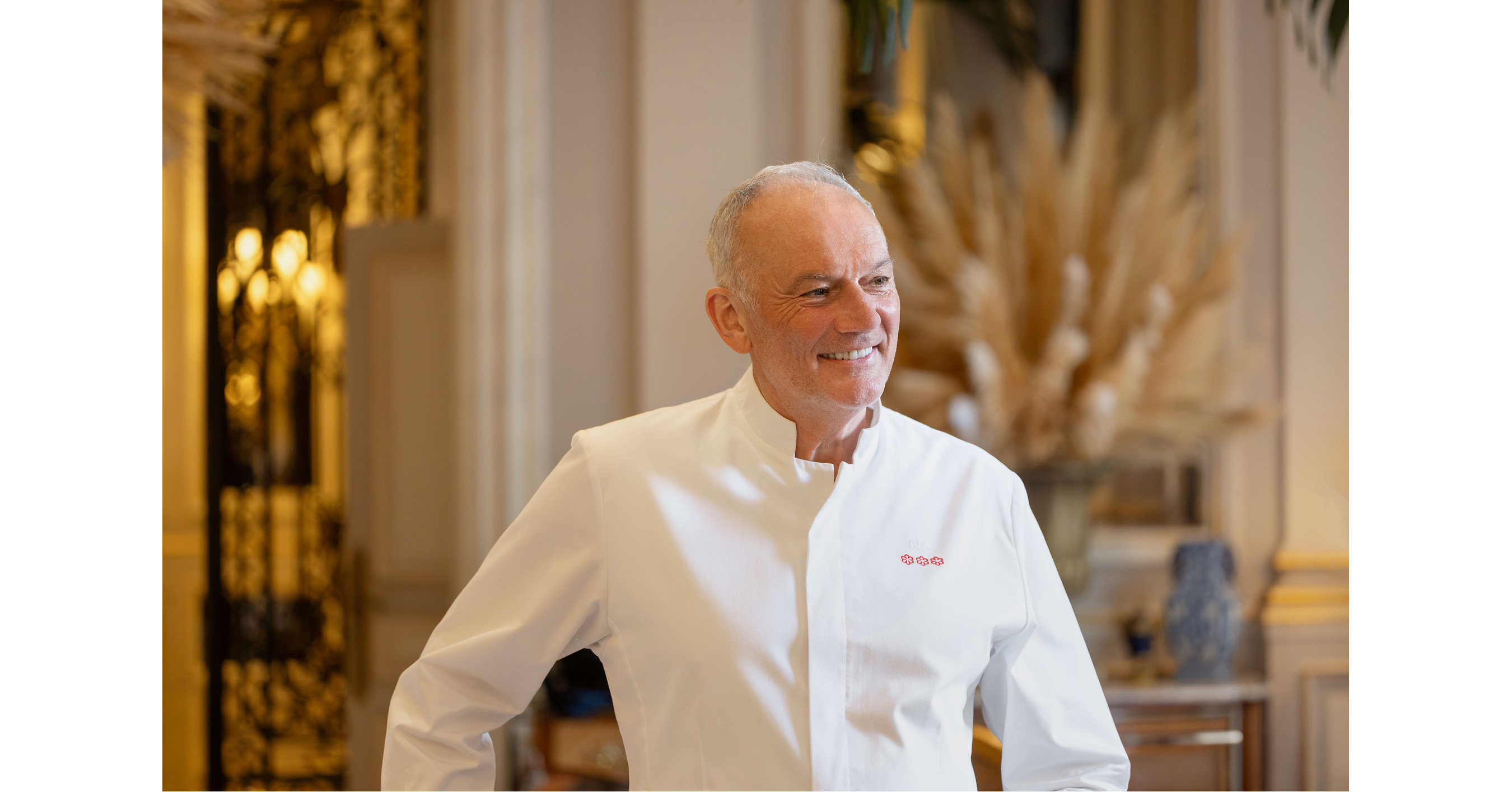
Christian Le Squer will guide Sedna’s French culinary programme through 2027, with two chef-in-residence voyages and training for the ship’s restaurant team.
Four Seasons Yachts has announced a year-long collaboration between the Parisian chef Christian Le Squer and Sedna, the principal fine-dining restaurant aboard Four Seasons I. The agreement, announced on 12 November 2026, will extend throughout 2027 and includes two voyages on which the chef is scheduled to join the ship in person. His responsibilities will encompass the culinary direction of the restaurant, development of menus and training for its chefs at Le Cinq, the three-Michelin-starred restaurant at Four Seasons Hotel George V in Paris. For owners of substantial private yachts, the announcement is interesting not merely because it brings a renowned chef to sea, but because it illustrates how the expertise of an established restaurant can be transferred to a marine hospitality operation without expecting the original culinary team to remain aboard indefinitely.
A different model of guest-chef collaboration
The involvement of an internationally recognised chef in a maritime dining programme can take several forms. Some collaborations centre on a single dinner, during which a visiting chef works with the vessel's regular galley team to present a temporary menu. Others involve the selection of signature dishes that can be reproduced by the resident chefs when their creator is absent. The arrangement announced for Sedna combines the latter approach with a more extensive advisory role and two periods of personal participation. It is therefore relevant to anyone considering how the culinary character of a yacht might be sustained beyond the duration of an individual guest appearance.
Le Squer is expected to guide the development of Sedna's programme during the year, including its future visiting-chef collaborations. The resident chefs will have an opportunity to work alongside his team in Paris. The significance of that arrangement lies in the possibility of transmitting knowledge that is not easily communicated through a written recipe. Professional cooks make continual decisions about the condition of an ingredient, the texture of a preparation and the precise point at which different elements should be assembled. Learning the reasoning behind those decisions may be more valuable to a resident chef than acquiring a fixed list of dishes to reproduce.
The background of a chef from the Breton coast
Le Squer comes from Morbihan in Brittany, a region where the relationship with the Atlantic has contributed substantially to local culinary traditions. His career includes his period at Pavillon Ledoyen in Paris, where the restaurant maintained three Michelin stars for twelve consecutive years, according to Four Seasons. He joined the George V in 2014 and became associated there with a contemporary interpretation of French gastronomy.
The relevance of his background to the announced maritime collaboration is not confined to familiarity with seafood. French restaurant cookery encompasses a demanding set of processes through which ingredients are selected, prepared and arranged in a complete meal. A chef's individual approach can be expressed through the degree of richness in a sauce, the separation or combination of textures and the way the courses are ordered. Le Squer's stated preference for allowing menus to change in response to the quality of available produce is especially interesting in the context of an itinerary that crosses several regions. He describes his approach as more responsive than a rigid schedule of seasonal menus. The ability to alter a preparation when its intended ingredient is no longer satisfactory has practical importance when supplies are obtained in different ports.
Developing a restaurant menu that works at sea
Sedna will offer a tasting menu and individually selectable dishes reflecting the culinary direction of the Parisian chef. The initial announcement does not identify the precise courses or their prices. Travellers interested in the collaboration should therefore understand that the proposed experience will be developed over time rather than assume that a particular menu from Le Cinq will be transferred intact to the vessel.
Designing a menu for service at sea requires consideration of the different conditions under which the galley operates. The availability of suitable ingredients may change towards the end of a voyage; certain preparatory processes need to be completed well in advance of service; and the coordination of refrigeration, storage and deliveries is closely linked to the itinerary. A successful menu therefore needs to account for more than the creativity of its dishes. The responsible chefs must understand which preparations can be adapted to local supplies without losing their defining characteristics and which ingredients require arrangements to ensure continuity. For a yacht owner working with a culinary consultant, the important question is often whether the resulting dishes can be executed consistently by the permanent team, across destinations and during demanding periods of service.
A dining room with a private dimension
The published specifications for Sedna describe accommodation for sixty-six guests inside and forty outside, together with a private dining room for ten. Its emerald-green interior provides a distinctive visual setting for the restaurant. That range of seating arrangements is important because the atmosphere of a meal for a small private group differs considerably from that of a service delivered throughout the main dining room.
An individual group may wish to arrange a different pace of service or discuss dietary preferences before a private dinner. Such arrangements need to be coordinated with the restaurant's wider capacity and the availability of staff. Guests should establish the conditions for reserving the private room and any additional charges directly with the operator. The presence of a room designed for ten does not guarantee that it is available on a particular evening. For private yacht owners, the arrangement provides a useful example of how a dedicated dining room can accommodate intimate occasions within a much larger hospitality environment. Its success will depend not just on the interior design but on the practical organisation of the service and the experience of the team responsible for it.
A winter voyage through the Lesser Antilles
The first of the chef's two planned residencies takes place between 21 and 28 February 2027. The programme identifies Guadeloupe and Anguilla among its destinations and draws attention to the relationship between the culinary traditions of the French and British West Indies. Examples given in the announcement include the Creole cooking of Guadeloupe and lobster and crayfish associated with Anguilla.
These places offer an opportunity to consider how the ingredients of a sailing region can influence the food available on board without treating the local cuisine as merely a collection of exotic additions to an established European menu. Each island has its own history of agriculture, trade, restaurants and domestic cookery. A visiting chef can draw inspiration from that context while preserving the character of the individual meal. Guests with a particular interest in regional food may benefit from arranging complementary shore experiences with local specialists. The precise places visited and the practical availability of excursions should be established from the operator's current voyage itinerary. Weather or operational changes can also affect maritime schedules.
A September return to the Mediterranean
The second residency is scheduled for 12 to 19 September 2027, in the Greek and Turkish waters of the eastern Mediterranean. The announced programme includes Mykonos and Göcek, highlighting the foods of the Cyclades and the Turquoise Coast. The local references include kopanisti cheese, seafood and the olive oil and meze traditions associated with the region.
Late summer provides a different culinary context from a Caribbean winter voyage. The ingredients, the relationship between shore suppliers and the ports, and the habits of guests eating outdoors may all change. The presence of the same consultant on two distinct voyages offers an interesting opportunity to consider the degree to which an individual cooking style can remain recognisable while engaging with quite different regional influences. Four Seasons has not specified whether every dish on the two itineraries will be unique to its respective voyage. A guest interested in a particular culinary encounter should therefore seek the confirmed programme nearer departure. Neither a fixed schedule of personal appearances nor the presence of every named ingredient should be inferred from the broad description of the residency.
Training as a lasting investment in the galley
The planned training of Sedna's chefs at Le Cinq may have a more enduring influence on the ship's restaurant than the two occasions when Le Squer is on board. Training in an established kitchen gives the participating chefs a chance to examine the role of communication, preparation and quality control within an experienced team. They can observe how a complete menu is assembled and how the standard of individual components is maintained through successive tables during a service.
The translation of that experience to a marine environment requires independent judgement. Galley layout, the number of chefs available, the scale of the service and the physical character of the vessel may all differ from those of the shore restaurant. An effective training programme should help the team understand the principles that can be applied in its own working environment. Owners commissioning bespoke culinary programmes should consider whether similar opportunities can be arranged for their permanent chefs. A consultant can help establish a coherent approach, but the people delivering meals throughout an ordinary cruising season need the confidence and authority to make the necessary adjustments themselves.
What the collaboration means for luxury dining at sea
Four Seasons I operates as a commercial luxury passenger vessel, not as an independently chartered private superyacht. Nonetheless, the proposed collaboration provides a useful illustration of the relationship between a recognised shore-based restaurant and a maritime culinary programme. For anyone seeking to maintain a demanding standard of private hospitality, the difference between a celebrated one-off event and the ongoing ability of the galley team is fundamental.
Guests interested in the two announced 2027 voyages should consult Four Seasons Yachts for the latest sailing arrangements, accommodation availability and actual dining conditions. The Michelin stars associated with Le Cinq are distinctions of that Paris restaurant and should not be understood as an award to Sedna. The proposed collaboration has yet to operate throughout its announced year. Its lasting significance will be established by the quality and consistency of the meals, the development of the resident team and the ability of the restaurant to connect its French culinary identity with the changing environment through which the ship travels.
Primary source: Four Seasons Hotels and Resorts, official press release, 12 November 2026.
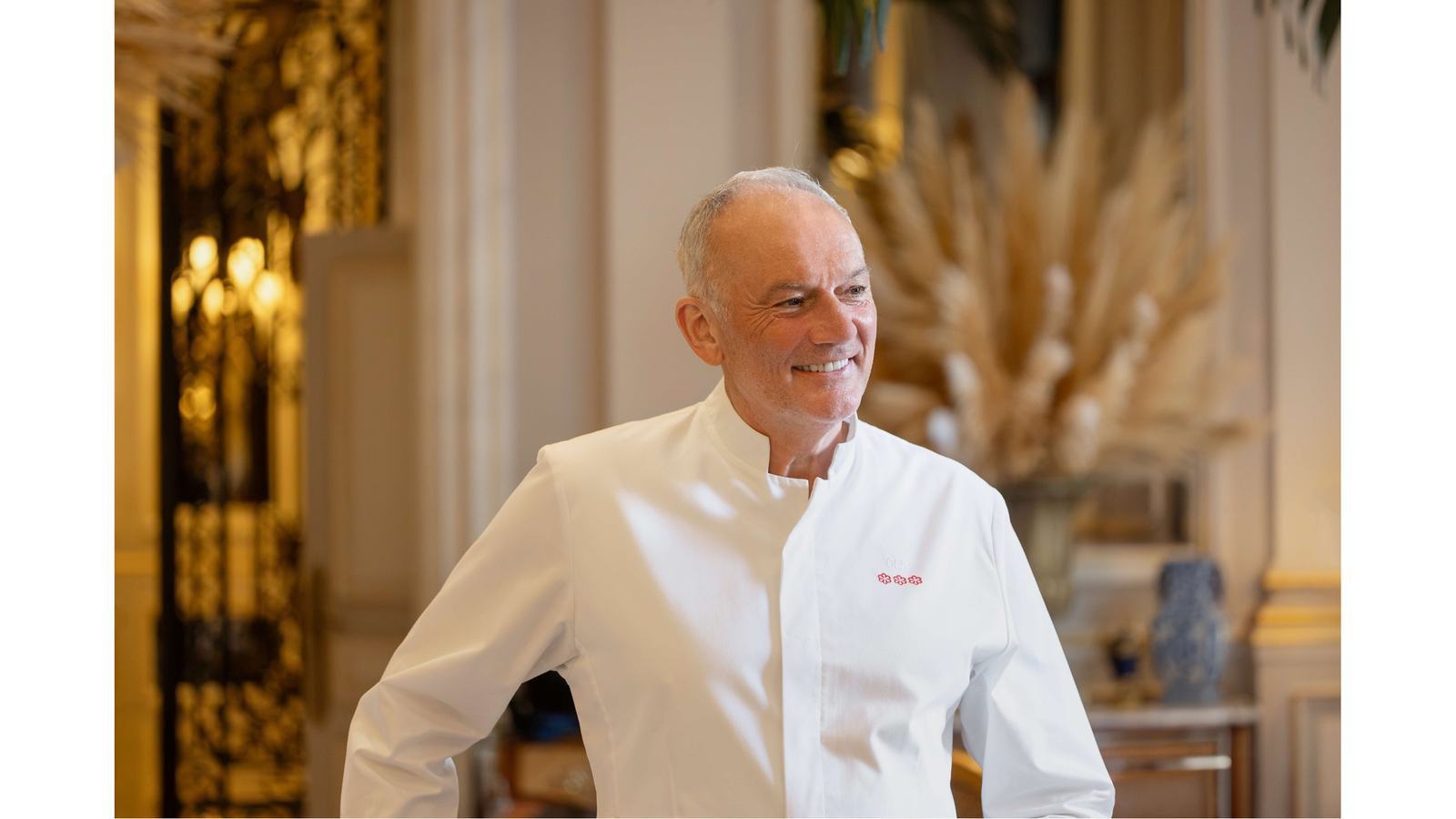
Four Seasons Hotels and Resorts, official press portrait supplied via PR Newswire. Official source.