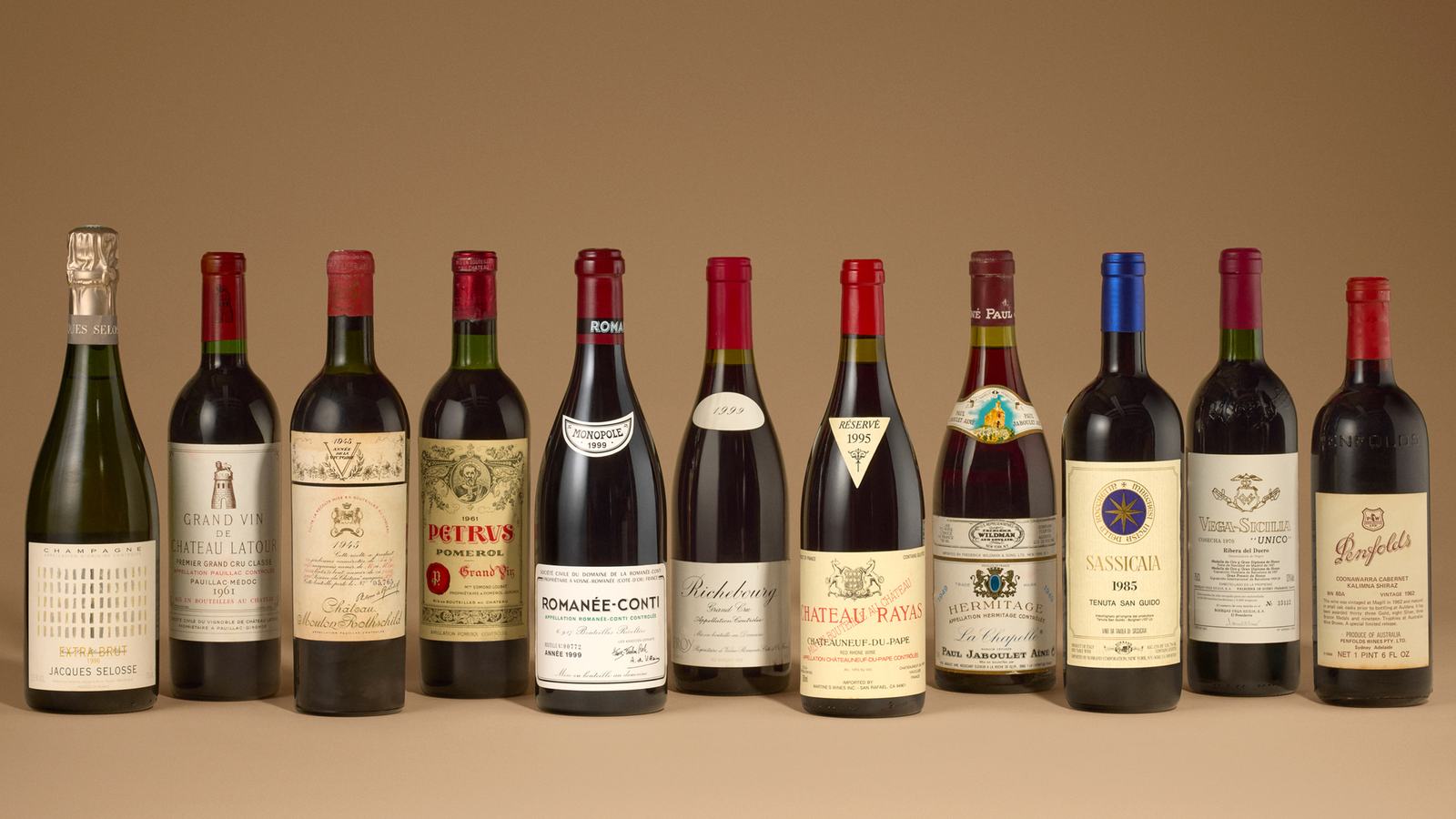
Christie's celebrates 60 years of specialist wine auctions with a meticulously documented American collector's 1,700-plus bottles, offered in New York on 23 October 2026.
Sixty years of wine expertise, one remarkable cellar
Christie's is marking six decades of its dedicated wine department with a New York auction that places provenance and patience at the heart of luxury collecting. The Distinguished Cellar of an American Connoisseur, scheduled for 23 October 2026, brings together more than 1,700 bottles from a collection assembled over several decades and is one of the house's principal anniversary events.
The sale is more than an inventory of famous names. According to Christie's, the collector began buying through the auction house in the 1990s and documented the background of each acquisition with unusual care. Bottles came from celebrated private collections, established commercial cellars and producers themselves, giving many of the wines a traceable story before they ever reached the present sale.
A history beginning in 1766
The business's relationship with fine wine stretches back to its first auction in 1766, when the catalogue included Madeira and claret alongside other possessions. It was not until 1966, however, that Michael Broadbent established a specialist department devoted to the field, laying foundations for modern wine auction scholarship.
Broadbent's practice of systematic tasting notes became a point of reference for collectors. Christie's recalls that he accumulated close to 100,000 records, recording dates, appearance, aroma and flavour. The department's sixtieth anniversary is therefore as much a celebration of expertise and documentation as it is a commercial occasion.
Provenance as the real luxury
Christie's senior wine specialist Chris Munro describes an owner who sought exceptional older vintages and paid attention to their history. At the highest end of the market, provenance is not an optional narrative attached to a bottle. It is part of what collectors use to judge whether a wine has been cared for and whether the account of its ownership can be followed.
For a purchaser, questions about cellar conditions, transfers, labels, closures and the completeness of documentation remain essential. An auction estimate cannot establish what a particular wine will taste like, nor does an immaculate-looking case replace specialist inspection. The value lies in the combination of rarity, historical interest, condition and a credible ownership record.
A 1945 Bordeaux from Château Mouton Rothschild
Among the sale's notable lots is a single bottle of Château Mouton Rothschild 1945, with a presale estimate of US$8,000 to US$11,000. That vintage is particularly associated with the end of the Second World War, and its commemorative label adds a layer of history beyond the wine itself.
Christie's describes the year as one of extraordinary concentration and distinction. Even an important vintage must be approached bottle by bottle, however, because age introduces variation and storage history matters. A buyer is acquiring a rare object that embodies a specific moment in Bordeaux's history, not purchasing a guaranteed tasting experience.
An original case of 1982 Pétrus
The auction also features twelve bottles of Pétrus 1982, estimated at US$38,000 to US$48,000. The house reports that this case was acquired on late release and shipped directly from Bordeaux to its owner, remaining within the same cellar since. Such continuity is especially notable for a sought-after vintage of a wine that is often traded repeatedly.
A full case of mature Pétrus can attract attention for its completeness as well as the individual bottles. The original packaging and ownership story help distinguish it from dispersed examples of the same vintage. They do not eliminate the need to confirm physical condition, but they contribute materially to the collection's appeal.
Three bottles from a celebrated Burgundy vineyard
A trio of Domaine de la Romanée-Conti Romanée-Conti 1999 carries an estimate of US$60,000 to US$80,000. The vineyard's output is exceptionally limited, and Christie's notes that fewer than 7,000 bottles were produced in that vintage. The set is offered in its original wooden case.
Romanée-Conti illustrates another dimension of the fine-wine market: the scale of production relative to global demand. With only a small area devoted to the vineyard's Pinot Noir, collectors may regard a complete group of bottles as a rare opportunity to understand a legendary site through one specific year. A high estimate reflects market interest, not a promise of future appreciation.
White Burgundy and northern Rhône
The collection's range extends beyond the best-known Bordeaux names. Twelve bottles of Domaine Leflaive Chevalier-Montrachet 1989 are estimated at US$24,000 to US$35,000, an example of how distinguished white Burgundy can occupy the same collecting conversation as mature red wine. Christie's highlights the rarity of finding cases of this age in such a condition.
A six-bottle case of Jean-Louis Chave Ermitage Cuvée Cathelin 1991 is estimated at US$60,000 to US$80,000. The producer's limited cuvée is associated with a particularly small production, and Christie's notes the unusual survival of multiple bottles in their original wooden case. Here the appeal is intensified by scarcity and the evidence of coordinated storage.
A landmark Australian vintage
The sale is not exclusively French. A single bottle of Penfolds Grange 1966 is estimated at US$700 to US$900, connecting the collection with Australia's contribution to international fine-wine culture. The year also coincides with the founding of Christie's specialist department, giving the bottle a symbolic significance within the anniversary programme.
That relatively modest estimate alongside some exceptionally costly French lots makes a useful point: the history of an object, its place in a collection and its absolute market price are separate considerations. For a dedicated enthusiast, the chance to study a historically interesting bottle may carry a personal significance not captured by a headline figure.
The superyacht owner's cellar dilemma
Collectors who spend long periods aboard superyachts face practical decisions once fine wine becomes part of life at sea. A valuable bottle is not ordinary provisions. Exposure to heat, changes in temperature, vibration and movement must be considered when planning transport and storage, especially for old or delicate vintages with an uncertain ability to withstand disruption.
The sensible approach for a significant collection is to distinguish the permanent, professionally managed cellar from a carefully chosen selection taken aboard for consumption. On a yacht above 24 metres, bespoke refrigeration and service arrangements can support exceptional dining, but size alone is no guarantee of suitable storage. Specialists should assess the actual system and handling arrangements before rare bottles are moved.
An auction defined by the collector's judgement
Christie's says the cellar once contained considerably more wine and that menus from the owner's dinners reveal how the collection was enjoyed rather than merely held. One historical meal reportedly paired ten courses with ten French wines from 1959, a detail that turns an abstract list of bottles into a picture of connoisseurship expressed through hospitality.
As the New York anniversary sale takes place on 23 October, presale estimates remain just that: indicative ranges, not achieved prices. The collection's wider lesson is enduring. Whether fine wine is enjoyed ashore or served during a private superyacht voyage, genuine luxury rests on choosing carefully, preserving provenance and understanding when a remarkable bottle is meant to be opened.