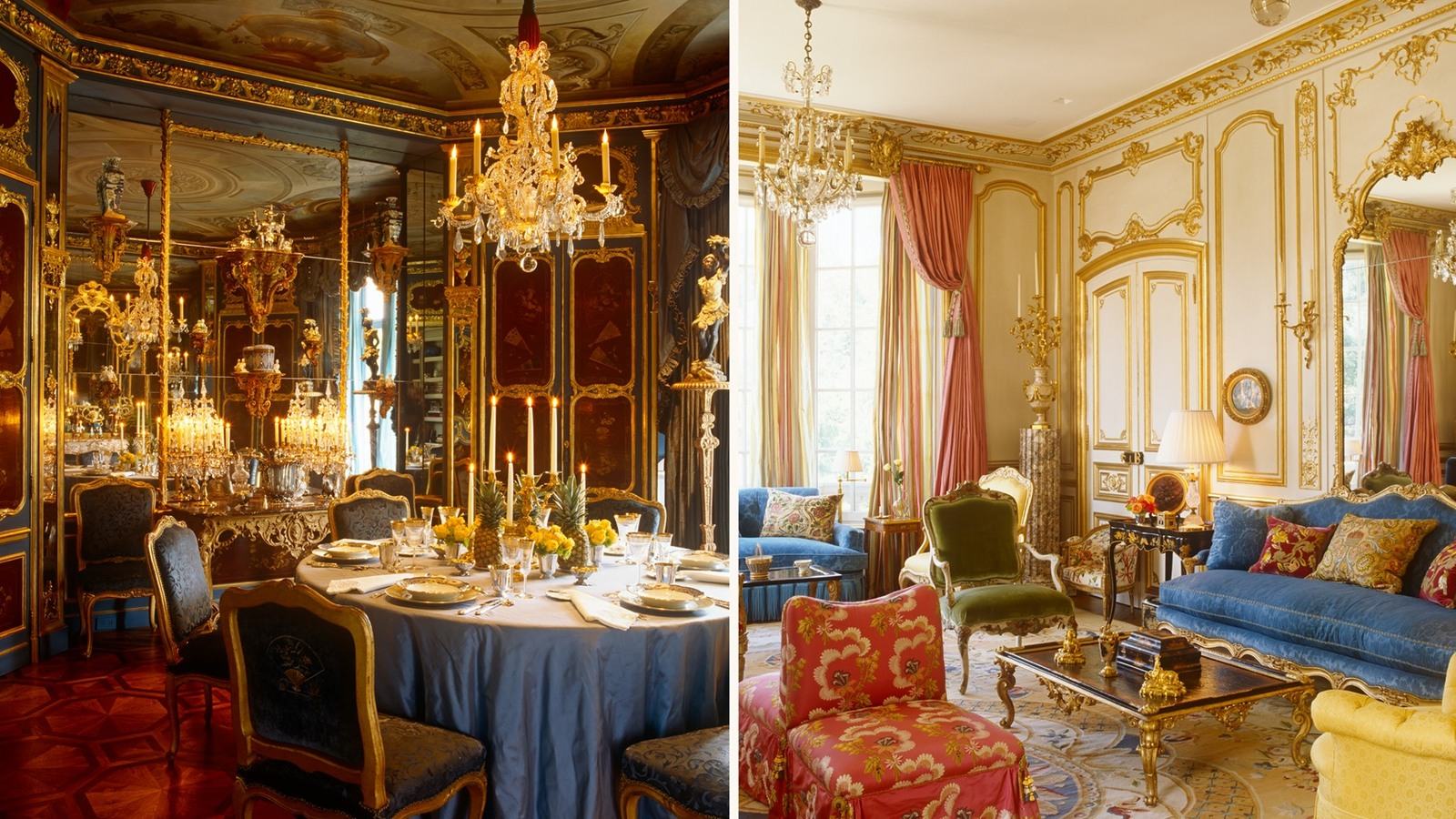
Christie's 1–13 October online sale opens an American home's French-inspired interiors to collectors, with antique furniture, giltwood and craftsmanship chosen by designer Brian McCarthy.
An American house built around French decorative traditions
Christie's is offering more than 100 objects from a remarkable American residence conceived as a French hôtel particulier by New York interior designer Brian J. McCarthy. The online sale runs from 1 to 13 October 2026 and takes a deeply personal design commission into the collecting market, revealing the historical furniture and decorative arts assembled over many years by the designer and his clients.
McCarthy's goal was not to fill a modern interior with period-style reproductions, but to create a house whose rooms felt genuinely rooted in French decorative history. The project began roughly two decades ago and developed through numerous visits to European dealers, workshops and important collections. Its public presentation offers a rare view of how collecting, architecture and craftsmanship can form one coherent private environment.
A collection built over more than 20 journeys
The designer and his clients travelled together through Paris, Amsterdam, Antwerp, Rome, Florence and other centres of the European antiques trade, seeking objects that suited their emerging vision. The acquisition process extended beyond a conventional list of furniture for each room: they sometimes purchased objects because of their quality and historical character before deciding exactly where they would belong.
Highlights in the Christie's catalogue include an eighteenth-century giltwood canapé, ornate lighting, tables, carved seating and antique decorative objects. A North European ormolu four-light bouillotte lamp from around 1840 carries a published estimate of $5,000 to $8,000, while a circa-1750 giltwood canapé is estimated at $8,000 to $12,000. These are pre-sale estimates, not confirmed hammer prices or guaranteed transaction values.
Why the panelling mattered as much as furniture
Fourteen rooms were fitted with panels produced through the Paris workshop Féau Boiseries, working with director Guillaume Féau. The designer also collaborated with French gilder Jacques Goujon and Atelier Mériguet-Carrère to achieve the intended colour, gilding and surface treatments. This kind of work sits at the meeting point of architecture and applied art: the surrounding room is itself a major commission rather than a neutral background for objects.
The interiors range from a white-and-gold salon to an octagonal dining room finished in deep Prussian blue. Chinese-inspired red lacquer details, a ceiling painted in France and a seventeenth-century rock-crystal chandelier contributed to the atmosphere. Such combinations illustrate the long tradition of French houses that placed contemporary craftsmanship alongside antiques from different historical periods.
What a serious collector should ask before bidding
Private collectors interested in furniture of this type should consider provenance, condition, original materials, past restoration and the extent to which an object has been altered for a particular room. Measurements become especially important for monumental furniture, while fragile marquetry, gilding and old surface finishes need carefully planned shipping and installation. A printed catalogue photograph alone cannot establish structural condition.
The move from a complete residential scheme to individual auction lots also changes how objects are appreciated. Pieces that were harmonious within McCarthy's original design may be used in entirely different interiors by future owners. Buyers should request detailed condition reports and examine what alterations would be needed to accommodate objects in another residence, gallery or onboard environment.
Craftsmanship as the enduring luxury
For owners of major homes and superyachts, the story carries a broader lesson about the meaning of bespoke luxury. Exceptional results often come from sustained relationships among client, designer, specialist workshops and dealers, not just from an expensive materials schedule. On a yacht, similar collaboration is needed among joiners, metalworkers, upholstery teams and marine engineers, even if the historic furnishings themselves would require special conservation measures at sea.
Christie's article is illustrated here with its original interior photography by Fritz von der Schulenburg, showing the American hôtel particulier that inspired the sale. The house's historically furnished rooms are genuine photographs, not generative renderings, and no claim is made that any auction item has already sold before the closing date.