Christie's assembles 40 exceptional watches for its 25 November Hong Kong evening sale, including a pink-gold Patek Philippe Ref. 1518 estimated at HK$16m–32m.
Luxury collecting, 12 November 2026. The Iconic 40 is a forthcoming 25 November evening sale, not a completed auction; estimates are not achieved prices. This article focuses on horological quality and collecting risk, distinct from the broader Shanghai luxury sales.
Forty watches for forty years in Asia Christie's has introduced the Iconic 40 Watches Evening Sale, a 25 November 2026 auction in Hong Kong built around exactly forty exceptional timepieces. The format marks four decades since the auction house established its presence in Asia and seeks to distinguish an intentionally narrow selection from larger catalogue sales. Alex Bigler, the house's senior international specialist and head of collections for watches, has positioned the sale around historical significance, originality and the sustained influence of particular references. For wealthy collectors, the significance lies less in a fixed number of lots than in the discipline behind selection. A tightly edited sale can simplify viewing but may concentrate competitive bidding on recognised trophies. The catalogue should be treated as an invitation to independent study rather than evidence that every watch will appreciate or that estimates constitute a guarantee of value.
The Patek Philippe 1518 sets a historical benchmark A pink-gold Patek Philippe reference 1518 is among the headline lots, with a published estimate of HK$16 million to HK$32 million. Introduced in 1941, the reference was the first serially produced perpetual-calendar chronograph wristwatch, combining two demanding complications in a form intended for regular wearing. Christie's describes production of 281 examples across the metals used, with fewer than sixty pink-gold examples known to the market. The watch offered in Hong Kong has an unusually rare detachable pink-gold Patek Philippe bracelet. The importance of that accessory should not be reduced to its metal value: originality and the relationship between watch and bracelet can influence how specialists understand the object's completeness. A serious bidder should obtain written clarification of the watch's components and documentation before assuming every detail is original to manufacture.
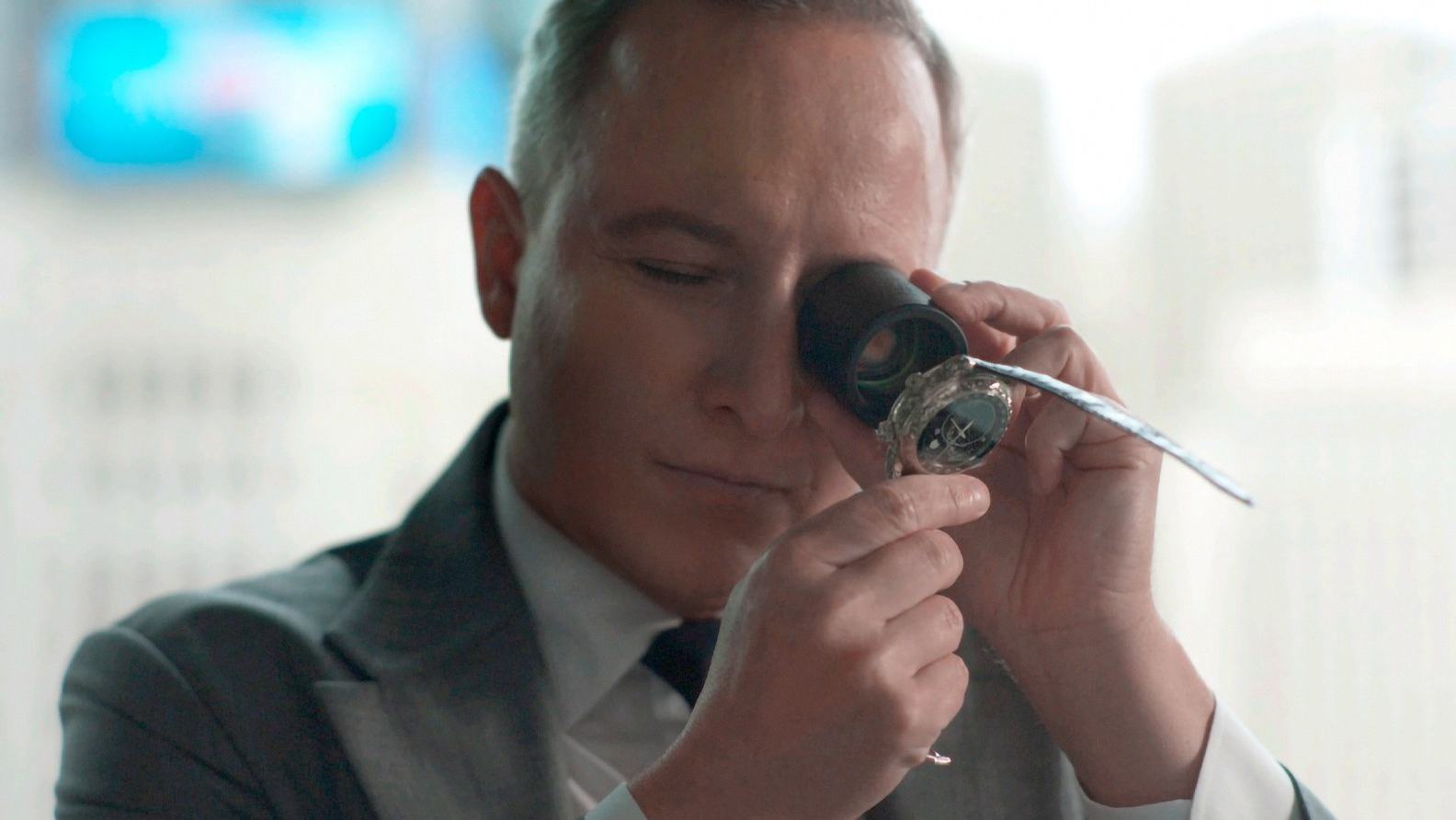
Why condition can outweigh a glamorous provenance An historic reference number alone cannot tell the whole story of a vintage watch. The dial, hands, case proportions, hallmarks, movement, service history and any replacement components all contribute to the object being offered. Christie’s emphasises the preservation of the 1518 dial and case, but an auction catalogue is a commercial description rather than an independent mechanical warranty. A potential purchaser can request condition reports and seek expert interpretation of photographs, serial information and service documentation. Restorations are not invariably disqualifying, yet their effect on desirability depends on the rarity of the original parts and collectors' changing standards. A highly polished case may look attractive to a casual buyer while losing definition prized by specialists. For a collection intended to endure across generations, careful authentication is as important as the excitement of securing a celebrated reference.
Stainless steel can become rarer than precious metal Another featured watch is the Patek Philippe reference 1579A, a stainless-steel chronograph distinguished by its angular, so-called spider lugs. Its estimate is HK$5 million to HK$10 million. The attraction illustrates a paradox in advanced watch collecting: material that was less expensive when a watch was produced can become exceptionally valuable if few examples survive. This is not a universal rule that steel watches are better investments than gold. It reflects scarcity within a particular reference, together with condition, originality and the design's place in watchmaking history. In the vintage market, aesthetic balance and legibility matter alongside statistics. A watch that appears understated may provoke intense interest among collectors who understand its production context. The important question is not what the metal costs, but how the specimen compares with verified peers.
Independent watchmaking enters the conversation The sale also recognises independent watchmakers, including F.P. Journe, whose work appeals to collectors looking beyond the established great maisons. Independent horology offers opportunities to study distinctive mechanical approaches, lower production runs and strong individual design philosophies. It also requires different due diligence. Buyers should consider the maker's ongoing service capacity, availability of parts and whether specialist expertise is likely to remain accessible decades later. Limited production is not the same as guaranteed scarcity if the market has little sustained interest in the specific model. Equally, the reputation of a famous watchmaker should not become a substitute for verifying a particular example. An exceptional private watch collection may include both foundational vintage references and innovative contemporary pieces, but the reasoning for each acquisition should remain clear.
Collection building is not the same as trend chasing Bigler's comments in the auction preview emphasise the growth of knowledgeable Asian collecting and the importance of a coherent long-term vision. That is a useful counterweight to the language of record prices. A collection can be structured around historical breakthroughs, a single manufacture, a period of technical experimentation, exceptional dials or the careers of independent creators. A collector who understands the rationale can evaluate a tempting new lot against existing holdings rather than buy merely because an estimate is large. It is also worth recording why each object was acquired and how it fits the collection. Such notes provide context for future curators, insurers and heirs. The strongest collecting decisions combine pleasure with research rather than relying on the assumption that every headline auction watch is a financial asset with predictable returns.
Auction estimates leave out essential costs The HK$16 million to HK$32 million bracket for the 1518 and HK$5 million to HK$10 million for the 1579A are estimates, not hammer prices and not the total eventual invoice. A successful buyer may owe a buyer's premium and relevant taxes, together with shipping, insurance and import costs. Different bidding channels and jurisdictions can alter obligations. Currency conversion also introduces risk for international clients whose assets or liabilities are denominated elsewhere. A high-net-worth purchaser should determine the relevant conditions of sale and calculate an all-in ceiling before taking part. Auction excitement can encourage decisions beyond an initial budget, particularly when a rare watch attracts several highly committed bidders. A disciplined ceiling does not lessen the pleasure of collecting; it allows that pleasure to continue without an unnecessarily complicated post-sale surprise.
Authentication should continue after acquisition A successful bid is the beginning of stewardship rather than the end of research. Mechanical watches require appropriate servicing, careful storage and insurance documentation. Excessive intervention can harm historical originality, while insufficient maintenance can jeopardise the movement or expose fragile components to damage. An owner should determine whether the watch is appropriate for daily wearing, what water resistance can safely be assumed and which specialists are qualified to service it. The procedures for a complex vintage perpetual-calendar chronograph differ from those of a contemporary sports watch. High-value pieces are also susceptible to theft, loss and damage in transit. Private collections move between residences, vaults, exhibitions and sometimes yachts or aircraft. Clear custody records and agreed transport procedures are therefore essential.
Hong Kong's role has changed since 1986 Christie's anniversary framing recalls the auction house's first Asian activities in Hong Kong in 1986. Four decades later, the region's collecting community encompasses serious specialists with access to international markets and technical expertise. It would be simplistic to describe all Asian collectors as sharing identical tastes or motivations. The audience includes individuals who build historically focused collections and others who are interested in design, craft or contemporary watchmakers. Digital catalogues and international bidding widen participation, but personal inspection remains valuable for rare mechanical objects. The Hong Kong sale is therefore both a commercial event and an illustration of a wider transition from enthusiasm for luxury brands toward detailed connoisseurship of individual references. Whether that pattern continues should be judged from sustained collecting activity rather than one auction's eventual total.
Why a compact sale can be demanding for bidders Forty chosen pieces may sound easier to research than hundreds of lots, yet prominent references invite particularly close scrutiny. Specialists may spend substantial time comparing serials, dial configurations and known examples. Buyers should distinguish rarity confirmed by archival documentation from scarcity described only in promotional language. They should ask whether an estimate reflects a range of comparable sales or a distinctive feature for which few clear precedents exist. In exceptional cases, a bracelet, dial or provenance can make one watch unlike any routinely traded counterpart. This creates opportunities for passionate collectors but limits the usefulness of simple price-per-feature comparisons. A collector who wants a representative example of a reference and one who seeks the finest available specimen may rationally bid at very different levels.
What is confirmed before the sale As of 12 November 2026, Christie's has announced a forty-lot Iconic 40 Watches Evening Sale in Hong Kong on 25 November. The highlights include the pink-gold Patek Philippe 1518 with bracelet, estimated at HK$16 million to HK$32 million, and the stainless-steel 1579A, estimated at HK$5 million to HK$10 million. The preview also highlights the increasing status of independent watchmaking and the importance of documented preservation. No winning bids or final sale total can yet be reported. Collectors should consult the final catalogue and conditions of sale for individual lot particulars, provenance and eligibility to bid. For the ultra-wealthy collector, the attraction is not simply the prospect of a public trophy but the chance to place carefully researched horological history within a private collection.
Original source: Christie's, 11 November 2026, Defining excellence: inside The Iconic 40 Watches Evening Sale.