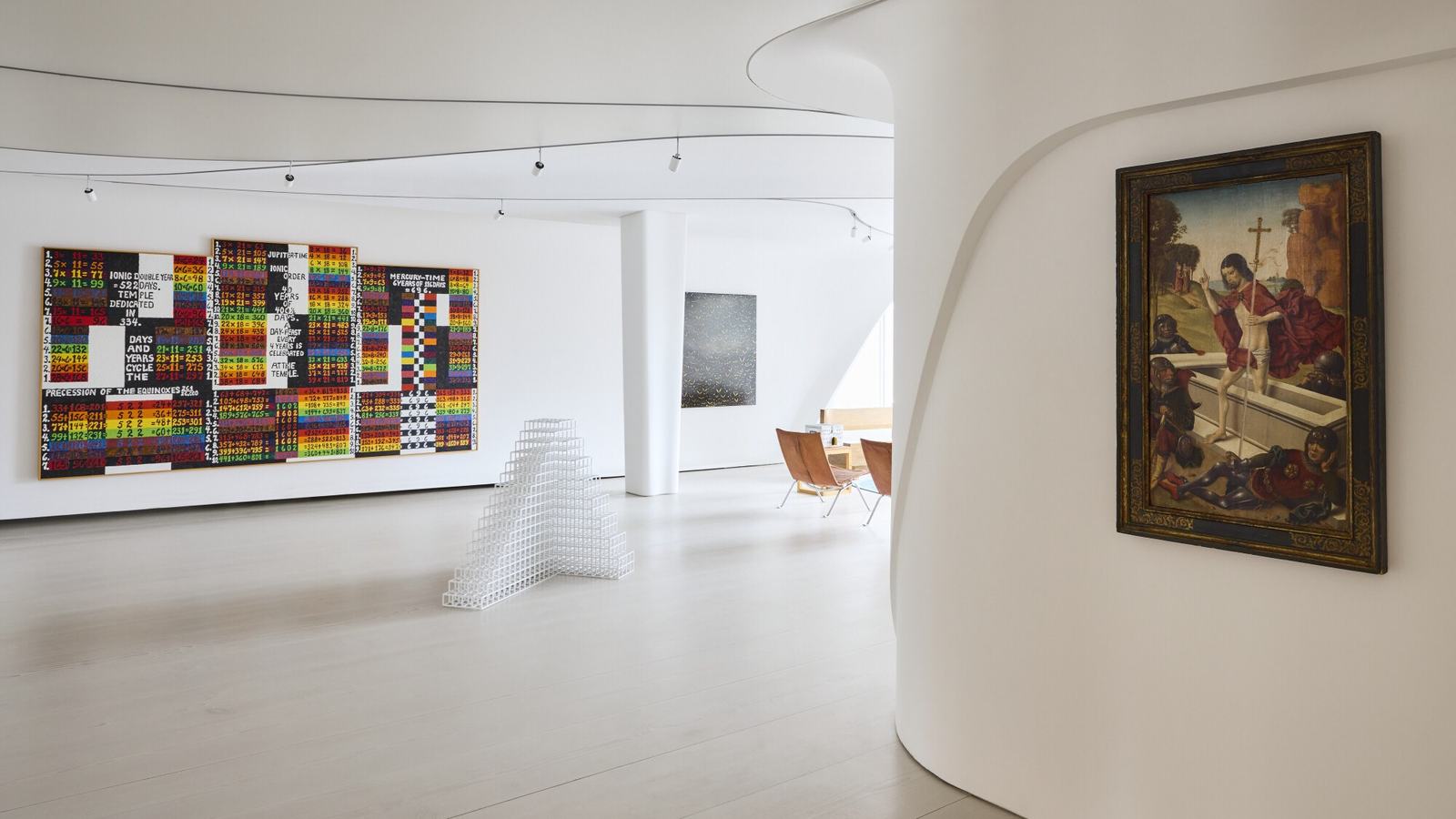
Christie's announces a multi-sale programme for works from collector Mickey Cartin, spanning Old Masters, contemporary art, books and design through July 2027.
A collection that refuses narrow categories Christie's is preparing a series of auctions devoted to works from the collection of Mickey Cartin, a collector whose interests range from Old Master paintings and rare printed books to contemporary and Outsider art. The announcement, published on 27 October 2026, gives the programme the title An Alchemy of Ideas and describes more than ten sales beginning in New York in November and concluding in London in July 2027. Cartin spent around four decades building relationships with artists and assembling objects that did not fit neatly into a single stylistic category. For collectors used to dividing their holdings into paintings, sculpture, books and design, the interest lies in seeing how one person's visual and intellectual interests can connect very different periods.
New York sales open the programme The first announced offerings are scheduled for 18 November in the New York Impressionist and Modern Art Day Sale, followed by pieces in the Post-War and Contemporary Art Day Sale on 20 November. Christie’s identifies works by Giorgio de Chirico, Walton Ford, Alfred Jensen and Roman Opałka among the material expected in the early stages. These are examples of the planned programme, not a complete published inventory of every lot across the subsequent months. Prospective buyers should examine the actual auction catalogues once available, especially where a work's date, medium or estimate matters. The announcement supports the sequence of sales, but the precise composition of each session may evolve before bidding.
More than ten auctions create a different kind of dispersal A single-owner collection is sometimes sold in one evening intended to generate intense attention around a coherent group of objects. Christie's has instead chosen a programme distributed across numerous sales and categories, ending in July 2027. That structure allows works to be offered within specialist contexts where knowledgeable buyers can compare them with other objects in the same discipline. It also means collectors following the Cartin material must pay attention to more than one catalogue and auction date. A photograph or drawing offered within a wider sale may not carry the same publicity as a trophy painting, but it can still be integral to the original collector's vision.
Why early printed books belong in the story Among Cartin's interests are early books and manuscripts, objects that invite a different kind of expertise from the evaluation of contemporary paintings. The quality of a rare book may depend on its edition, state, binding, completeness, provenance and history of ownership. A compelling subject does not establish that every copy is equally rare or desirable. In a cross-category collection, such books can reveal the collector's curiosity about the transmission of ideas through text as well as images. This breadth distinguishes the programme from a straightforward sale of modern art. Yet the press announcement does not identify all future book lots, so it would be premature to provide specific estimates or promise particular titles.
Outsider art challenges familiar collecting hierarchies Cartin also collected work commonly placed within the Outsider Art category, alongside art recognised by mainstream museums and commercial galleries. The term covers diverse practices and should not imply that the artists are all similar or share the same background. In the context of the collection, the interest is the owner's willingness to make judgments outside conventional prestige hierarchies. That approach may appeal to collectors who want their holdings to express personal conviction rather than simply follow prices. It also requires careful research: authenticity, artist attribution, materials and conservation concerns remain important, regardless of whether a work belongs to a well-established art-market category.
Contemporary art is represented by lasting relationships Christie's describes Cartin's connections with artists including Sol LeWitt, Walton Ford, Charles LeDray and Spencer Finch, whom he encountered and supported over the years. Such relationships can provide a rich history for an artwork, although friendship with an artist does not replace normal documentation of provenance or condition. A collector who follows an artist's practice over time may understand details that are difficult to capture in a brief catalogue entry. Auction specialists can help present that context, but buyers should distinguish recorded facts from recollections. The personal story is an asset when it is properly documented, not a substitute for the evidence establishing what the object is.
The significance of Giorgio de Chirico and Alfred Jensen Christie's identifies de Chirico and Jensen among the named artists in the opening New York offerings. Their inclusion demonstrates the collection's interest in distinctive visual languages rather than one dominant style. A de Chirico work may be discussed through the history of metaphysical painting, while Jensen's approach to pattern and structure invites different questions. These interpretive connections are useful background, but the specific works must be assessed by their catalogued date, medium, condition and provenance. Collectors should not assume that every work by a famous artist has an identical place in the artist's development or commands a comparable price. The discipline of looking closely remains essential.
The home itself offers part of the context The press imagery shows Cartin's residence containing works by artists of different periods, including Sol LeWitt and Alfred Jensen. A collection displayed in a home can create relationships among objects that disappear when each is placed on a separate auction page. Scale, light, furniture and the position of works relative to one another influence how a collector experiences them daily. Auction photographs can preserve a record of those arrangements but cannot reproduce the original setting in full. For buyers building their own collections, the domestic context is instructive. It raises a question beyond acquisition: how will an object interact with other works, architectural space and the people who live with it?
Personal conviction versus market fashion Christie's positions Cartin as a collector guided by curiosity and independent judgment. That account is promotional, but it points toward a meaningful distinction in high-end collecting. Some owners pursue works identified as fashionable by market commentators, while others follow a subject or artist for decades, including periods when little public attention exists. Both approaches can lead to valuable holdings, and neither guarantees financial success. The enduring value of an independent collection may lie in its documentation and intellectual coherence, not simply in a later sale total. As individual lots are auctioned, commercial results will provide one measure of demand but not a comprehensive verdict on Cartin's choices.
Provenance and condition remain individual questions The description of a celebrated single-owner collection can create a sense that every object must be exceptional. Serious collectors must still examine each work separately. Paintings may have restoration histories, works on paper can be sensitive to light and humidity, and mixed-media objects can involve complicated conservation requirements. Provenance documents, exhibition histories and scholarly references should be checked against the catalogue. A compelling collector narrative may enhance interest but does not remove these responsibilities. Where art is intended for a yacht or a coastal residence, further practical considerations arise, including vibration, environmental controls and insurance. Not every material is suitable for every display environment.
The programme stretches across three cities The wider sale schedule is expected to include New York, Paris and London, with the final stage planned for July 2027. Spreading the collection internationally offers access to different specialist markets, although it does not prove that any one city will deliver higher prices. Buyers considering works in multiple jurisdictions should understand import duties, export restrictions, shipping and insurance before participating. Some objects, particularly older cultural material, may require specific documents or have restrictions that affect international movement. Auction houses can explain their procedures, but individual buyers should obtain independent advice when their intended destination creates legal or logistical complexity.
A collection is more than its headline artists High-profile names may draw initial attention, but the most revealing objects in a private collection are not always the most expensive. Works by less familiar artists, unusual books or historical drawings can demonstrate the depth of a collector's interests. That is especially true when collecting has occurred over forty years, as Christie's describes in Cartin's case. An auction dispersal can make those objects visible to new owners and researchers, while also separating the works from the relationships that originally brought them together. Detailed cataloguing is therefore part of the cultural legacy of a sale, beyond the commercial process of assigning estimates and securing bids.
What has been announced and what remains unknown The verified news is the forthcoming multi-sale programme, the collector's cross-category interests, the named opening dates in November and the planned July 2027 conclusion. Christie's does not provide a confirmed aggregate sale total in the initial announcement, and no result can be stated before the auctions take place. A reader should not interpret the phrase legendary collection as an independently verified valuation. The appropriate editorial approach is to document the structure of the programme and explain why its combination of art, books and design is unusual. Further coverage can examine specific objects and achieved prices once catalogues and results are available.
The lesson for owners building enduring collections Mickey Cartin's example is relevant to yacht owners, art patrons and other private collectors because it illustrates a collection shaped by a continuing intellectual conversation rather than by one purchase category. A superyacht may contain significant artworks, but the decision about what to acquire should consider the owner's interests, the object's fragility and the context in which it will be displayed. The forthcoming Christie's sales may allow new collectors to participate in parts of that vision. Whether those buyers seek paintings, drawings or rare books, the best approach combines enthusiasm with research and responsible stewardship. An exceptional collection often reflects the quality of questions its owner asks over many years.
**Primary source:** Christie's press announcement, 27 October 2026. Official Christie's collection photograph is credited to the auction house. The auctions are scheduled events; results, estimates and particular consignments beyond the source are not invented.
Primary source: Christie's Press Centre.
Photo: Christie's Images Limited, official Mickey Cartin Collection press gallery, October 2026. Official press photograph.

Source
Christie's Press Centre