Christie's highlights rare medieval and Renaissance chests and credenzas, explaining carving, ironwork, authenticity and the scarcity of unaltered historic furniture.
The appeal of furniture that predates the modern house
A new collecting guide from Christie's turns attention to the extraordinary survival of Gothic and Renaissance furniture, with specialist Peter Hall explaining how early European craftsmanship differs from the period styles that followed. Published on 2 October 2026, the article accompanies a concentration of rare furniture from the collection of New York dealer Maurice Margules, presented during Christie's October decorative-arts sales.
Unlike furniture made to fit modern floor plans, medieval chests, cupboards and display pieces often drew their visual language from ecclesiastical architecture. Their carved tracery, pointed arches and dramatic iron fittings carry evidence of the workshops, tastes and social rituals of the societies that commissioned them. Original examples are scarce in private circulation, making attribution and condition especially significant.
Gothic carving echoed the architecture of cathedrals
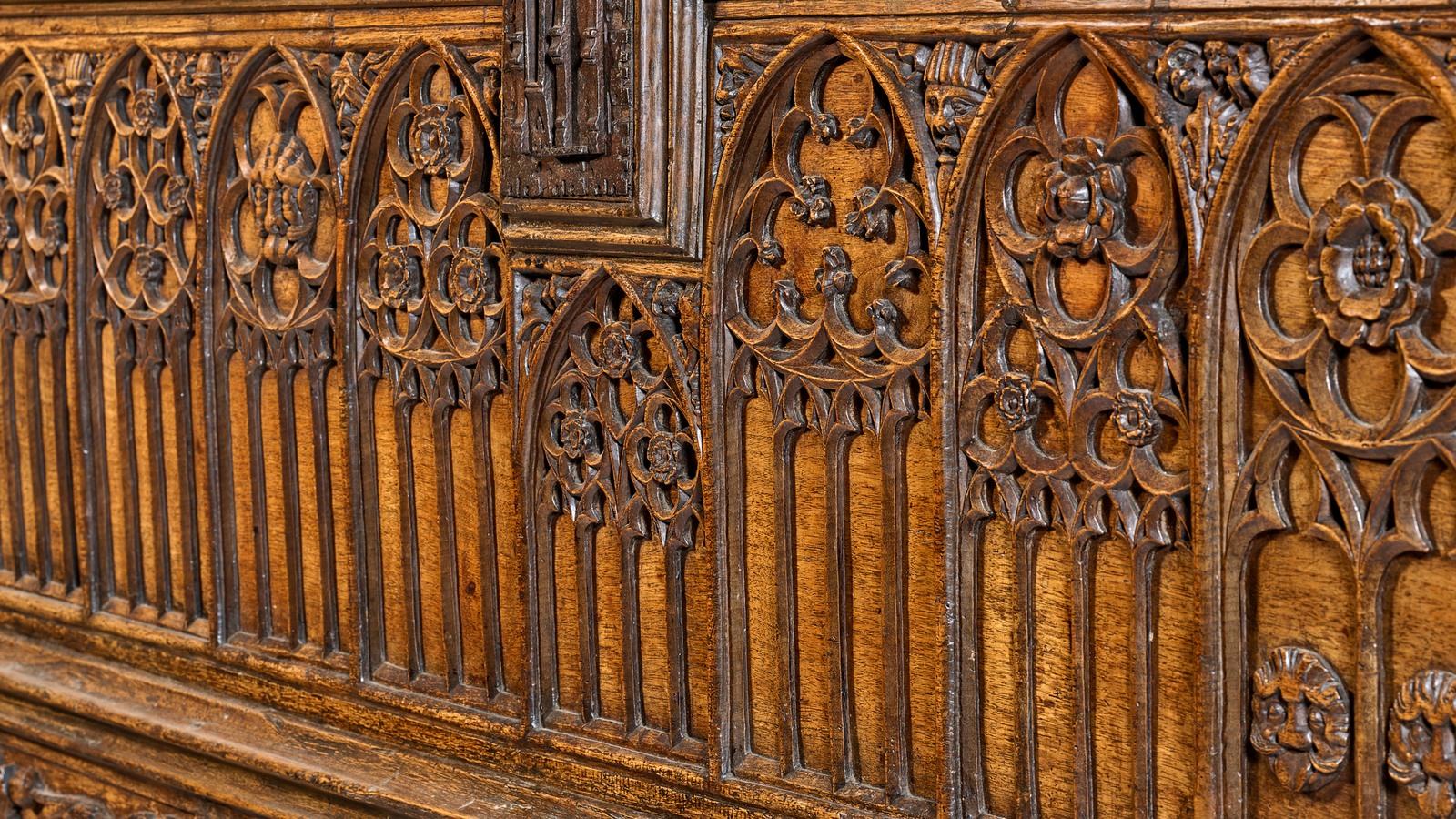
By the fourteenth century the Gothic style had become a major international language of European architecture and applied arts. Joiners and woodcarvers created furniture with miniature versions of church arches, pinnacles and flowerlike ornament. A substantial chest might resemble a small architectural façade, its carved front divided into panels containing repeated arches and tracery.
Christie's identifies a French Gothic walnut coffre d'apparat from circa 1475–1500, estimated at $10,000 to $20,000, among the notable objects in the current sale. The estimate concerns that particular lot, not a typical market price for all Gothic furniture. Age, completeness, materials and past interventions can produce enormous variation even between objects of broadly similar size.
Renaissance decoration introduced a different world
As classical art and architecture became increasingly influential in sixteenth-century Europe, furniture makers introduced acanthus leaves, masks, sphinxes, human figures and other designs inspired by antiquity. The framework of a chest or cupboard could remain recognisably similar while the surface carving took a radically different direction. Engravings helped distribute these decorative motifs across countries and workshops.
An exceptional Italian Renaissance walnut credenza in the Christie's selection measures more than four metres across and was probably made in Tuscany during the second half of the sixteenth century. Such scale suggests an object closely tied to the architecture and ceremonial life of its original home. A future owner would need to consider careful access planning and preservation as well as the aesthetic possibilities.
Locks and repairs may reveal the object's history
Christie's describes how medieval ironwork was frequently designed and decorated as carefully as the timber itself. Some locks display elaborate pierced patterns or sculptural features, while hinges and straps can help specialists understand where and when an object was made. Removing or modernising original hardware can therefore diminish historical evidence even when it appears to make the furniture easier to use.
Few wooden objects survive five centuries entirely untouched. Many were repaired, moved or repurposed long before they reached today's market, and some nineteenth-century revival pieces imitate medieval forms. Prospective collectors should ask which elements are demonstrably original, where later parts have been added and how the attribution has been supported. Specialist inspection is essential before buying a high-value piece.
Historic craftsmanship in contemporary luxury interiors
The enduring attraction of Gothic and Renaissance furniture is its ability to serve as a room's central object without requiring a fully period setting. A carefully placed coffer can sit within contemporary architecture as a powerful counterpoint to modern materials. The challenge is to protect the piece from excessive sunlight, unstable humidity, mechanical damage and interventions that would reduce its integrity.
For the superyacht world, the lesson is less about putting sixteenth-century armoires aboard a moving vessel than about appreciating the knowledge behind carved timber, forged metal and one-off craftsmanship. This article uses Christie's original photograph of intricately carved Gothic furniture from its collector guide, not an invented antique or an unrelated decorative image.