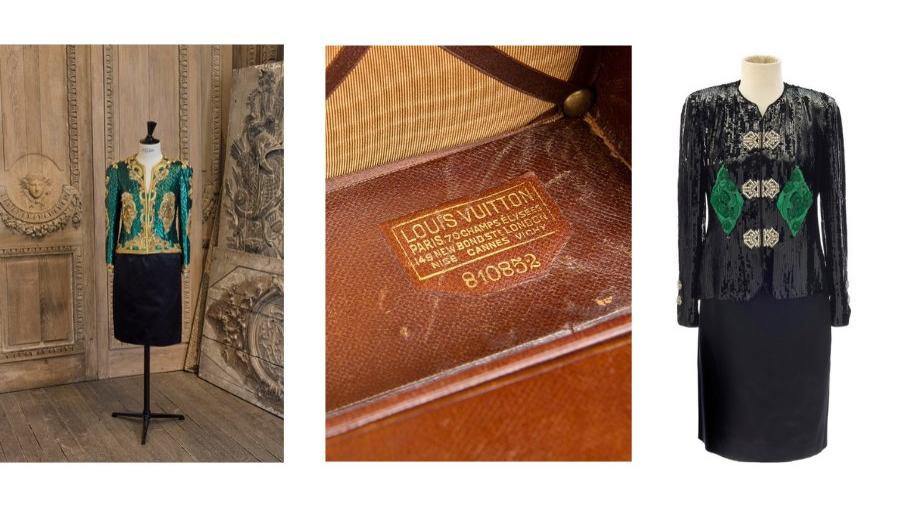
Christie's reports €1.49m from The Trunk Unboxed, its Paris online sale devoted to historic Louis Vuitton travel trunks and objects, closed on 10 November 2026.
Ultra-luxury collecting, 12 November 2026. Christie's online The Trunk Unboxed sale closed on 10 November with a reported €1,490,176 sale total. That is an auction-house result, not an appraisal for every historic Louis Vuitton trunk or a claim about an individual lot's price.
A Paris sale puts the art of travel in the auction room Christie's has reported a total of €1,490,176 for The Trunk Unboxed, its Paris online auction devoted to the craftsmanship and collecting history of Louis Vuitton travel trunks. Sale 25002 ran from 30 October to 10 November 2026 and is now marked closed in the auction house's official catalogue. The figure is presented as a sale total including buyer's premium, not simply an aggregate low estimate. This is a significant distinction for collectors interpreting an auction's performance. It is also a completed outcome, unlike the pre-sale marketing that introduced the lots to prospective bidders. The sale was conceived as a third chapter following Christie's earlier Legendary Trunks presentations. Its subject belongs to a collecting world in which functional luggage can become an important example of decorative art, design and personal history. The price achieved by a collection of objects, however, cannot establish the value of every individual trunk made by the same house.
More than a conventional luggage sale The catalogue brought together historic wardrobe trunks, courrier cases, secretary trunks, specialist storage pieces and examples reflecting the evolution of luxury travel. The auction house described a mix of objects from the golden age of travel and contemporary collaborations. These are not necessarily practical substitutes for modern wheeled luggage. Their attraction may lie in ingenious joinery, interior fittings, rare configurations, decorative finishes and the stories attached to previous owners. A well-preserved wardrobe trunk can show how clothing was arranged for travel before today's baggage systems, while a secretary trunk may reveal an elaborate attempt to make a portable office. For collectors who travel between homes or maintain a yacht, such objects can be displayed in libraries or suites as reminders of an earlier era of bespoke mobility. But aesthetic appeal is different from an assurance that an antique should still be used heavily in a harsh marine environment.
The significance of bespoke interior design Louis Vuitton's historic reputation rests partly on the ways its workshops adapted travel objects for unusual requirements. A trunk designed for shoes, hats or business correspondence requires more than an attractive outer covering. Its internal geometry, compartments, hardware and methods of securing contents reflect particular problems that the owner wanted solved. The Trunk Unboxed was promoted with an unusual Monogram Trunk for Thirty Pairs of Shoes among its examples. It is easy to admire the novelty of such a design, but the broader collecting interest is the relationship between form and purpose. Owners commissioned objects for a type of travel and daily routine that is now very different. Those details can help historians understand luxury consumption, industrial transport and the personal habits of affluent travellers. They also provide a way to distinguish a documented historic commission from a more common production item.
Why provenance matters to collectors A high-value historic trunk is not valued solely by the presence of a recognisable monogram. Condition, period, originality, restoration, the completeness of internal fittings and the credibility of provenance can all influence what serious collectors are prepared to pay. A piece with a notable owner may have unusual appeal, but a claim should be supported by documents or other reliable evidence rather than by a story repeated through successive sales. The same principle applies to maker attribution. Details of stamps, materials, fittings and construction should be examined by a specialist who understands how the house's techniques evolved. An alteration made for practical reasons decades ago may be part of an object's life, but replacing significant components can change the way it is regarded as a collectible. The sale result is an invitation to study these questions, not a shortcut around them.
Restoring a vintage trunk involves difficult choices The decision to restore a historic travel trunk is rarely as simple as making it look new. Cleaning, stabilising weakened material and repairing a failing hinge can be necessary to preserve the object. Yet aggressive replacement of canvas, leather, locks or interior fittings may erase evidence of its age and original use. Collectors should work with conservators and specialists who can explain which changes are reversible and which are not. Good documentation of every intervention is particularly important for future owners, insurance and resale. A trunk that is visually pristine after heavy reconstruction may be less interesting to some historical collectors than a well-preserved original showing appropriate wear. These judgments cannot be made from an online photograph alone. Prospective buyers should seek condition information and, where possible, inspect objects before committing to a major purchase.
Contemporary collaborations extend the collecting category The sale also featured more playful objects connected to contemporary design, including a Supreme skateboard and a surfboard associated with the Louis Vuitton universe. Those pieces belong to a different collecting logic from nineteenth- or early-twentieth-century luggage. Their attraction may depend on collaboration history, scarcity, packaging, edition details and the relationship between fashion, art and youth culture. Combining them with historic trunks makes the catalogue a commentary on the brand's continuing cultural reach. It would nonetheless be mistaken to conclude that a rare skateboard and a century-old bespoke secretary trunk share the same market dynamics. Their audiences may overlap, but condition standards, documentation and long-term collecting narratives can differ greatly. A considered buyer should know which category an object occupies and why that category matters to them personally.
Auction total is not identical to hammer prices Christie's states that the reported sale total includes buyer's premium, while estimates generally exclude that addition. This matters when comparing catalogue estimates with a final total. Premiums can form a meaningful portion of the amount recorded after an auction, and the final cost paid by an individual purchaser may also involve tax, shipment and other charges depending on the terms of the sale. The published €1.49 million figure should not be presented as an independent valuation of all objects or a measure of profit for the seller. It describes the completed auction as reported by the organising house. Without a properly verified individual result, there is no justification for inventing a hammer price for a particular trunk. Collectors who wish to compare specific examples should use the published lot-result pages and the relevant conditions of sale.
Transport and display require care A travel trunk made many decades ago may be structurally sound yet ill suited to repeated contemporary handling. Weight, fragile fittings, historic adhesives, leather condition and the stability of inner textiles can all create difficulties. Owners who wish to exhibit a significant piece on a large yacht should consider humidity, vibration, changes in temperature and the risk of movement under way. An antique should not simply be placed where it can slide or be struck by loose objects. Climate-controlled residential displays may be more appropriate for pieces with delicate original interiors. If an object will move between homes, insurers and specialist shippers may require packing plans and condition reports. Such considerations are part of responsible stewardship and can influence the true long-term cost of an acquisition far more than the immediate appeal of a striking auction image.
A family office can treat design objects as recorded assets An important collection of design, historic luggage and decorative art benefits from the same disciplined records as a serious art collection. Inventory photographs, identification marks, invoices, previous sale documents, conservation reports and insurance descriptions should be retained together. Changes of location need to be logged, particularly where objects are moved between several residences or loaned for exhibitions. A family office may be well equipped to manage these responsibilities, but personnel changes can make an informal system vulnerable. A poorly documented trunk can become difficult to authenticate decades after purchase. The objective is not to turn private enjoyment into bureaucracy; it is to keep the information that explains why the object is special. The best collections combine personal taste with reliable provenance and a clear plan for their long-term preservation.
Paris remains an important setting for decorative-art collecting The online format allowed bidders beyond France to take part in a sale centred on Paris and the history of a French luxury house. The city remains closely associated with fashion, craftsmanship and important auction presentations, but a digital sale also changes how collectors examine objects. Photographs, condition reports and specialist conversations can partly replace an in-person preview, although they cannot replicate direct inspection. The firm's broader Classic Week programme offered another way to position historic travel objects alongside decorative arts and luxury collecting. This is valuable context, not proof that the same bidders participated in every event. A discerning buyer may attend multiple previews, but individual purchases are confidential unless the auction house reports them. The outcome to record here is the completed Trunk Unboxed sale and its published total.
The collecting lesson behind the result The Trunk Unboxed demonstrates that vintage travel equipment can attract attention as a category of collectible design. Its commercial result is specific: a closed Christie’s Paris online auction with a published total of €1,490,176. The catalogue encompassed both historically significant travel forms and later objects reflecting contemporary collaborations. The sale does not establish a single market price for Vuitton luggage, nor does it disclose the identity of buyers in a way that would justify speculation. For the ultra-wealthy collector, the appeal is the possibility of acquiring an object that speaks to craftsmanship, mobility and the culture of personal commissions. The prudent next step for any serious purchase is to examine provenance and condition rather than assume that brand recognition alone guarantees lasting importance. A remarkable trunk can be a work of design history, but careful documentation is what allows its story to endure.
Primary source: Christie's, 10 November 2026, The Trunk Unboxed sale 25002 official result and catalogue.