Christie’s November New York sales include works from the Clive Davis collection, with Warhol, Hockney and other major modern artists alongside public gallery viewing.
Luxury art and travel preview, 10 November 2026. Viewing and auction details are based on Christie’s official programme; no sale result is asserted before bidding. Lead image is independent venue-area photography, not auction artwork.
New York art week brings a music-industry collection into view
Christie’s has placed the art collection of influential record executive Clive Davis among the focal points of its New York twentieth- and twenty-first-century auctions this November. The house identifies works connected with Andy Warhol, David Hockney, Frank Stella, Jean Dubuffet, Jean-Michel Basquiat and Joan Mitchell, reflecting several generations of artistic experimentation. The named collection is scheduled within the 17–20 November series in New York, with works offered through more than one sale setting. This is an advance guide, not an account of prices achieved.
For yacht owners and guests who collect art or arrange cultural travel ashore, the appeal goes beyond celebrity ownership. Davis’s career as a music executive offers a distinctive lens through which to view the relationships between artists, performers, patrons and cultural institutions. Yet the quality of an artwork cannot be inferred from a celebrated prior owner alone. Collectors should separate a compelling biographical narrative from the individual work’s authorship, condition, provenance, exhibition history and contractual details.
Why the Davis collection is distinctive
Christie’s presents Davis as a figure who discovered and developed musical talent and applied a similar sensitivity to collecting visual art. The collection ranges across Pop, Minimalism, Abstract Expressionism and later creative movements. The auction house also describes portraits that record connections between the music executive and leading artistic personalities. Such works are interesting because they combine an aesthetic object with a network of personal relationships that can be explored through catalogues and documentation.
A collection assembled across decades can be more coherent than a group of expensive names placed together. Some buyers value the original owner’s judgments and the dialogue between works; others are drawn to individual artists regardless of provenance. Both perspectives can be legitimate. The important discipline is to examine how Christie’s has attributed and described each lot. An exhibition narrative offers useful context, but it is not a substitute for inspecting the actual painting or sculpture and the terms on which it is sold.
Warhol and Hockney in conversation
Christie’s identifies an Andy Warhol portrait of David Hockney among the offerings linked with the Davis collection, complemented by a landscape by Hockney. The pairing illustrates how art collecting can place an artist’s image beside that artist’s own creative work. Warhol’s approach to portraiture and Hockney’s visual experimentation are different, but the relationship between the works offers an interpretive reason to see them together rather than as two isolated market entries.
Visitors should be careful not to infer size, condition, estimate or medium for a particular object from this overview. Those details belong to the auction catalogue. The significance of the pairing is curatorial and biographical: it allows a collector to think about the way modern artists represented one another and interacted with patrons. If bidding is contemplated, the same careful assessment required for any major artwork applies, regardless of how persuasive its connection to a famous cultural figure might be.
The wider November programme
The official Christie’s guide says the sales run from 17 to 23 November and comprise six live auctions and two online sales. The 20th Century Evening Sale is listed for Tuesday 17 November at 6:30pm Eastern Time, while the 21st Century Evening Sale is scheduled for Thursday 19 November at 7pm. Works on paper, day sales and post-war and contemporary offerings occupy other parts of the week. The live and online calendars should not be treated as interchangeable: bidding windows, access and formats differ.
Other significant collecting stories include the Antonio Homem Sonnabend Collection, the Herbert Lust collection and the Agnes Gund works being sold to benefit her foundation. Christie’s also names the William I. Koch collection among the season’s holdings. Those are distinct groups with their own histories. A visitor interested specifically in the Davis collection should check which works will appear on which day, rather than assuming every Davis piece is offered in a single evening or remains on view throughout the entire programme.
How to visit the Rockefeller Center galleries
Christie’s published a viewing period from 7 to 17 November for a broad selection of the works at its Rockefeller Center galleries. It states that admission to the exhibition is free and identifies daily hours of 10am to 5pm, with Sunday viewing beginning at 1pm. Those are organiser-published arrangements that can change, particularly when the salerooms are being prepared for live auctions. Visitors planning to see a specific work should confirm its current availability with Christie’s before travelling.
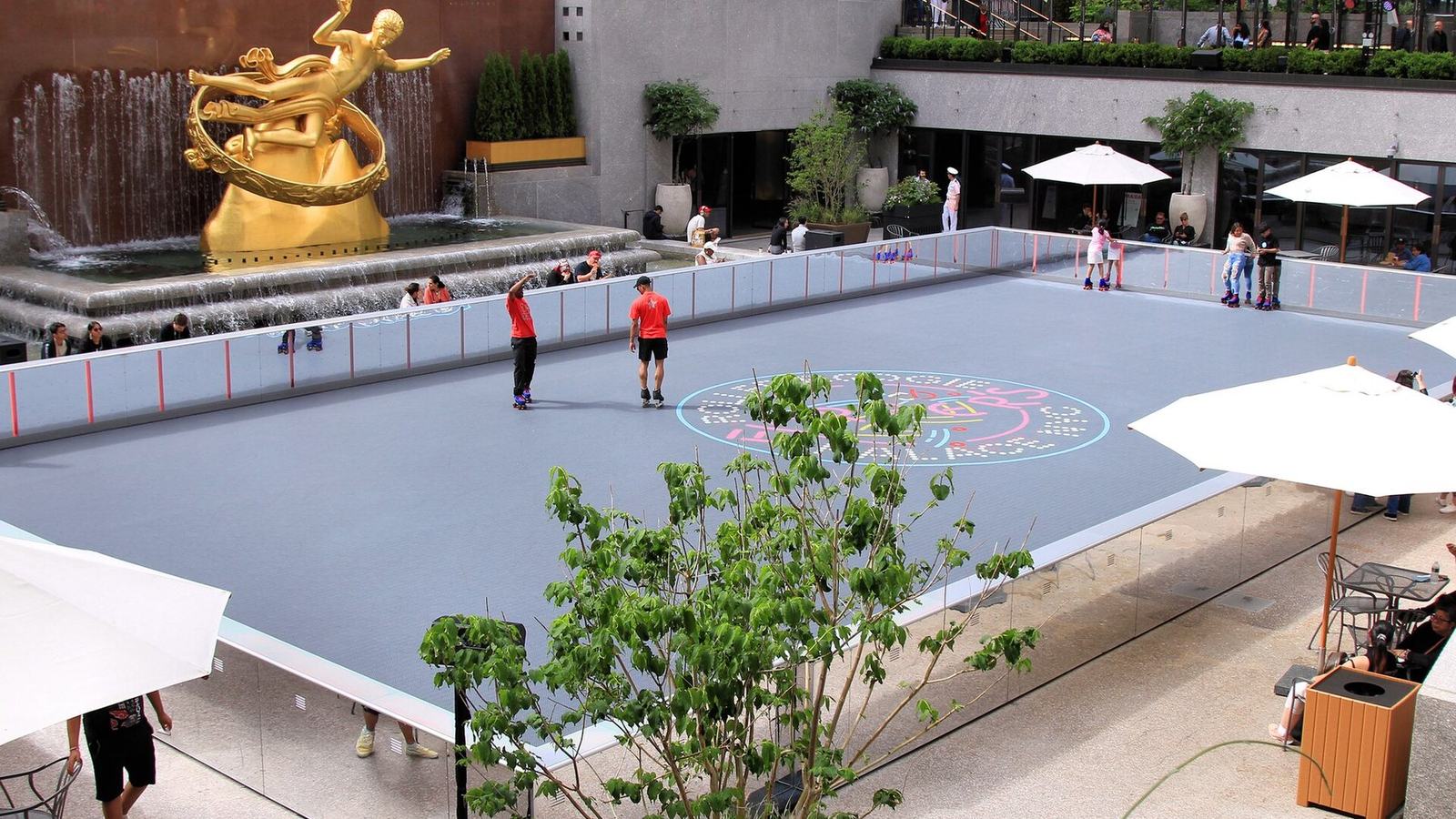
In-person auction attendance is a different matter from gallery viewing. Christie’s says tickets are needed for live sales, with seating reserved for selected registered bidders. A yacht guest who is merely interested in looking at the work may have a pleasant and instructive visit without joining the bidding process, while a prospective buyer should arrange credentials and specialists in advance. Our lead photograph shows the Rockefeller Center area in an earlier year; it does not portray this year’s collection or interior exhibition.
Large auction estimates require context
The Christie’s guide highlights Wassily Kandinsky’s Betonte Ecken and Gustav Klimt’s Litzlbergkeller among works estimated at US$60 million to US$80 million each in the 20th Century Evening Sale. Those objects are part of the wider sale programme; they should not be mistakenly described as Davis collection property. An estimate expresses the auction house’s pre-sale expectation, not a buyer’s commitment and not a verified transaction price. Whether a work sells, and at what figure, remains unknown until the result is published.
Collectors should also distinguish hammer price, total with buyer’s premium and the sum ultimately paid after taxes or other charges. Large figures can make an engaging headline, but the value of a particular object involves history, attribution, condition, presentation and current demand. A painting by a significant artist can have very different characteristics from another work bearing the same signature. The auction catalogue and the specialist’s condition information are essential parts of any serious assessment.
Why provenance is central
The ownership record of an artwork can establish more than celebrity association. It may help document where a piece has been, how it was acquired and whether its attribution and title have changed. For works that have travelled through major collections, museums or galleries, the relevant records can extend over decades. That history is one reason auction catalogues devote space to provenance and exhibition information. It can also reveal unanswered questions that a buyer should investigate before committing.
A responsible collector asks for the available documents and may commission independent advice where appropriate. This includes examining title, authenticity, restoration, condition, possible cultural-property restrictions and any obligations that affect export or resale. Regulations vary by jurisdiction and the details of an individual transaction. Superyacht Guide does not assume that a work can be carried across borders simply because it has been bought in New York, or that an auction house’s promotional narrative resolves every legal and conservation question.
Art aboard a yacht presents different design challenges
Collecting and displaying art aboard a yacht can be rewarding, but a vessel is unlike a climate-controlled gallery. Motion, vibration, salt air, humidity, light levels and the need to move objects safely can all influence what is practical. Some works may be unsuitable for a permanent installation on board, particularly if they have fragile surfaces or complex conservation needs. Owners should obtain guidance from conservators, insurers and the yacht’s technical team before deciding where an important object will be placed.
A safe arrangement may require appropriate mounting, environmental monitoring, careful handling procedures and clear responsibilities when the yacht is undergoing maintenance. The fact that a piece is visually compelling does not mean it will withstand a long passage or a tropical environment. Equally, valuable art does not need to be excluded from an owner’s life at sea if risks can be assessed and managed. The decision belongs to the owner and qualified specialists, not to the auction catalogue.
A visit can be valuable without bidding
One of the most useful aspects of a public preview is the opportunity to compare styles and periods in person. A visitor can examine the relationship between painting and sculpture, the scale of a work that appears deceptively small in photographs and the way different surfaces respond to natural or gallery light. Exhibitions around major auctions often assemble objects that would otherwise be difficult to see together. For art-interested yacht guests passing through New York, this can justify an appointment even when buying is not the objective.
The experience is richer with preparation. Choose a small number of works and read their catalogue entries beforehand; discuss the objects with a specialist if one is available; and allow enough time to look carefully. Photography restrictions, visitor numbers and room access may change as the sale approaches. Christie’s official viewing page and registration information are the proper authorities on arrangements, not a general travel feature. A good cultural outing need not turn into a commercial transaction.
Remote participation has limitations
Christie’s says its November sales can be followed through a high-definition livestream and its live bidding platform. That broadens access for collectors who cannot be in New York, including those travelling aboard yachts or based in other time zones. However, watching a stream cannot replicate an in-person condition examination, and connectivity should not be assumed reliable during a remote cruise. Registration, bid limits and the auction’s terms must be dealt with well before a sale begins.
A buyer contemplating a substantial bid may want a trusted specialist to inspect the work, review its documents and coordinate with the auction house. The practicalities of payment, transport, insurance and installation should also be planned in advance. It is easy to focus on an image and an estimate while overlooking the consequences of a successful bid. A livestream is useful for following a public event, but it does not replace independent judgment or professional advice for an expensive and potentially fragile object.
What we will follow after 17 November
The next important information will be the verified outcomes of Christie’s individual auctions, clearly identifying which works were offered, which sold and how the reported sums are calculated. For the Davis collection, future analysis could look at the relationship between the art’s individual merits and the history of its prominent collector. The results should not be treated as a referendum on the artistic importance of a musician, a painter or an entire movement.
For now, the confirmed story is the forthcoming November New York programme, its public gallery viewing and the inclusion of significant works from Clive Davis’s collection. A yacht owner seeking a thoughtful shore itinerary can find genuine cultural value in the preview without being encouraged to speculate. Christie’s official pages supply the dates, collections and access conditions; Superyacht Guide supplies context and practical questions that help readers approach the material with curiosity and care.
Photo licence and source
Rockefeller Center lower plaza, New York, photographed in 2022; archival location photograph, not Christie’s sale room or artwork. Photograph by Larry D. Moore, CC BY 4.0; Wikimedia Commons source. Image resized for web delivery.

Primary sources: Clive Davis Collection; November Sale Guide; Sales Event.
Source
Christie’s