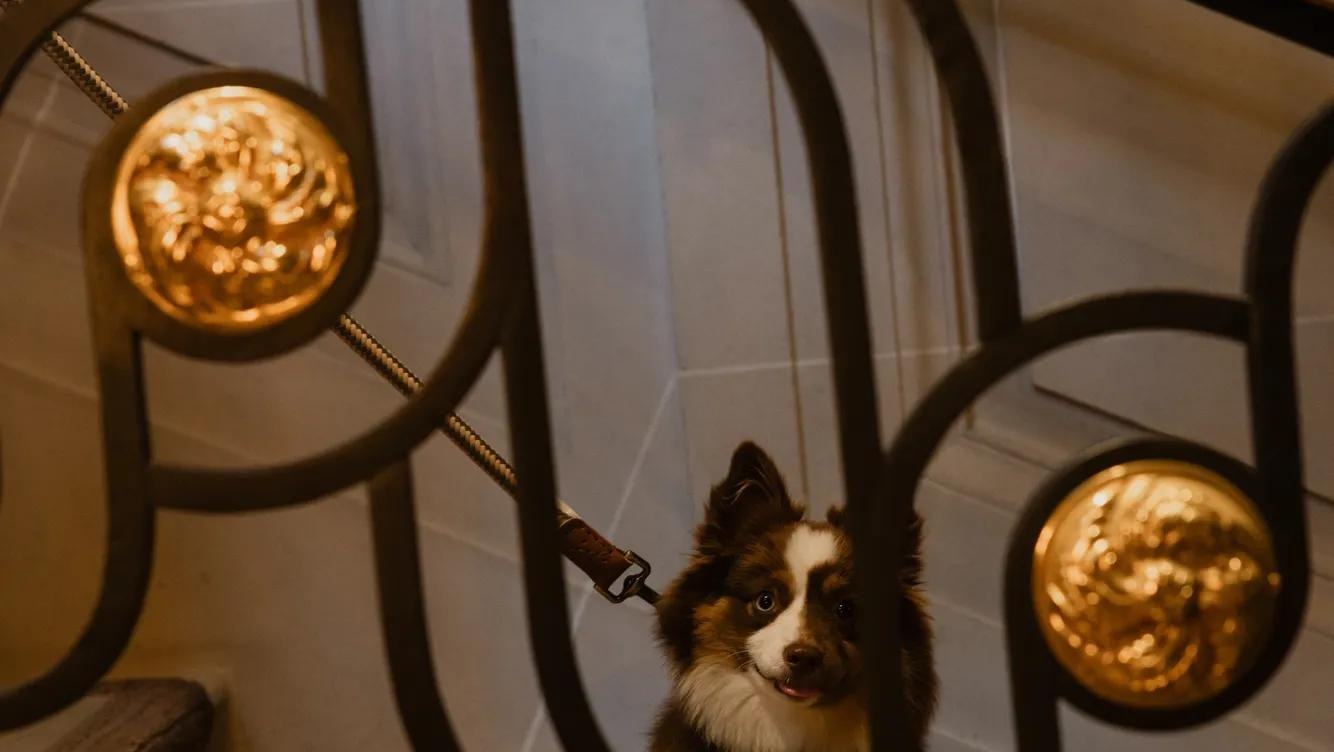
Hôtel de Crillon is extending personalised palace hospitality to four-legged guests with in-room amenities, local recommendations and specially arranged dining.
A Paris palace extends its welcome
Hôtel de Crillon, A Rosewood Hotel, has introduced Crillon & Co, a new hospitality programme built around guests travelling with pets. The concept is positioned as an extension of the historic Paris property’s highly personalised service rather than a basic permission to bring an animal into a guestroom.
At the centre of the announcement is the idea that the animal should be considered in the overall design of a stay. That matters to travellers whose companions are an established part of daily life and who find ordinary pet-friendly accommodation too limited in its practical offerings.
The Rosewood hotel overlooks Place de la Concorde, placing guests in a celebrated central district but also creating the need for careful arrangements when an animal requires exercise or a quieter route. A glamorous address is useful only when the realities of the pet’s routine have been considered.
Crillon & Co aims to close that gap with a welcome package, local information and optional experiences. It is a distinctive example of luxury hospitality moving beyond a standard room upgrade to address the needs of a very particular travelling party.
An in-room welcome designed for the animal
Rosewood describes a personalised welcome gift presented in an embroidered bag. Products from Nocat Studio are included alongside artisanal treats from Maison Txaku, a Basque brand, bringing specialist suppliers into the experience rather than relying solely on generic hotel merchandise.
A plush bed, toys, bedside rug and raised ceramic bowls are among the practical amenities described by the hotel. Those details may seem modest beside the scale of a palace suite, but they directly affect whether an animal feels settled in an unfamiliar environment.
A guest travelling with a large or elderly dog may require more than the standard selection. Bed sizes, material sensitivities, suitable feeding-height arrangements and access to drinking water should be discussed before travel rather than assumed from photographs of the welcome set.
The value of personalisation is in matching the surroundings to the individual companion. A room can look impeccable while remaining unsuitable for an excitable puppy, an anxious rescue animal or a pet that needs a predictable daily routine and limited noise.
A concierge guide to pet-friendly Paris
The hotel’s concierge team has prepared a Pet-Friendly Guide to Paris that identifies parks, walks, cafés, restaurants, shops and wellness addresses. This offers a more practical form of local knowledge than a general sightseeing itinerary because it is filtered through the needs of someone travelling with an animal.
Central Paris offers beautiful streets and public gardens, but not every prestigious space allows dogs on identical terms. The guide can help visitors distinguish the places where an animal is genuinely welcome from locations that are better enjoyed without one.
For a guest planning a long lunch or an evening performance, the relevant questions extend beyond walking suggestions. Pet-care arrangements, the rules governing unattended animals and any additional services should be agreed explicitly with the hotel well ahead of a reservation.
It is important to remember that a hotel’s list of recommended venues cannot override local regulations. Owners should verify access rules, leash requirements and seasonal restrictions at their chosen destinations, especially when planning extended walks or visits to public gardens.
Design accessories and specially prepared dining
Crillon & Co includes optional accessories from Hubbton’s, whose decorative bandanas and charms add a fashion-focused Parisian element to the offering. The hotel also mentions a crystal-healing experience, presented as part of its bespoke lifestyle programme rather than as a substitute for veterinary care.
The culinary offer is perhaps the clearest sign of how far the programme extends. Rosewood names beef tenderloin with pasta and green beans among the available in-room dishes, alongside a poultry, rice and vegetable option described as a gluten-free alternative.
A Delamour ice cream formulated for dogs is also listed as a treat, with the hotel noting veterinary involvement in its development. Owners should still disclose allergies, dietary restrictions and health conditions before ordering, because an attractive menu description does not establish suitability for every animal.
The overall approach will appeal most to guests who appreciate craftsmanship and coordinated hospitality. It also highlights an important distinction: bespoke pet service works best when the practical wellbeing of the animal is given priority over decorative presentation.
What discerning travellers should verify
The hotel’s October announcement does not replace the need to establish the actual pet policy for a specific booking. Owners should ask about permitted species, size limits, number of animals, charges and any restrictions affecting accommodation types or public areas.
International travel adds further requirements, including the documentation and veterinary procedures applicable to the countries involved. A journey that includes private aviation may offer scheduling flexibility, but border regulations and animal welfare obligations still apply.
Guests should also clarify whether the welcome amenities are included automatically or offered as part of a paid package, and what notice is required for customised feeding or accessories. Transparent information is particularly important when special requests involve third-party suppliers.
For someone regularly travelling with a companion animal, the significance of Crillon & Co is the invitation to plan the entire city stay together. Its success will be measured by whether the concierge, rooms and dining programme work smoothly for both the guest and the animal.