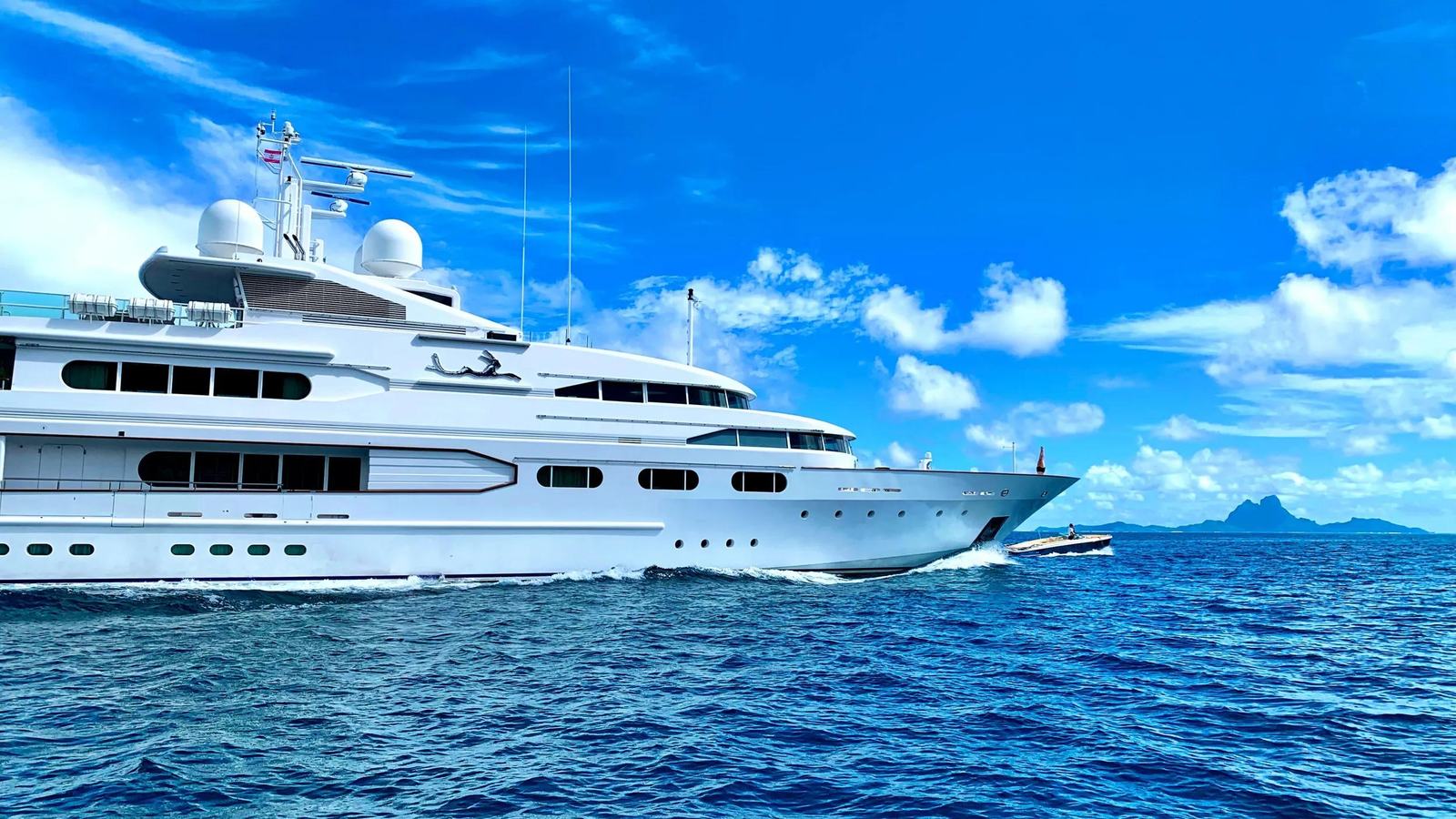
The 57.7-metre DANCING HARE shows how Jon Bannenberg was reshaping outdoor superyacht living decades before today's beach-club boom.
DANCING HARE feels strikingly contemporary for a yacht delivered in 1986 because her design placed wide open decks and outside-in enjoyment at the centre of the experience. Amels credits legendary designer Jon Bannenberg with creating a yacht that broke from convention and still appears regularly in Asia-Pacific waters.
Open decks were once a genuinely radical idea
Modern superyachts routinely promote beach clubs, terraces and large exterior lounges, but DANCING HARE came from a period when those ideas were far less standardised. Bannenberg used broad open spaces to make the exterior a principal living environment rather than simply circulation around enclosed rooms.
This changes how guests experience a yacht because the sea becomes part of everyday social life. Breakfast, reading and evening drinks can happen in direct contact with wind and horizon, allowing the voyage to feel present instead of becoming scenery viewed mainly through glass.
Outside-in enjoyment reshaped the social plan
Amels describes the yacht as revolutionary for outside-in enjoyment and custom features that stood apart from the norm. The phrase captures a design philosophy in which exterior life and interior comfort were conceived together rather than as separate programmes.
A yacht used this way naturally develops different rhythms from a more enclosed vessel. Guests move between shade and sun, between open air and protected spaces, while the crew can adapt meals and service to weather rather than treating the formal dining room as the default setting.
Asia-Pacific cruising suits the design philosophy
The builder notes that DANCING HARE can often be seen in Asia-Pacific waters, a region where island chains and warm-weather cruising reward generous exterior spaces. The yacht's continued presence there suggests that her original lifestyle concept remains useful rather than merely historically interesting.
Long tropical itineraries place real demands on shade, ventilation and deck circulation. A successful open-deck yacht needs more than large areas; it needs spaces that remain comfortable at different times of day and give guests reasons to stay outside beyond the initial view.
Bannenberg's legacy is lived rather than displayed
DANCING HARE is important because her design ideas can still be experienced directly instead of existing only in archives. The yacht's value as a piece of design history is inseparable from the fact that she continues to travel and function as a private yacht.
For owners and design enthusiasts, that makes the vessel almost architectural in the cultural sense. She shows how one designer's willingness to challenge convention helped shift superyacht life toward the exterior, a direction the entire industry now treats as fundamental.
Official sources: www.amelsyachting.com.
Source
www.amelsyachting.com