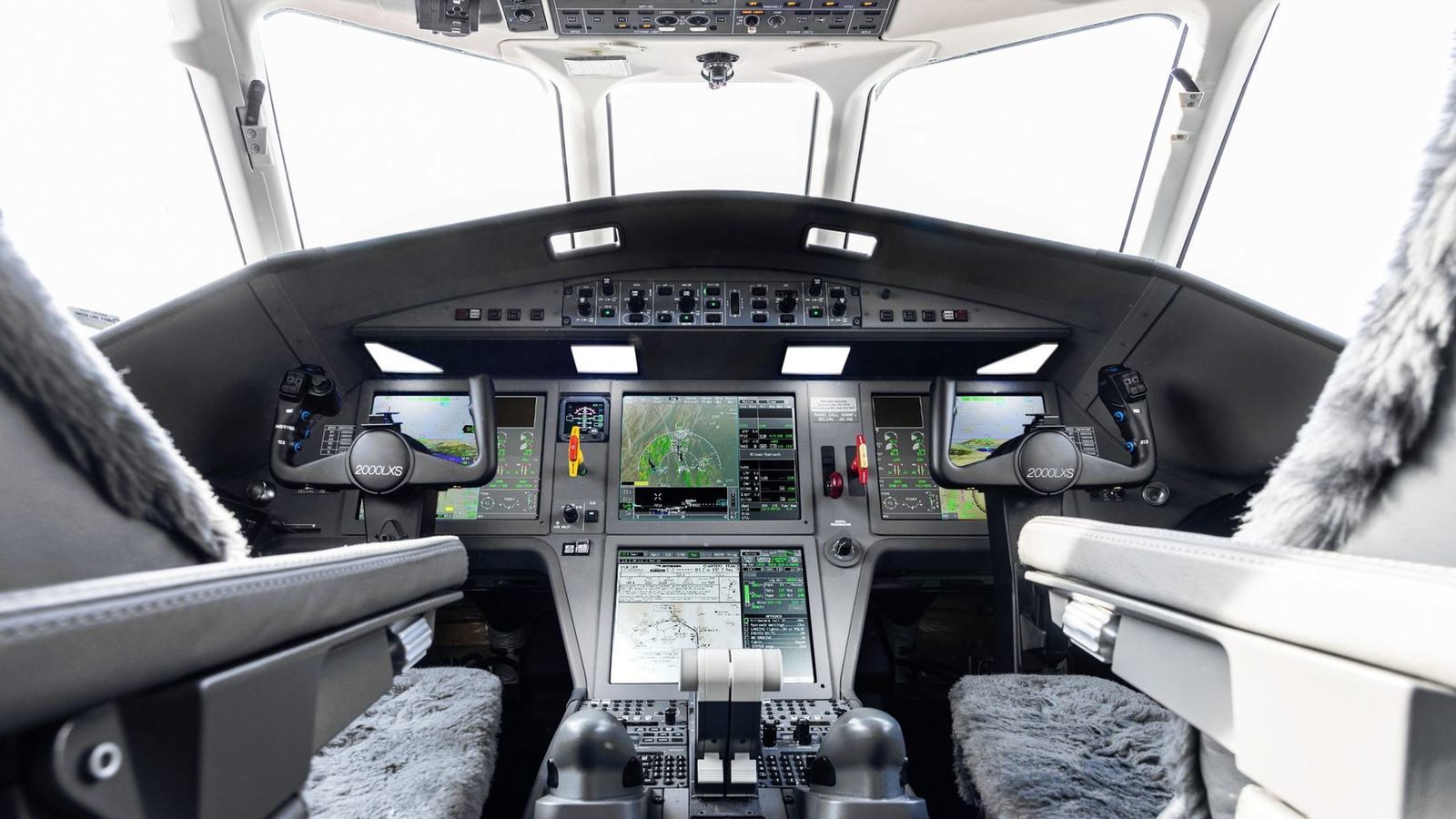
Dassault Aviation is introducing its fourth-generation EASy IV flight deck to new Falcon 2000LXS aircraft and planning a retrofit for the existing Falcon 2000 EASy family.
A familiar aircraft with a new cockpit
Business-jet owners frequently face a decision that yacht owners know well: retain a trusted platform and modernise its systems, or replace the asset altogether. Dassault Aviation is giving Falcon 2000 operators an additional choice with plans to bring its fourth-generation EASy IV flight deck to the aircraft family. The company announced the programme on 20 October 2026, covering the production Falcon 2000LXS and a planned retrofit path for Falcon 2000 aircraft already fitted with earlier EASy avionics.
The announcement matters because it treats cockpit technology as something that can evolve independently of an aircraft's core design. The 2000 series entered service in 1995, and Dassault reports more than 700 examples produced. That longevity reflects a large existing operator community with an interest in maintenance support, airport access and the economic life of each aircraft. A modern avionics offering can be relevant to buyers considering either a new aircraft or a carefully managed pre-owned example.
What EASy IV is expected to deliver
Dassault says the new system will provide faster processing, sharper displays, updated Jeppesen chart capabilities and both two-dimensional and three-dimensional airport moving maps. These are pilot-facing improvements, but their value extends beyond visual polish. At unfamiliar or congested airports, ground-position awareness and legible information can help flight crews manage busy procedures. The next-generation flight management system is also described as supporting required navigation performance approaches, subject to the aircraft's applicable equipment and approvals.
The release refers to the FalconEye combined vision system as a complementary capability that may improve situational awareness during approaches in reduced visibility. It is important not to present that combination as a promise that every aircraft can safely operate in all conditions. Flight rules, crew training, equipment status and certified operating limits always determine what is permissible. The meaningful claim is narrower: pilots may receive more useful information when conditions make the workload especially demanding.
Why the existing fleet is important
New aircraft often command attention because of cabin design, range figures and the latest technology. Yet an established type with a substantial installed base brings a different set of questions for owners. How well can the aircraft's systems be kept current? Are training and support networks sufficiently mature? And can a retrofit help sustain operational usefulness without committing to a different airframe? Dassault's decision to offer EASy IV beyond newly produced jets speaks directly to that ownership calculation.
The manufacturer describes the 2000LXS as a 4,000-nautical-mile aircraft, with a spacious cabin and the short-field capability traditionally associated with Falcon designs. Actual range depends on operating conditions, configuration and payload, so that published figure should be treated as a manufacturer reference rather than a universal trip guarantee. For owners linking business travel with yacht itineraries, dependable access to regional airports can be as meaningful as headline distance. The point is flexibility across a mixed travel programme.
The aircraft as a long-term investment
A retrofit has to make sense in more than engineering terms. Operators must consider aircraft downtime, equipment costs, crew familiarisation and continuing maintenance requirements. Dassault has not provided a public universal retrofit price or a completion timetable in this announcement, and any economic assumptions should therefore be tested with the manufacturer or an authorised service provider. Likewise, there is no basis for promising that an avionics update will generate a particular resale premium.
Nevertheless, newer flight-deck capabilities can influence the attractiveness of an established aircraft type. Buyers may value consistent cockpit standards across a fleet, while individual owners may prefer to preserve a familiar cabin and mission profile. A modernisation decision works best when it starts with the aircraft's specific utilisation, age and planned holding period. Dassault's announcement gives owners another option to assess, but not a substitute for a proper technical and financial review.
Keeping pilots at the centre
The most useful cockpit technology is technology that reduces friction rather than adding another layer of distraction. More detailed maps, clearer visual presentations and improved flight management can support preparation and execution, but only if crews understand the system and its limitations. Training, procedures and human judgement remain fundamental. A photograph of a new flight deck may look persuasive, yet operational benefits must ultimately be assessed under realistic flying conditions and the aircraft's approved documentation.
Dassault presents EASy IV as part of a longstanding effort to improve the 2000 family, describing the platform as its best-selling business aircraft. That framing is commercially understandable, but the practical test will be how well the functions integrate with existing avionics and support processes. Operators will want to know which specific aircraft configurations qualify, how installation works and what support is available after delivery. Those answers are more valuable than broad promises of technological transformation.
What owners should watch next
For a prospective buyer of a Falcon 2000-series aircraft, the next step is not to assume every advertised aircraft already carries the new system. EASy IV was announced as a future production offering and retrofit programme, so installed equipment must be checked by serial number and documentation. Owners contemplating the upgrade should seek authoritative information about certification, availability, downtime, commercial terms and the implications for existing optional systems. Aircraft-specific due diligence remains essential.
Dassault's latest flight-deck announcement illustrates an enduring theme in premium transport: longevity depends on continuing investment in the systems behind the visible luxury. A yacht refit may renew navigation, communication and control equipment while retaining a trusted hull; an aircraft programme can pursue a comparable goal within a far more tightly certified environment. EASy IV is not a new Falcon model, and the announcement does not change the aircraft's published fundamental specifications. It is a development in how the established platform may be operated in the years ahead.
Questions worth asking first
Operators considering the upgrade should review their avionics configuration, expected downtime and training requirements. These factors are specific to each aircraft and cannot be determined from a general product announcement.
Coordinating an installation with scheduled maintenance may reduce disruption, but that possibility requires a proper engineering plan. Owners should evaluate both the immediate expense and any interruption to planned aircraft use.
Beyond the headline specification
A public description of faster processing does not confirm retrofit eligibility for every Falcon 2000 variant. Operators must rely on certified documentation and manufacturer guidance before assuming a particular installation is possible.
Long-term aircraft value depends on mechanical condition, records, operational support and crew competence as well as avionics. EASy IV may improve capability, but it does not replace the fundamentals of responsible ownership.
Editorial source: Dassault Falcon. This original lifestyle feature is based on information from the named source; check current local navigation requirements and the equipment manufacturer before departure.
Source
Dassault Falcon