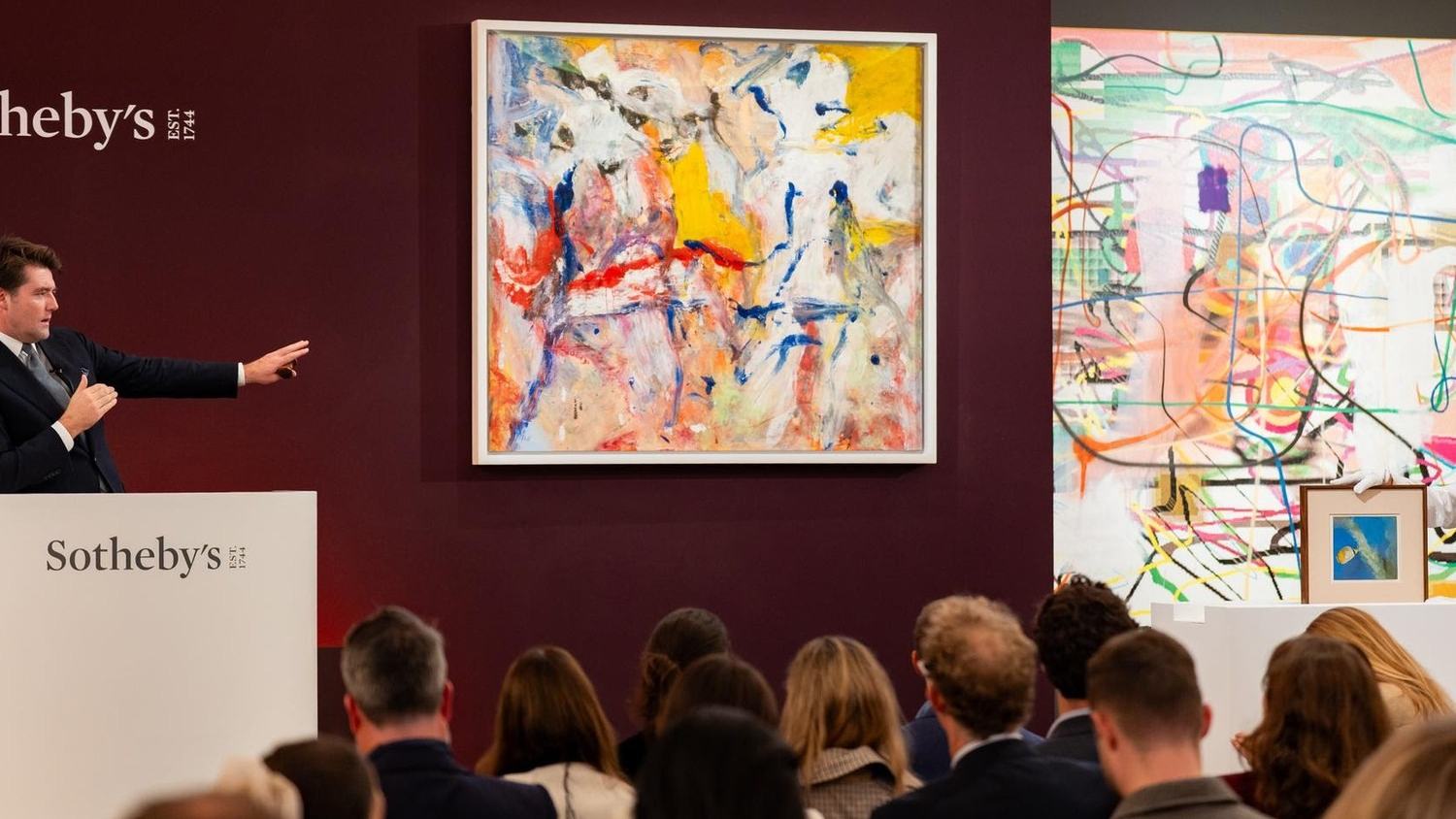
A 1977 de Kooning painting sold for £9.8 million at Sotheby's London Contemporary Evening Auction on 15 October, leading a £45.9 million sale with selective bidding.
A de Kooning leads Sotheby's October London sale
Willem de Kooning's Untitled from 1977 sold for £9.8 million including fees at Sotheby's Contemporary Evening Auction in London on 15 October 2026. The result was the highest price achieved by a work from the artist at a European auction, giving the sale a significant headline during Frieze week. The overall auction, however, provided a more cautious picture of the contemporary art market.
Sotheby's realised around £45.9 million after fees across the evening, with bidding concentrated on selected works. The headline price for de Kooning should not be confused with the hammer amount: the painting was knocked down at £8.2 million, and the total including fees reached £9.8 million. Those distinctions matter when comparing auction results against presale estimates.
A major late-period abstract painting
The de Kooning work was produced in 1977, a period associated with the artist's intensely worked colour and vigorous abstract forms. Sotheby's catalogue records the oil on canvas at approximately 136.8 by 151.7 centimetres. The painting had appeared at auction in New York in 2015 and subsequently entered another private collection before returning to the market this autumn.
Its £8 million to £12 million presale estimate indicated the level of interest the auction house expected, although estimates are not guarantees of a final price. The reported buyer paid close to the lower end once fees are included. The record is therefore a meaningful benchmark within European auctions, but not evidence that every de Kooning painting will command the same result.
Thirty-four works were ultimately offered
The auction originally listed 37 works, with three withdrawn before bidding. Of the 34 actually offered, 28 sold and six remained unsold, producing a sell-through rate of approximately 82 percent on the offered lots. The aggregate hammer total of about £36.9 million fell below the original combined low estimate, underlining the selective nature of the evening.
Strong interest in one exceptional artwork does not necessarily translate into consistent demand throughout a catalogue. Collectors may weigh condition, provenance, rarity and the attractiveness of estimates differently from lot to lot. This is particularly important when interpreting public reports that focus heavily on the highest sale and give less space to unsold material.
Richter, Rothko and a surprise on paper
Among other important results was a Gerhard Richter abstract work from 1992, reported at around £6.7 million, and a late Mark Rothko work on paper which achieved about £3.8 million. These pieces reflected demand across different kinds of postwar abstraction. They also served as a counterpoint to the sale's more disappointing lots.
A work on paper by Michael Andrews, Butterfly Fish from 1978, achieved about £704,000, far exceeding the upper level of its presale estimate. The result illustrated how a carefully presented lesser-known work can draw energetic competition. It was a reminder that strong collecting interest does not necessarily follow a strict hierarchy of famous names.
London remains active but buyers are selective
The sale took place at Sotheby's New Bond Street premises during an important week for London's art trade. Its results followed substantial sales at competing houses, attracting attention from dealers and international collectors. Yet reports from the room described relatively restrained bidding on several works, suggesting buyers were prepared to set firm limits.
The confirmed October figures show a prominent de Kooning result within a mixed overall auction. No simple prediction about future art-market growth can be made from one evening. For buyers, the event emphasises the continued value of individual research and realistic bidding rather than reliance on broad claims that an entire market segment is rising.