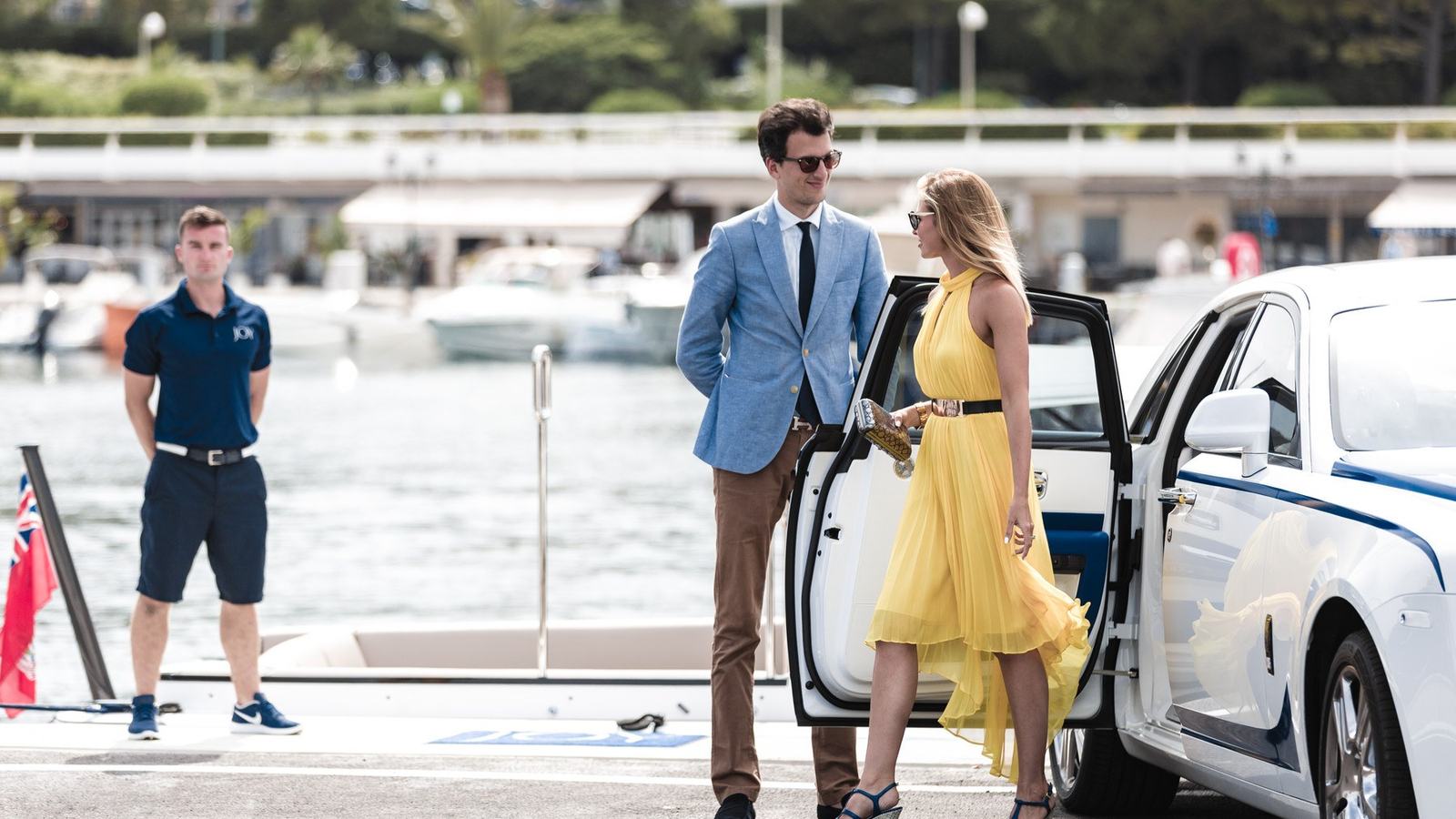
Burgess identifies discretion as a defining luxury travel priority. We examine how private yacht holidays can balance seclusion, genuine hospitality and responsible operations.
The freedom to choose who shares an experience
Burgess's editorial of 12 November 2026 identifies discretion as an increasingly important element of high-end travel. The brokerage discusses a preference for seclusion and personalised experiences among wealthy clients, connecting that demand with the private-yacht charter market. It is a perspective offered by a company active in the sector rather than an independent measurement of the behaviour of every superyacht owner or guest.
The subject is worth examining beyond the familiar vocabulary of exclusive hospitality. A holiday can involve considerable expenditure and still leave guests feeling that their time, surroundings and personal information are being controlled by other people. A well-organised yacht journey gives the party an opportunity to influence those arrangements. What matters is not simply the rarity of the vessel or destination but the quality of the decisions made before and during the voyage.
Privacy begins with the itinerary
The choice of destination is fundamental to the character of a private holiday. A succession of spectacular ports may provide memorable photographs, yet it may involve considerable exposure to crowded quays, busy restaurants and repeated public movements. Conversely, extended periods aboard a yacht can provide enviable freedom while limiting the variety of activities available to some members of a family. The right itinerary balances those competing priorities.
An experienced charter broker and captain should establish which activities genuinely matter to the guests. Some may enjoy the atmosphere of a celebrated harbour for a night, while others would prefer uninterrupted time in a quiet anchorage. Avoid making every stop dependent on securing a table or arranging a visible arrival. A carefully selected combination of anchorages, legitimate private venues and modest shore excursions often permits a more relaxed schedule than one built around externally imposed appointments.
No captain can promise complete isolation in public waters. Weather, traffic, local regulations and operational requirements may change an anchoring or berthing plan. A good charter arrangement recognises that uncertainty. It establishes alternatives rather than presenting privacy as an unconditional guarantee for which the crew must disregard normal maritime responsibilities.
The preference sheet as a practical agreement
Before the yacht is provisioned, the charter party should agree how much service it wants and when. A detailed preference sheet normally covers items such as meals, dietary requirements and activities, but it can also establish more personal matters. Discuss whether guests want the crew to take photographs, whether image sharing is permitted, how visitors should be introduced and who is authorised to alter arrangements on the principal guest's behalf.
The aim is not to produce an unnecessarily restrictive document. It is to reduce uncertainty for a team that may be supporting people from different households who have distinct expectations. A clear request concerning photography, for instance, can be much easier to follow than an implied expectation that every person aboard interprets privacy in the same way.
Only supply information needed to deliver the service. Relevant medical or dietary requirements may be essential, whereas unrelated personal history is unlikely to be useful. Ask how information is stored, who receives it and when it will be deleted. An owner or charterer using a family-office representative should ensure that responsibility for transmitting accurate instructions has been clearly allocated.
The arrangement of accommodation
A yacht's design can make discretion comparatively effortless or surprisingly difficult. Review the routes connecting cabins, guest saloons, service areas and embarkation points. A principal suite that is geographically separated from family accommodation may offer welcome independence, but can be inconvenient for a parent who needs to remain close to young children.
Guest spaces with multiple uses can be a particular advantage. A yacht may offer an informal lounge in addition to its main saloon, allowing different groups to enjoy conversation or entertainment without continually negotiating the use of a single room. Outdoor accommodation should likewise provide a reasonable choice of shaded, sheltered and more open spaces where the weather permits.
The crew needs clearly defined working areas and appropriate accommodation of its own. Privacy does not mean requiring staff to avoid using essential passageways or remain continuously available without adequate rest. It means selecting a vessel whose operation naturally supports the intended guest experience. A brochure's cabin count is insufficient to assess that relationship; a layout study and a conversation with the people who actively manage the yacht are much more informative.
Thoughtful digital boundaries
Private travel involves digital information as well as the physical movement of people. Live photographs, location tags and images showing identifying details may circulate rapidly once released. Guests who wish to limit that exposure should discuss it within their own group before departure. A courteous shared understanding is often more effective than an awkward intervention after someone has already posted a photograph.
The yacht's lawful navigation, tracking and communication obligations must remain unaffected. Privacy arrangements should never require the disabling of safety equipment, withholding information required by authorities or interfering with the captain's professional responsibilities. There is an important difference between declining unnecessary publicity and attempting to prevent legitimate oversight of maritime operations.
When accessing sensitive business information aboard, discuss the network arrangements with the captain or technical manager. Appropriate safeguards depend on the yacht's actual equipment and the needs of its guests. Individuals who require particular levels of information security should bring those requirements to the attention of a qualified specialist rather than assuming a private vessel's internet connection is inherently private. Technical security and discretion in hospitality are related but separate matters.
Service without unnecessary performance
The finest private hospitality is often recognised through what does not have to happen. The guest does not need to repeat a preference, negotiate every small change or explain why a quiet meal would be preferable to a formally staged event. A crew that has been given accurate information can organise those details while remaining approachable when the guest wants assistance.
It is worth identifying a few daily patterns before embarkation. A family may prefer to take breakfast independently, reserve the afternoon for activities and gather at one principal evening meal. Another party may be travelling with colleagues and require generous periods in which conversations can take place without interruption. Such requirements need to be communicated directly rather than assumed from the cost of the charter.
An excellent crew will also explain when a requested activity needs to be changed. A private beach lunch may be inappropriate because of the conditions at the landing point, or a late tender trip may conflict with safe operating limits. A clear explanation and a credible alternative preserve the spirit of the holiday more successfully than a reluctant attempt to deliver an unsuitable experience.
Moving between the yacht and the shore
There are times when the private yacht offers precisely the atmosphere the party wants, and others when the interest of a destination is best experienced through local restaurants, cultural institutions or expert-led excursions. The transition between the vessel and the shore deserves careful preparation. Establish which arrangements require advance permission, how guests will board transport and who will manage the connection between the captain and an independent guide.
Visitors should respect the rules applicable to private venues, protected sites and working ports. Exclusive access is a legitimate benefit when it has been agreed with the relevant organisation; financial resources do not create a right to enter restricted places or displace the ordinary users of public spaces. The most rewarding shore experiences frequently arise from good relationships with local specialists who can explain the character of a place and help organise a thoughtful visit.
Keep the number of transfers proportionate to the activity. A secluded lunch can lose much of its appeal when the party spends several hours moving between vessels and vehicles. A broker should explain that logistical reality while the itinerary is still flexible.
Choosing the right broker and vessel
Burgess describes the importance of discretion in brokerage itself, including circumstances where some yachts are introduced to suitably qualified clients without broadly publicising the opportunity. Such arrangements may be attractive to owners or prospective charterers who value control over personal information. They do not remove the need for clear contracts, client-identification requirements, insurance information and transparent financial terms.
A prospective charterer should understand who receives the enquiry, who represents each party and how the information needed to arrange the charter will be handled. Confirm the actual vessel, dates, cruising area, payment arrangements, cancellation provisions and permitted passenger numbers before committing. Any specific privacy arrangements should be agreed with the relevant parties instead of being inferred from a general statement about discretion.
The vessel should be assessed on its suitability for the proposed experience rather than on reputation alone. A yacht offering considerable separated accommodation may be excellent for one family but inefficient for a small party planning to spend most of its time together. The correct selection is one that makes the intended experience natural.
Discretion as a condition of genuine enjoyment
Ultimately, a private holiday should allow people to enjoy one another's company and their surroundings without feeling obliged to create an event for an external audience. The most meaningful luxury may be the freedom to spend an afternoon differently from the way it was originally planned, provided the captain can safely accommodate the change.
Burgess's November commentary provides a useful starting point for considering these questions. Its practical implications extend into vessel selection, communication with the crew, itinerary planning and the handling of personal information. The achievement is not absolute invisibility or unrestricted access. It is a genuinely comfortable, lawfully operated and thoughtfully arranged experience in which people know what has been agreed and can devote their attention to the reasons they chose to travel together.
Primary source: Burgess.
JOY — Burgess official private-travel editorial photograph. Official editorial material from Burgess. Official source.

Source
Burgess