Discover Castillo San Felipe del Morro, the historic San Juan Gate and the fortified city walls on a culturally rich Puerto Rico shore day, with official National Park Service guidance.
Why a harbour entrance became one of the Caribbean's great landmarks
A visitor arriving in San Juan by yacht enters a harbour defined by centuries of maritime strategy. The stone walls at Old San Juan are more than an atmospheric backdrop to the waterfront: they belong to a defensive system built to control access to a port that mattered enormously to Spain's Atlantic empire.
Castillo San Felipe del Morro, commonly called El Morro, is the most direct expression of that history. It commands the approach to San Juan Bay from a promontory above the sea, so a visit from a yacht has an unusually strong connection to the view navigators once confronted when approaching the island.
El Morro was designed to face threats arriving by sea
Construction of the fortress began in 1539, and its defences evolved over many generations rather than appearing complete in a single campaign. The National Park Service describes a six-level fortification on a headland around 140 feet high, with artillery positions placed to challenge ships approaching the harbour.
Spanish military engineers, including the Antonellis, transformed the early tower into a more formidable masonry structure as artillery and siege tactics developed. Seeing its massive walls and layered positions from close range makes clear why a fortress of this kind was both an engineering project and a statement about the strategic value of the harbour.
El Morro also belongs to the longer history of conflict, trade and colonial power in Puerto Rico. The island was already home to Indigenous Taíno communities before European colonisation, and a thoughtful visit should recognise that the fortifications represent a particular era of power rather than the beginning of the island's human history.
The experience inside the six levels
The appeal of touring El Morro lies partly in how the architecture channels movement between platforms and outlooks. From the open spaces overlooking the Atlantic to enclosed passages and gun positions, the changing vantage points explain the defensive logic better than a quick photograph taken from the outer lawn.
This is a visit to take at a measured pace because the climb, exposure and heat can make an otherwise manageable walk tiring. Comfortable shoes, drinking water and sun protection are sensible essentials, particularly for travellers who are spending part of the day on a yacht and may not have brought walking clothes ashore.
One of the pleasures of the setting is looking back towards the harbour and the city from the fort's upper areas. The contrast between the broad water, the compact historic streets and the landward defences offers an architectural reading of Old San Juan that is difficult to appreciate from sea level alone.
A wider route through the fortified city
A shore day need not stop at one castle. San Juan National Historic Site also protects Castillo San Cristóbal and sections of the historic city walls, with El Morro intended principally to counter attack from the sea and San Cristóbal developed to resist threats coming from the land.
Those different functions make the two forts rewarding to consider together when time and mobility allow. El Morro feels like a guardian at the mouth of the harbour, while San Cristóbal provides another perspective on the layered protection of the colonial settlement.
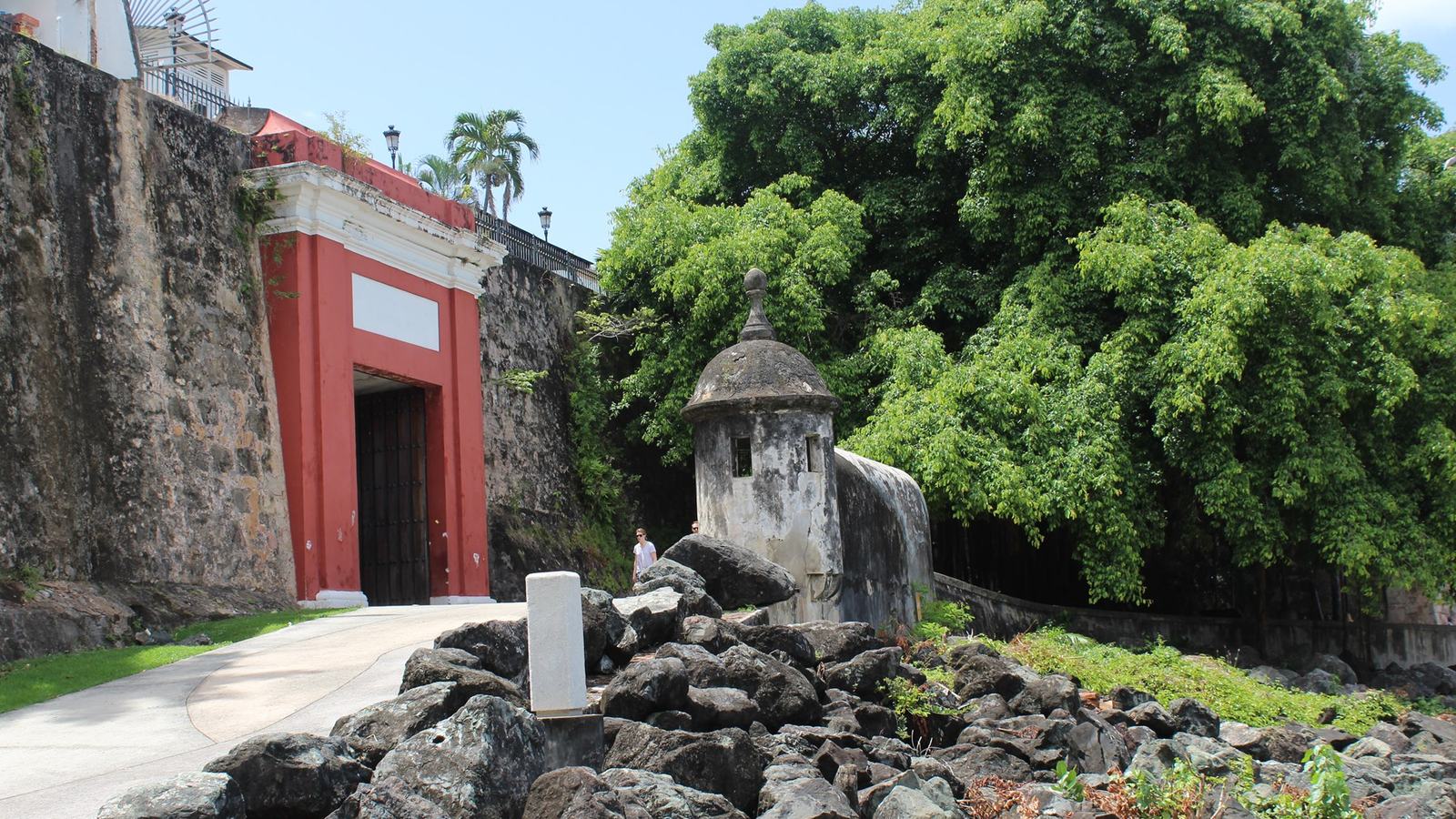
The San Juan Gate provides a particularly evocative connection between the walls and the city. Its architecture recalls the time when entering a fortified urban centre was a deliberate passage through controlled openings, and the accompanying photograph by National Park Service photographer Laurie Smith shows this historic gateway rather than the El Morro castle itself.
There is also the Paseo del Morro, a coastal walking route below sections of the walls. According to park management information, the trail is generally open from sunrise to sunset, subject to safety closures, offering a very different appreciation of the masonry and scale than the view from the upper fort.
How to plan the visit from a superyacht
El Morro is a historic attraction reached on land, not a pier designed for visiting yachts. A captain should arrange an appropriate authorised berth or shore transfer for the vessel and guests, then plan local transport or walking time to the fort rather than assuming the national historic site provides a place to secure a tender.
The National Park Service currently lists the fortifications as open daily from 9am to 5pm, with closures for Thanksgiving Day, Christmas Day and New Year's Day. These are operational details worth checking again immediately before travel because special events, maintenance and weather can occasionally alter public access.
The park lists a standard entrance price of $10 per person aged 16 and over, valid for 24 hours and covering both fortifications; younger children enter without charge. The same official fee page says the site uses cashless payment, which makes having an appropriate card or accepted contactless method a useful practical detail even for guests accustomed to cashless marina services.
San Juan's tropical climate can make the open grounds feel very hot and bright, while showers can occur during much of the year. The park identifies the Atlantic hurricane season as running from June through November, so a luxury shore itinerary still requires sensible weather monitoring and an unhurried plan that leaves room to change arrangements.
Architecture, interpretation and UNESCO recognition
The significance of the fort extends beyond its beautiful ocean setting. The National Park Service notes that the fortifications and nearby La Fortaleza were inscribed on the UNESCO World Heritage List in 1983, recognising a defensive landscape that evolved as maritime technology and political control changed over several centuries.
The complex rewards anyone interested in the relationship between naval power and architecture, as well as visitors who simply appreciate strong visual compositions. The repeated arches, thick walls, lookout positions and views over the water invite close attention, but the history makes those scenes more interesting than the photography alone.
A curated visit might devote the first part of the day to El Morro, leave time for a walk through the older streets and add a second fort only if the group enjoys an extended historical experience. The aim is not to rush between landmarks but to understand why the harbour entrance shaped the development of the surrounding city.
Returning aboard with a different view of the port
After visiting El Morro and the city walls, San Juan's harbour can look quite different from the deck of a yacht. The commanding walls are no longer merely scenery; they reveal a long relationship between the island, ocean trade and the decisions of people who built to control one of the Caribbean's important approaches.
Historical details are taken from the National Park Service's Castillo San Felipe del Morro history and its overview of San Juan's fortifications. Visitor hours and fees are checked against the park's official operating-hours and entrance-fee pages; guests should confirm current conditions before disembarking.