Engel & Völkers and Henley & Partners' new report examines the effects of international property portfolios, caution and generational succession on luxury buyers.
A second annual report examines the motivations behind acquisitions
Engel & Völkers Private Office has released its 2026/27 market report in collaboration with Henley & Partners, examining the relationship between luxury residential property, international mobility and long-term family plans. Announced on 16 November 2026, the research incorporates the observations of 185 real estate advisers operating in seventeen countries, alongside analysis of six markets through Henley & Partners' wealth mobility framework. Its central proposition is that personal enjoyment remains the most frequently expressed reason for buying a luxury home, while the preservation of family wealth has become an increasingly consequential consideration beneath that preference. The report is especially relevant to households maintaining substantial assets in several locations. It concerns advisers' assessments of buyer behaviour rather than a census of completed property transactions. Its findings should be understood in that context, particularly when considering the motivations of purchasers in markets or circumstances that may not be well represented within the sample.
Reading the figures in their proper context
The advisers estimate that wealth preservation outweighed lifestyle or practical use as a motive in more than one third of the transactions they considered. This does not mean that a third of all luxury homes worldwide were purchased solely as financial investments. The report deals with the relative prominence of motives, which may coexist within a single decision. A family can choose an appealing waterfront property because of its setting while also considering the security and potential value of the asset over a long period. An adviser may observe considerations that the family does not mention when first discussing a desired home. The resulting estimate is therefore a measure of professional perception rather than directly recorded financial outcomes or a declaration of each purchaser's private intention. For readers using the report to understand the market, that distinction is as important as the numerical findings. Neither the estimates nor the report's broader outlook establish the future investment return of individual properties.
International portfolios show a different pattern
The publisher provides a particularly useful comparison among groups of its advisers. Those who say relatively few of their clients own property abroad estimate that wealth preservation outweighs other motives in 36.5 percent of their transactions. The corresponding estimate is 52.3 percent among advisers whose clients mostly own property abroad, rising to 62.9 percent among those reporting overseas ownership for almost all their clientele. These figures describe groups of respondents differentiated by the composition of their client base. They do not measure the proportion of transactions attributable to a named country or establish that international ownership causes a particular motivation. They nevertheless suggest that an adviser serving geographically diversified households may encounter a different set of priorities from one serving primarily domestic purchasers. A family's second or third residence may have a purpose quite unlike its principal home. The value of that property can be considered in relation to other assets and the way the household expects to use different locations in the future.
Seven in ten advisers observe greater deliberation
Approximately seventy percent of the Private Office advisers report greater buyer caution in response to international uncertainty. The publisher associates the change with geopolitical events, taxation and regulatory considerations. A more deliberate acquisition process need not imply that affluent households have stopped purchasing residential property. It can instead influence the sequence in which they investigate locations, assess an individual asset and seek professional advice. A buyer choosing between two coastal regions might examine the rules relating to ownership, local infrastructure and long-term accessibility before deciding whether to inspect particular houses. Those questions differ from comparing architecture, condition and amenities within a single neighbourhood. The research records the advisers' perception of caution rather than a measured worldwide extension of the average period required to complete a transaction. It also does not establish that every buyer responds to uncertainty in the same manner. Local conditions and individual household objectives may produce considerably different decisions.
Succession introduces another set of priorities
The advisers estimate that the next generation materially influences approximately twenty-four percent of the transactions included in their assessment. The report also associates a higher degree of involvement by heirs with greater emphasis on long-term wealth preservation. A property that meets the needs of one generation may not necessarily meet those of the next. The principal home of a family with adult children living in several countries, for example, may require different arrangements from a residence used by a household whose members live in the same city. Decisions about the intended ownership structure, future use and responsibility for ongoing expenditure may matter as much as the selection of a particular building. These are matters that should be considered with relevant independent legal and financial professionals where appropriate. The survey does not establish that all families benefit from transferring property to their children or creating a particular ownership structure. Its contribution is to show how frequently future generations are identified as a meaningful part of the acquisition discussion.
Geography becomes part of the household's planning
The research describes relatively stronger market sentiment in some Mediterranean and Alpine locations, including Spain, Greece, Italy and Switzerland, alongside a more measured picture in the United States and Canada. Those indications should not be mistaken for official national house price indices. A country can contain several prime property markets that behave quite differently from one another. Coastal residences, urban apartments and Alpine retreats also have different patterns of use, availability and ongoing expenditure. For a family with a yacht operating seasonally in the Mediterranean, a coastal base may serve purposes beyond providing accommodation during the summer. It can facilitate visits by relatives, access to professional advisers and coordination of time spent between the yacht and locations ashore. A winter residence in another region may serve an entirely separate purpose. The report's emphasis on geography encourages purchasers to consider the respective roles of multiple properties rather than assess each solely through its individual architectural qualities.
Different analytical approaches serve different purposes
Henley & Partners' contribution examines the conditions associated with internationally mobile wealth across six selected markets using twelve weighted dimensions. As described in the accompanying press announcement, these include quality of life, legal and tax conditions, residence and citizenship arrangements, geopolitical stability and the movement of capital. The framework addresses the characteristics of jurisdictions rather than the physical condition or price of an individual property. A country that performs favourably in a broad comparative framework may still have important limitations for a particular household. Its immigration rules, ownership requirements and applicable tax treatment will depend on facts that a general market report cannot resolve. The publisher's combined approach is therefore useful as a way of identifying questions requiring further investigation, not as a definitive ranking of locations for every wealthy buyer. Henley & Partners and Engel & Völkers are both commercial providers of advisory services, and their research should be read alongside independent information relevant to the purchaser's particular circumstances.
Considering residential property alongside yacht ownership
A household with a large private yacht can face practical questions that are less prominent in the purchase of an ordinary holiday residence. Where the vessel spends substantial periods in a region, a property ashore may offer space for guests, storage or continuity of family activities between voyages. However, the convenience of a location needs to be assessed using the actual maritime infrastructure and travel connections available. A house overlooking the sea does not necessarily provide convenient access to a suitable superyacht berth. Nor does a residence in one jurisdiction automatically resolve the arrangements for the yacht's own operation, taxation or registration. These matters need to be considered independently. The acquisition of expensive property also introduces continuing obligations for maintenance, staffing, insurance and management. Households assessing several potential residences can benefit from understanding how those obligations interact with their intended pattern of travel and the other assets already held.
The implications of the latest research
The November publication describes a luxury property market in which decisions concerning personal enjoyment increasingly intersect with an awareness of uncertainty and generational transition. Its figures are useful for illustrating the priorities encountered by the participating advisers, provided they are not treated as transaction statistics or causal evidence. The selection of a particular home will continue to involve questions of design, condition, price and personal preference. The report suggests that an internationally mobile purchaser may also place those questions within a broader examination of family requirements and the possible functions of each residence. No forecast in the study establishes that an expensive residence will preserve wealth or appreciate over time. An acquisition decision should be supported by property-specific due diligence and qualified advice suited to the intended ownership and use. The latest Private Office research provides an industry perspective on the changing context in which those decisions are made.
Primary source: Engel & Völkers official Private Office Market Report 2026/27 overview, released November 2026.
Further official information: Engel & Völkers GmbH official press announcement via Presseportal, 16 November 2026.
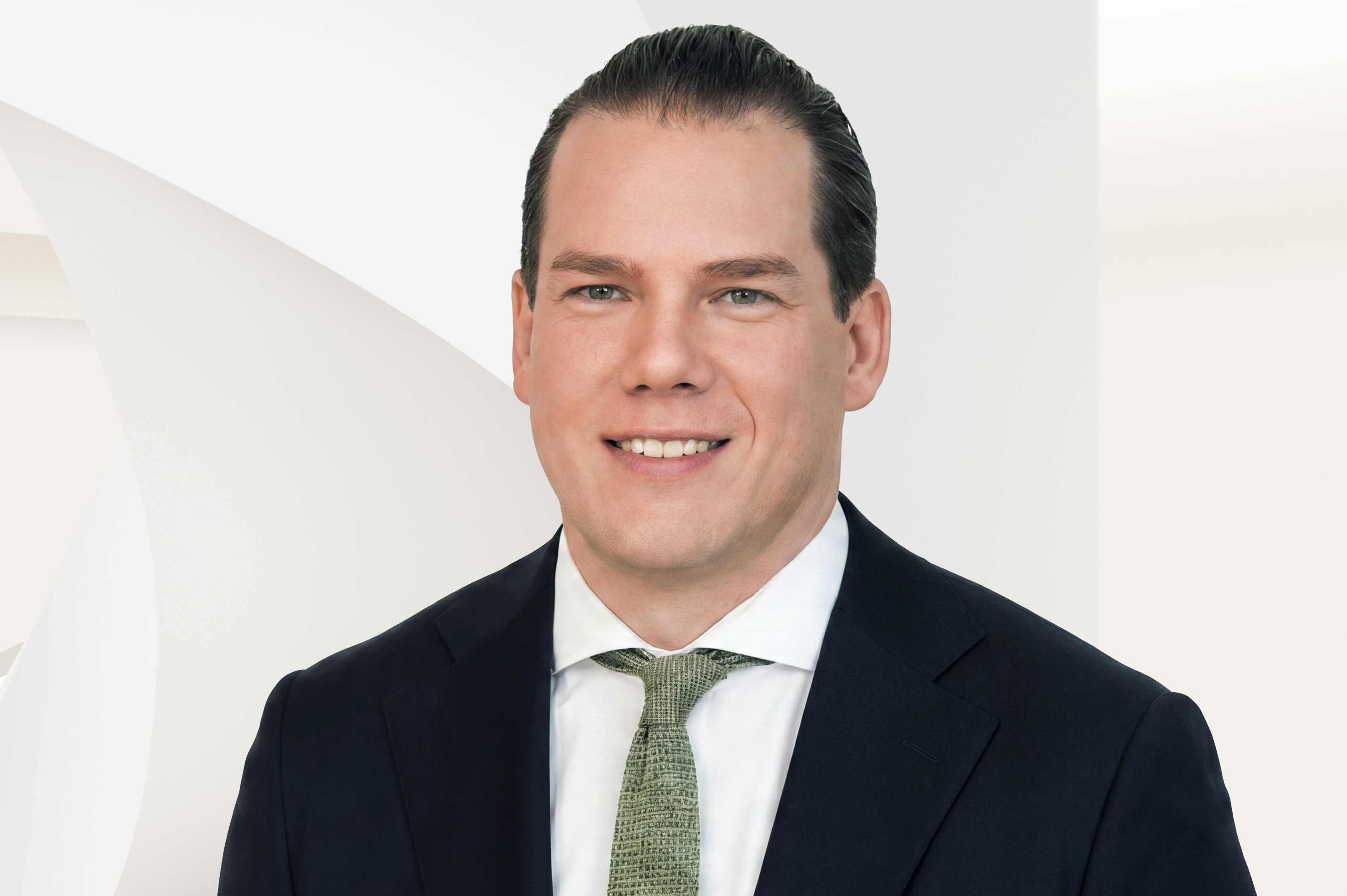
Photography: Engel & Völkers, issuer-supplied publicity portrait of group co-CEO Till-Fabian Zalewski distributed with the 16 November announcement. Official source.