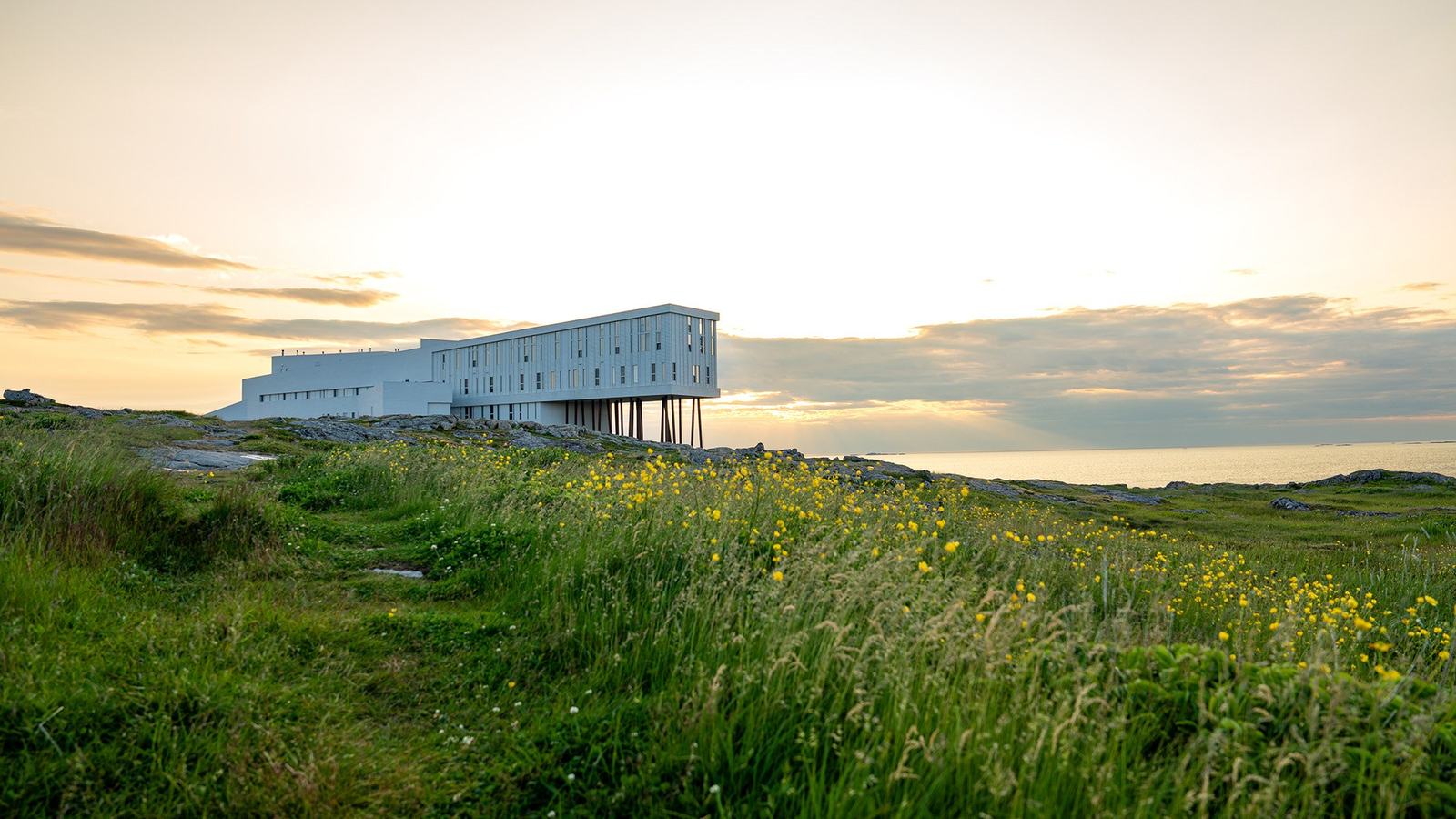
Newfoundland’s Fogo Island Inn brings 29 singular rooms, striking Atlantic architecture and a charitable community mission together on a rugged island shoreline.
A building at the end of the road
On Fogo Island in Newfoundland, the Atlantic is not a discreet backdrop to a hotel stay. It is the defining presence: a changing expanse of water, weather and light that can make the coastline feel both immense and unusually personal. Fogo Island Inn responds to that setting with an angular contemporary building on a rocky shore, an architectural gesture that is deliberately different from a grand urban hotel.
The hotel is small, with just 29 rooms and suites, and the limited scale underpins its relationship with the surrounding community. Visitors come for extraordinary scenery and carefully considered comfort, but also for a distinctive local culture. This is luxury that asks guests to be interested in where they have arrived, not merely how their room has been appointed.
Architecture with an unmistakable identity
The Inn’s design is immediately recognisable: a contemporary structure extending above the rugged shoreline on slender supports, with extensive glazing that directs attention towards the ocean. Rather than imitate a traditional fishing building, it uses modern forms to establish a dialogue with the landscape. The contrast between precise architecture and weathered rock is particularly compelling when the light changes quickly.
Architecture-minded visitors should consider spending time exploring the building as well as the island. The strongest photographs may be taken in shifting, imperfect weather rather than uninterrupted sunshine. Inside, sea views and thoughtfully selected local details add another layer to the relationship between design and place. Guests interested in craftsmanship can ask about the makers and materials represented in the interiors.
Twenty-nine ways to experience the coast
An intimate collection of 29 rooms and suites allows the Inn to offer a quieter pace than a large international resort. The rooms are positioned to draw the extraordinary Atlantic setting into everyday life, and the experience is more about contemplation than a continuous programme of hotel entertainment. The property presents hospitality as an opportunity to encounter the island through design, food and local knowledge.
Room categories should be examined for their actual layouts, views and practical arrangements, especially for couples or friends travelling together. The Inn welcomes children aged eight and over, according to its official guest information, so families should confirm both eligibility and suitable activities before booking. Guests with mobility needs can also discuss their particular requirements directly with the team.
A hospitality business built for a community
Fogo Island Inn is unusual in its ownership and stated purpose. It is a social business and community asset created and owned by Shorefast, a registered Canadian charity. The operator explains that operating surpluses support further community development and that the project is intended to sustain local employment and economic activity. This relationship is much more substantial than simply decorating rooms with a local motif.
It makes the destination interesting to travellers who think about what their spending supports. Guests can ask how Shorefast’s work connects to island businesses, artisans and the wider economy. The Inn’s public statements provide the rationale, while conversations on the island can add a human dimension. Respect for the community means treating its people as hosts and neighbours, not as scenery for a luxury travel photograph.
Different islands in different seasons
The official experience guide describes striking seasonal contrasts. Spring can bring offshore icebergs, summer long days and an active community calendar, autumn berry colours across the barrens, and winter a quieter landscape with the possibility of northern lights. No single season can guarantee a particular natural phenomenon, and that uncertainty is part of the character of travelling to this part of the Atlantic.
Visitors should choose dates around the kind of journey they enjoy rather than a fixed wildlife or weather promise. Those hoping to photograph icebergs need to understand that movement and visibility change. Winter travellers should take transport contingencies seriously, while summer visitors may find it valuable to leave unscheduled time for conversations and informal local discoveries.
Experiences guided by island knowledge
Fogo Island Inn’s programme can include boat trips, foraging walks, community visits, cultural storytelling, music and tours exploring architecture and design. The range is unusually well suited to a destination whose attraction is both natural and social. A guided walk can explain the relationship between a community and its land, while an architecture tour may reveal how contemporary design has been adapted to a remote coastal context.
The precise availability of each activity varies by season and local conditions. Guests should make interests known in advance but keep the itinerary flexible. For someone accustomed to exclusive high-end travel, there is real value in taking time to learn from an islander rather than trying to compress the destination into a series of standard excursions.
Food with a sense of origin
At a remote inn, dining has an important role in communicating the region. The appeal lies in ingredients, traditions and the careful connection between the table and the place outside the window. The Inn’s wider philosophy of place-specific hospitality suggests that food should be approached as part of the visit rather than simply a separate amenity. Travellers interested in local cuisine can ask what is available in their season.
Dietary restrictions and special occasions should be discussed before arrival, particularly where ingredients and suppliers are affected by island transport. Visitors may also want to explore the local community respectfully, using the Inn’s guidance to understand appropriate venues and opportunities. The strongest dining memory may arise from a simple ingredient carefully prepared with a good story behind it.
The practical value of getting away
Reaching Fogo Island involves more planning than checking into a capital-city hotel. Travel connections, ferries or other transport options, local weather and onward road arrangements should be confirmed with the Inn and relevant operators. International travellers should allow realistic margins and avoid assuming that a destination visible on a digital map is straightforward to reach in difficult weather.
Fogo Island Inn rewards those who welcome that remoteness. Its architecture is striking, but the lasting impression is likely to come from the combination of coastline, community and deliberate hospitality. For travellers interested in design with a social purpose, it offers a compelling reason to look beyond more familiar luxury destinations.