Four Seasons Resort Mallorca at Formentor hosted the Formentor Literature Prize and international literary conversations from 1–3 November 2026, honouring Portuguese writer Gonçalo M. Tavares.
Literary travel report, 12 November 2026. The 2026 Formentor Prize and associated conversations took place on 1–3 November. This is a report on a completed cultural gathering, not an invitation to attend an event still underway.
A literary gathering returns to a well-known Mallorcan landscape Four Seasons Resort Mallorca at Formentor has reported the return of the Formentor Prize for Literature and its associated literary conversations to the peninsula where the gathering first became known internationally. The 2026 programme took place from 1 to 3 November and brought writers, publishers and cultural figures together to discuss literature in a coastal setting long associated with creative exchange. Portuguese author Gonçalo M. Tavares received the year's prize, with a ceremony and a programme of debate held at the restored hotel. The news is the completed 2026 gathering and the identity of its recipient, not the creation of a new award or an upcoming ceremony. For Superyacht Guide's lifestyle audience, the story offers a reason to look more closely at the cultural history of a Mallorcan destination rather than treating the island simply as beaches, anchorages and fine restaurants. The peninsula has a distinctive literary association that rewards a considered visit even when no formal event is taking place.
Gonçalo M. Tavares is this year's recognised writer The official Four Seasons report identifies Gonçalo M. Tavares as the 2026 Formentor Prize recipient, selected for an approach to narrative that has attracted international attention. The award places his name within a longstanding tradition of discussing literature across national and linguistic boundaries. A literary prize can direct new readers towards a writer, yet it is not a substitute for engaging with the actual books. Tavares's work may appeal to readers interested in formal experimentation, philosophical questions and unusual narrative structures. Those are broad themes associated with his writing, not a claim that every published work uses the same method or concerns. A reader discovering the author through the ceremony may wish to begin with a translated work suited to personal interests and then explore other books with the help of a knowledgeable bookseller. The prize announcement does not provide sales figures or establish that particular translations are available in every market.
The ceremony and a musical performance marked the return The award ceremony took place on 1 November 2026, according to the resort, and included a performance by guitarist Pedro Mateo. Such programming positions the event as more than a formal presentation of a trophy. Music can help establish an atmosphere in which literature is encountered as part of a broader cultural tradition, with conversation continuing outside the structured speeches. It is nevertheless important to distinguish the published sequence from details that were not reported. The official release identifies the prize, the artist's performance and the programme's dates but does not supply a complete verbatim transcript of the discussions or an independent account of every audience reaction. This report therefore describes the elements that were publicly announced and considers their significance without inventing quotations or scenes from an event we did not attend. The outcome of the prize is established; personal responses from participants would require direct sourcing.
Publishers returned to questions about literature's future The gathering also included a Second European Publishers' Colloquium. The resort's account presents it as a forum for discussion about literature, the publishing world and the future of the written word. That is a timely subject because readers now encounter books through an array of physical and digital channels, while publishers must balance editorial judgement, translation, distribution and commercial realities. The existence of new channels does not eliminate the value of careful editing and a trusted relationship with authors. Nor does the prestige of a prize remove the difficult work of bringing books to audiences across languages. For a collector of first editions, an independent publisher or an enthusiast building a private library, these questions have practical consequences. A book's object value and its literary interest are different considerations, and a good cultural discussion allows room for both without treating every title as a financial asset.
A theme of artists, emulators and copyists invites debate The 2026 conversations were organised around the idea of artists, emulators and copyists, framed in terms of creating and recreating the atmospheres of the world. This is a promising theme because artistic development rarely takes place without influence. Writers inherit forms and techniques, read predecessors and respond to other voices, yet originality demands something more than straightforward imitation. The boundaries between quotation, homage, transformation and copying can be debated in literature as in music, visual art and design. For people who work with copyright or collect cultural works, the distinction is not purely academic. Attribution, authorship and legal rights can affect publication and ownership, while interpretation remains a matter of critical judgement. The event's title creates a space for those issues, but the official announcement does not establish a unanimous conclusion reached by the participants. A fair report should not manufacture a consensus merely because a symposium has a coherent theme.
Formentor's association with writers reaches back to 1961 The Formentor literary encounters originated in 1961, when gatherings on Mallorca helped create an international forum for writers and publishers. The resort recalls renowned figures associated with the history of the event, including Jorge Luis Borges and Samuel Beckett. That heritage is part of what gives the modern meeting its symbolic appeal. The landscape may have changed in its infrastructure and hospitality, but the idea of a meeting place away from a large capital city remains attractive. For travellers who enjoy visiting locations connected with books and cultural history, Formentor offers a way to understand how literary networks can form beyond a university or metropolitan salon. Historical associations still need care: the participation of a famous writer in past programmes does not imply that a particular room or terrace retains an unaltered appearance from the 1960s. A cultural itinerary is strongest when it distinguishes documented history from evocative but unverified anecdote.
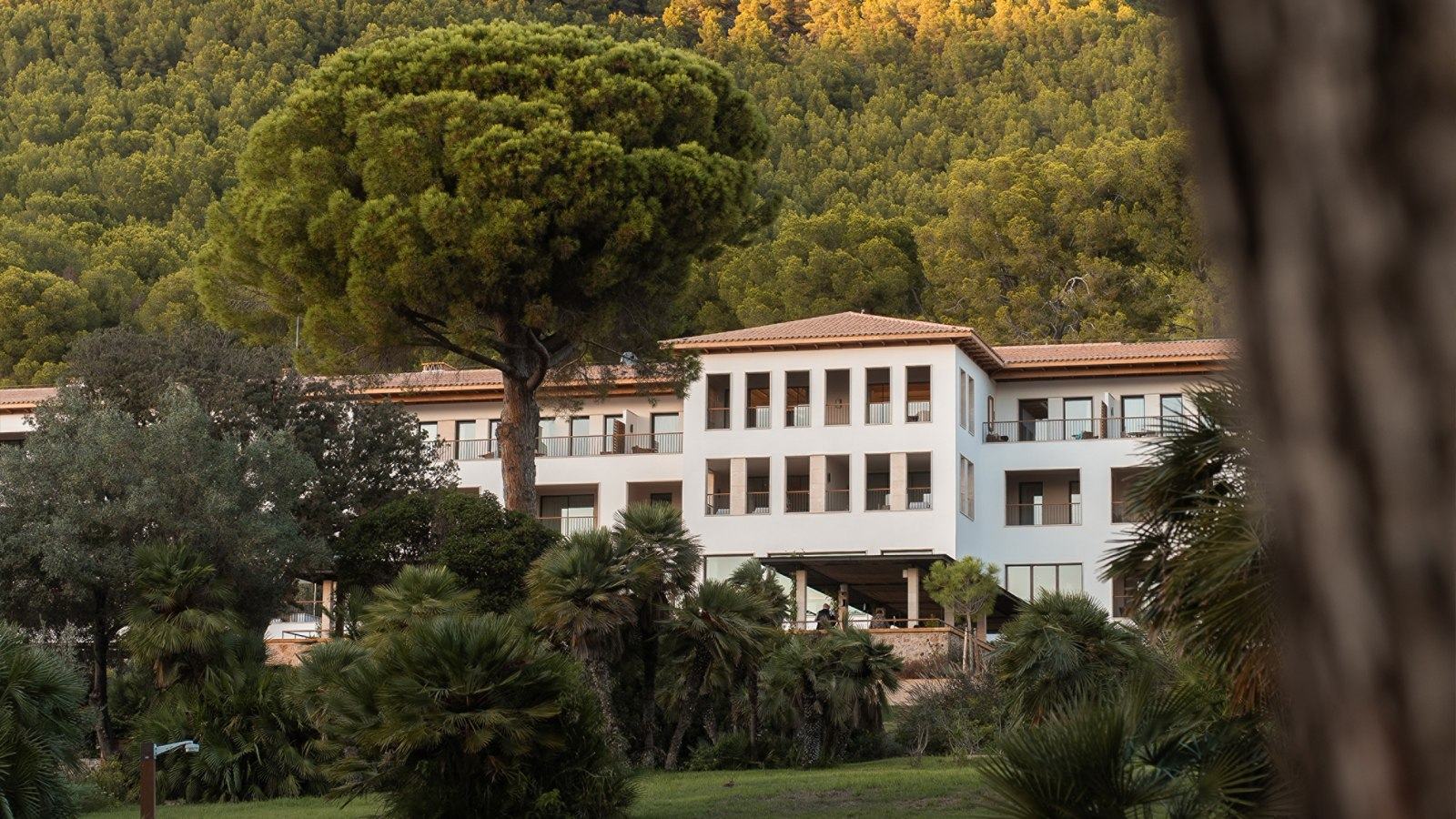
The hotel is part of the setting, not the reason for the prize The property has a longer history than its present branding. The original Formentor hotel opened in 1929, and Four Seasons introduced its restored resort in 2024. The new management has presented the literary gathering as a continuation of the peninsula's cultural story rather than a newly invented hospitality attraction. That distinction matters when historic places are refurbished. A visitor can enjoy contemporary comfort while still taking an interest in what has been retained, reinterpreted or changed. The hotel's setting on Mallorca's north-eastern coast provides a strong visual backdrop, but the quality of a literary event ultimately rests on its writers, ideas and exchanges. Press photographs of the resort illustrate the place; they should not be mistaken for documentary photographs of every speaker or prize recipient. The image accompanying this article is an official property view, identified as such, not evidence of attendance at the ceremony.
Mallorca's northern coast rewards a more reflective itinerary For owners and guests exploring Mallorca, the Formentor peninsula can offer a contrast with busier marinas and urban centres. The appeal lies in the combination of a rugged coastal landscape and a history of artists, writers and hospitality. It is important, however, to plan responsibly. Access to roads, protected natural areas and coastal points can be subject to restrictions or seasonal arrangements; visitors should check current official information before travelling. A captain or local agent can advise about safe anchoring and permitted access where relevant, but this article does not recommend an unverified anchorage or assume that every yacht may land passengers at a particular beach. A shore excursion focused on culture might combine landscape appreciation with time to read or discuss a writer encountered through the prize. Such an itinerary needs no speculative promise of exclusive access to the event or private meetings with the author.
Building a private literary collection takes different skills Some superyacht owners and guests maintain libraries that travel with them, while others collect signed books, manuscripts or first editions for shore-based homes. The Formentor Prize provides an occasion to think about the difference between reading and collecting. A book's importance to an individual reader may have little relationship to its rarity, while an unusual edition may require conservation even when it is not opened frequently. Onboard libraries pose particular challenges because books and paper can be damaged by humidity, temperature changes, sunlight and poor storage. An interior designer's shelving solution should be assessed for safe retention underway, ventilation and ease of handling. For rare material, a specialist conservator should advise whether the yacht is an appropriate display environment at all. Those concerns are a general collecting observation, not a claim that the 2026 Formentor event included a sale of manuscripts or a market for award-related memorabilia.
The value of a lasting cultural connection The completed November event brought the Formentor Prize and literary discussion back to a historic hotel on Mallorca, honouring Gonçalo M. Tavares and gathering participants around questions of creativity and influence. It adds substance to the cultural identity of a destination otherwise frequently described through scenery and hospitality alone. What cannot responsibly be concluded from the announcement is how every discussion unfolded, how many future books it will influence or whether the gathering will be repeated on exactly the same schedule. Those are matters for future reporting. The confirmed story is the prize and the restoration of an international literary forum at a place closely associated with its past. For travellers who value art, books and history, Formentor offers more than a fine view: it provides a reminder that memorable destinations are often defined by the conversations people have held there across generations.
Primary source: Four Seasons Resort Mallorca at Formentor, official 2026 literature prize report.