A source-checked cultural shore excursion to San Francisco's Fort Point National Historic Site beneath the Golden Gate Bridge, connecting coastal defense, maritime engineering and practical superyacht guest transfers.
A maritime landmark beneath the bridge
From the water, the south side of the Golden Gate Bridge is dominated by its monumental span, but a quite different piece of engineering stands beneath the roadway. Fort Point National Historic Site preserves a brick coastal fortification at the mouth of San Francisco Bay, positioned close to the water where nineteenth-century artillery could defend the harbor. For superyacht guests exploring San Francisco, the contrast between masonry fort and modern bridge creates an unusually rich shore excursion.
The most rewarding experience begins by understanding the fort from the bay and then visiting it from land. A yacht's deck offers the broad context of the harbor entrance, shipping movements, headlands and suspended bridge cables. A walk inside the old fort supplies the close-up story: vaulted brick rooms, gun positions, a lighthouse and the preserved physical evidence of generations who watched this strategic passage.
Planning a superyacht call in San Francisco Bay
Fort Point is a historic site, not a superyacht marina or a public landing facility for visiting yachts. Arrange a berth or an approved tender transfer elsewhere in San Francisco Bay and plan a vehicle journey to the fort's land entrance. Appropriate options depend on the vessel's length, draft, air clearance and marina availability, so the captain should confirm berth dimensions and operating rules directly with the facility before guests are promised an itinerary.
San Francisco is a working commercial harbor, and its famous scenery does not remove normal navigational duties. Strong tidal currents, traffic separation requirements, variable visibility and the busy Golden Gate entrance demand a thorough passage plan. Sightseeing close to the bridge or shoreline should remain subordinate to safe navigation, local traffic information and the restrictions applicable to the vessel. The visitor route to Fort Point should be planned separately from yacht manoeuvres.
Why the fort occupies this precise spot
Military planners regarded the Golden Gate narrows as critical to controlling access to San Francisco Bay. The National Park Service records that in 1851, soon after California entered the United States, the War Department ordered powerful casemate fortifications on both sides of the strait. The southern position received particular priority because it would help protect not only the port but also the wider Pacific coast and the economic interests attached to the Gold Rush.
Construction began in 1853 under the US Army Corps of Engineers. To place the fort's lowest guns near the water, builders reduced the coastal cliff dramatically, bringing the firing level down toward the surface of the strait. That decision tells guests much about the technology of the time: artillery planners wanted cannonballs capable of striking an approaching wooden ship after skimming or ricocheting across the water.
A fortress designed for a different navy
Fort Point was built in the Army's Third System tradition, with thick brickwork and layered gunrooms organised to concentrate fire across a narrow maritime approach. The park describes three tiers of casemates and an upper barbette level, while its masonry walls reached around seven feet thick. A close inspection makes the fort's geometry legible: repeated arches carry the loads above, corridors connect the gun positions and open views reveal the intended fields of fire.
This was the only fortification of its particular Third System design built west of the Mississippi River, according to the National Park Service. Yet technology was already changing as the structure was completed. Rifled artillery would soon make substantial masonry defenses more vulnerable than their designers expected. The fort is therefore both a triumph of craftsmanship and a monument to the speed with which naval warfare can make a major investment obsolete.
The Civil War at the Golden Gate
Although the Civil War was fought far from California's coast, Fort Point was armed and garrisoned during the conflict. The park's historical account records soldiers serving in the fort, drilling with artillery, maintaining the building and preparing for an attack that never arrived. Guests may be surprised to learn that such a substantial western fortress did not fire in combat during the war, even though its defensive purpose was taken seriously.
The story becomes more human when visitors imagine daily life inside the casemates. Enlisted soldiers shared crowded quarters, officers occupied more private rooms and fuel, food and routine maintenance had to be organised within a heavily defended but exposed waterfront building. Those details distinguish Fort Point from a purely picturesque ruin. It was a functioning institution whose military occupants spent far more time waiting and working than fighting.
How the Golden Gate Bridge changed the site
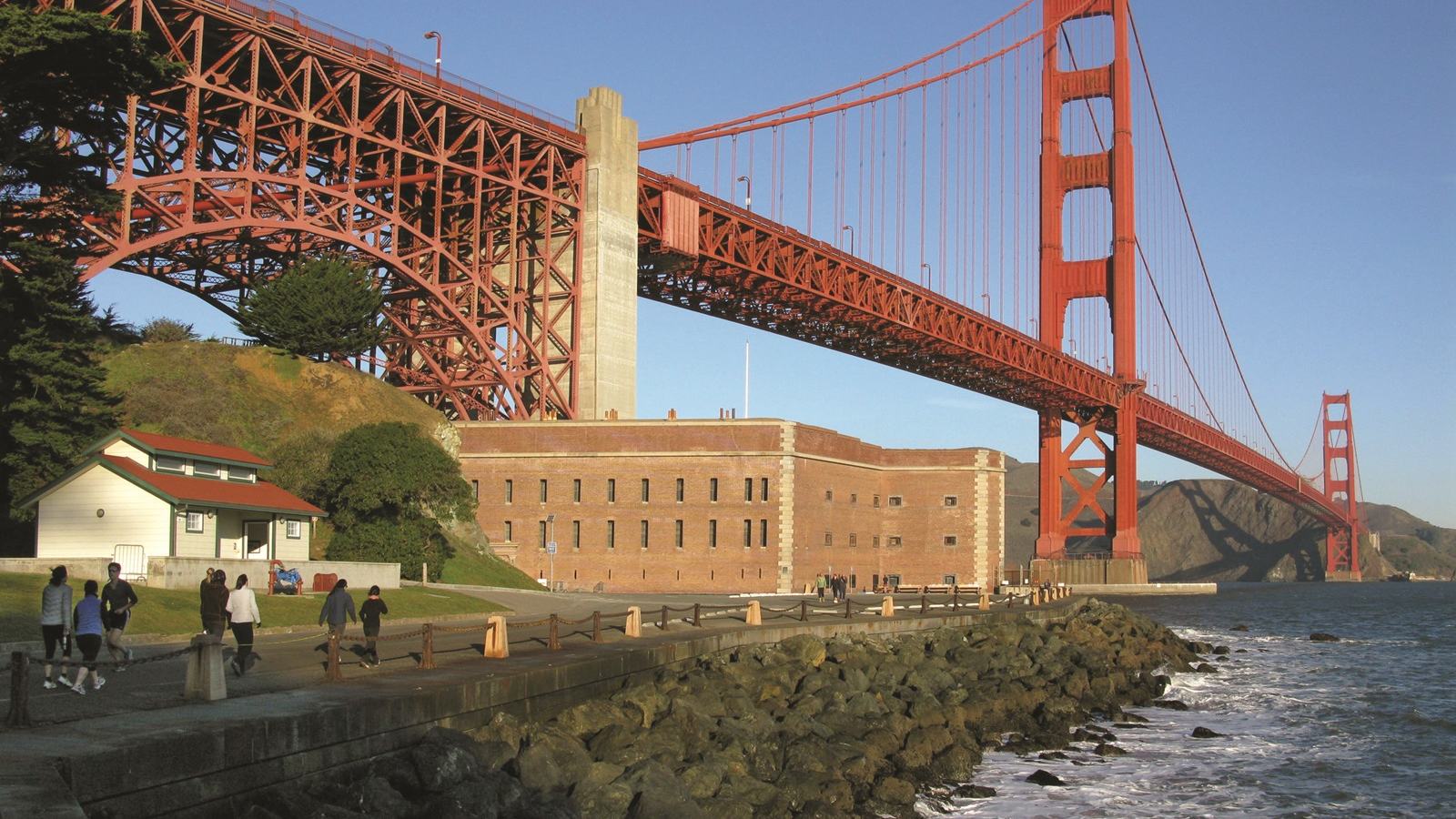
The bridge overhead appears so naturally fitted to Fort Point that it can be difficult to imagine the structure's survival was once uncertain. Plans for the Golden Gate Bridge raised the prospect of demolishing the old fort. The National Park Service credits bridge chief engineer Joseph Strauss with recognising its architectural importance and devising the special steel arch arrangement that permitted the bridge to pass above without destroying the historic building.
This produces one of San Francisco's most arresting architectural comparisons. Visitors stand below a twentieth-century suspension bridge while surrounded by a nineteenth-century brick defense system, both designed to command a demanding stretch of sea. Their coexistence also offers a lesson in preservation: major infrastructure and historic places do not always have to be rivals. Careful design can leave an older story visible beneath a newer one.
Inside the casemates and along the upper level
Allow time to explore the fort at walking pace rather than treating it as a brief photograph stop. From the brick arches visitors can follow the repeated gunroom spaces, examine interpretive material and look out toward the water that the defenders were meant to control. Surviving artillery and details of the building's construction make the tactical plan easier to understand, even for guests who have little prior interest in military history.
The upper level, when open to visitors, offers striking views beneath the bridge and across the entrance to the bay. It can also be windy and exposed, even when conditions at the yacht's berth feel mild. The Park Service may restrict roof access or close sections for safety and operations, so guests should check current conditions when they arrive rather than assuming every part of the fort is always accessible.
The fort's lighthouse and changing harbor
Fort Point's lighthouse introduces another facet of the site's maritime purpose. A fortification was built to deter hostile ships, while navigational lights supported the routine movement of vessels trading through the same waters. Seen together, the two functions show how a harbor entrance can be at once a strategic defense point and a passage essential to commerce, migration and the everyday life of a port.
The surrounding bay has changed almost beyond recognition since Fort Point's principal military years. Sailing ships, coastal steamers, cargo vessels and modern commercial traffic belong to different technological eras, but the Golden Gate remains a geographic threshold that every mariner must respect. Guests viewing the strait from the parapet can trace that continuity without romanticising the hazards of its current flows and shifting visibility.
The Presidio and a wider cultural itinerary
Fort Point makes a strong focus for a half-day on land, and the wider Presidio district can extend the excursion with landscape, coastal viewpoints and layers of San Francisco's military and civic history. The arrangement works especially well for visitors who want cultural substance between days at sea. A private guide with knowledge of maritime history can connect the fort's defensive role to the port's growth and the later decision to protect the coastline.
Plan transfers with realistic city traffic allowances, particularly if guests are returning for a timed departure. It is generally more sensible to reserve a dedicated car and guide than to rely on an improvised journey after disembarking from the yacht. A well-run shore day gives guests time to read exhibits, linger over harbor views and enjoy the place, without making the crew wait uncertainly for their return.
Opening times and seasonal realities
The National Park Service lists Fort Point as a managed historic site with opening days that vary across the year. Published visiting hours are generally daytime, and the fort can be closed on specified weekdays or holidays; the exterior may remain accessible at times when the interior is not. Check the park's current operating-hours page shortly before the visit, especially during seasonal transitions, instead of treating an old itinerary as confirmation.
San Francisco weather adds another practical variable. Fog may conceal the bridge's higher span while leaving the water below visible, or a clear afternoon may become blustery at the exposed waterfront. Guests should bring layers, sturdy walking shoes and patience for changing light. The mist that delights photographers should not be used as a reason for the yacht to venture into conditions beyond the crew's planned visibility limits.
Photographing an icon responsibly
The visual opportunities are exceptional because the bridge and fort can be photographed together from many scales. At sea, the broad composition tells the geographical story of the harbor; ashore, tight frames can reveal red brick arches, shadowed passages and bridge steel above. The National Park Service photograph used with this article, credited to NPS photographer Will Elder, shows the fort and roadway in their unmistakable relationship.
The temptation to pursue a dramatic photograph should never dictate close-quarters yacht manoeuvres in the narrow entrance or an unsafe position on shore. A captain can select a lawful and appropriate viewing point as part of a normal harbor transit, while guests can enjoy detailed architectural photography from accessible public areas. The strongest photographs often come from understanding what one is looking at, not from approaching the structure as closely as possible.
A rewarding shore day for culturally curious guests
A successful Fort Point outing balances three experiences: the maritime approach that gives the fort its meaning, a slow walk through its historic spaces and a wider view of the Golden Gate landscape. It suits guests interested in engineering, military history, architectural conservation and the relationship between ships and the cities they serve. The visit can be modest in duration while still feeling more distinctive than an ordinary scenic stop.
Before finalising the excursion, confirm the fort's open days and accessibility, the yacht's actual berth and transfer arrangements, the local marine forecast and the departure window. Those straightforward checks turn an attractive idea into an enjoyable private-yacht shore day. Fort Point rewards attention precisely because it makes San Francisco's past visible at the same harbor entrance through which modern yachts still arrive.