Four Seasons Hotel Hangzhou at West Lake reports repeat Two Michelin Key recognition and Tatler distinctions for the garden retreat and its Jin Sha restaurant.
Recognition for a garden retreat by West Lake Four Seasons Hotel Hangzhou at West Lake has drawn attention to a series of 2026 hospitality distinctions, including a second consecutive year with Two Michelin Keys and inclusion in Tatler Best selections. The hotel's announcement, published on 12 November, also highlights recognition for its Jin Sha restaurant. In a market crowded with hotel rankings, the important detail is that these honours assess different things. A hotel key is not a restaurant star, and inclusion on an editorial list is not proof that every visitor will have an identical experience. For travellers seeking an intimate connection to Hangzhou's gardens and regional food culture, the news provides useful evidence of how the property is being regarded by two different assessment programmes.
Understanding the Two Michelin Key distinction The Michelin Guide's hotel Key system recognises accommodation rather than restaurant kitchens. Four Seasons Hangzhou says it retained Two Keys in 2026, following recognition in the prior year. That differs from saying its Jin Sha restaurant received two Michelin Stars, a claim the release does not make. Travellers should look closely at the award category when comparing hotels and restaurants across markets. A high hotel distinction may reflect the coherence of a guest experience, sense of place and service, but it does not guarantee the availability of a particular room, view or personalisation. Readers can use the award as one piece of information alongside a property's design, location and practical services.
Tatler's Mainland China hotel selections The hotel says Tatler Best China named it Best Resort in Mainland China and included it among the Best 30 Hotels in Mainland China. Those are separate descriptions within Tatler's assessment and should not be converted into a numerical rank that is not disclosed. The property also appears in Tatler Best Asia-Pacific's Top 100 Hotels list, according to the release. The regional and Asia-Pacific programmes have different geographic scopes, so their recognition should not be presented as if they were the same award. From a traveller's perspective, such shortlists may be useful for identifying properties with an established reputation, but the final choice should still reflect individual priorities, seasonal conditions and the specific type of stay being planned.
Jin Sha earns its own attention Jin Sha, the hotel's signature Chinese restaurant, is included among Tatler Best China's Best 30 Restaurants and Tatler Best Asia-Pacific's Top 100 Restaurants for 2026. The culinary programme is described as engaging with traditions of Jiangsu and Zhejiang, interpreting regional ingredients through a contemporary fine-dining perspective. This is a worthwhile distinction from the hotel's accommodation awards: a guest may value the restaurant independently of an overnight stay. It also means the restaurant should be judged on its food, service and understanding of regional techniques rather than merely benefiting from its location within a highly regarded hotel. Reservations, menu arrangements and any dietary accommodation require direct confirmation with the team.
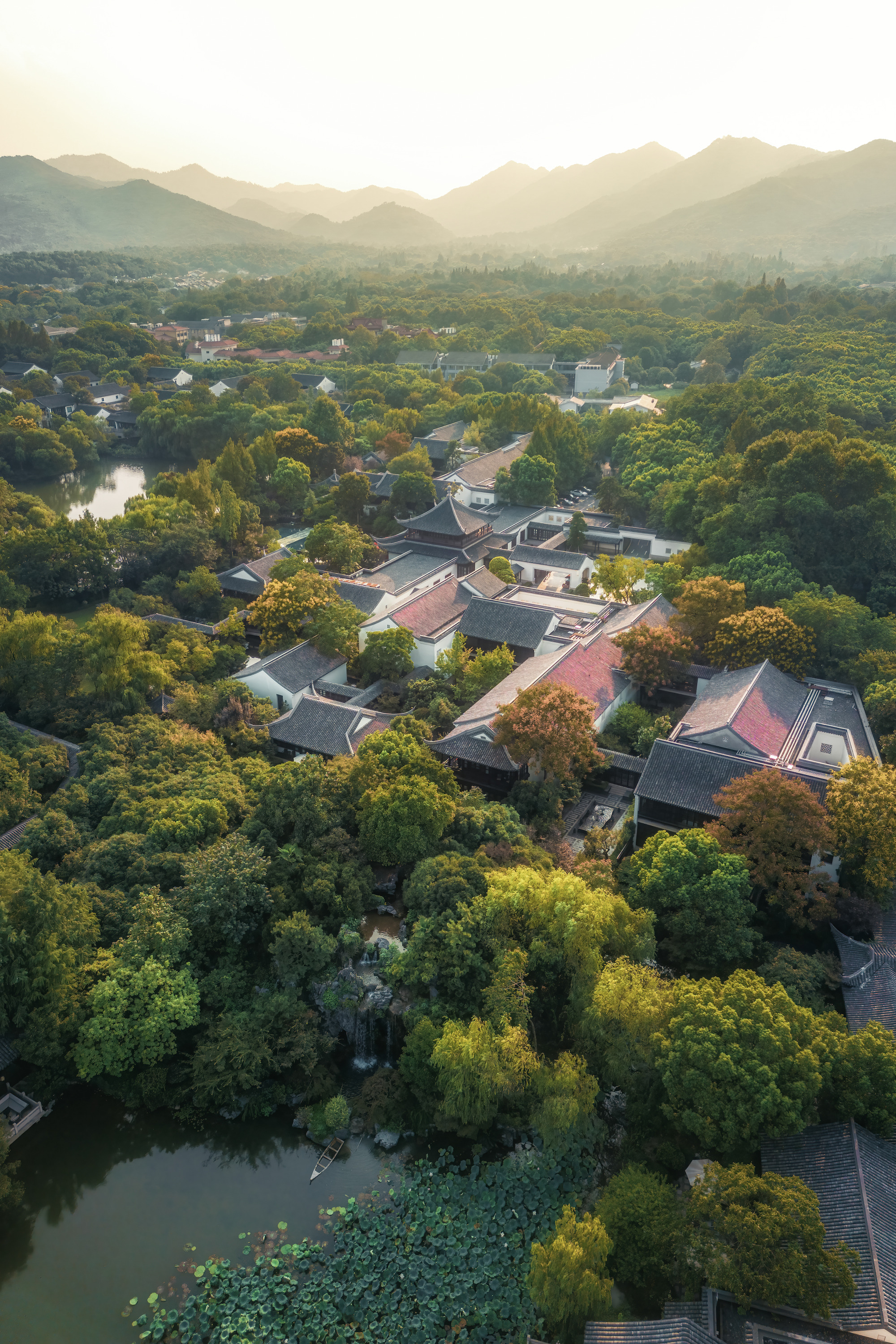
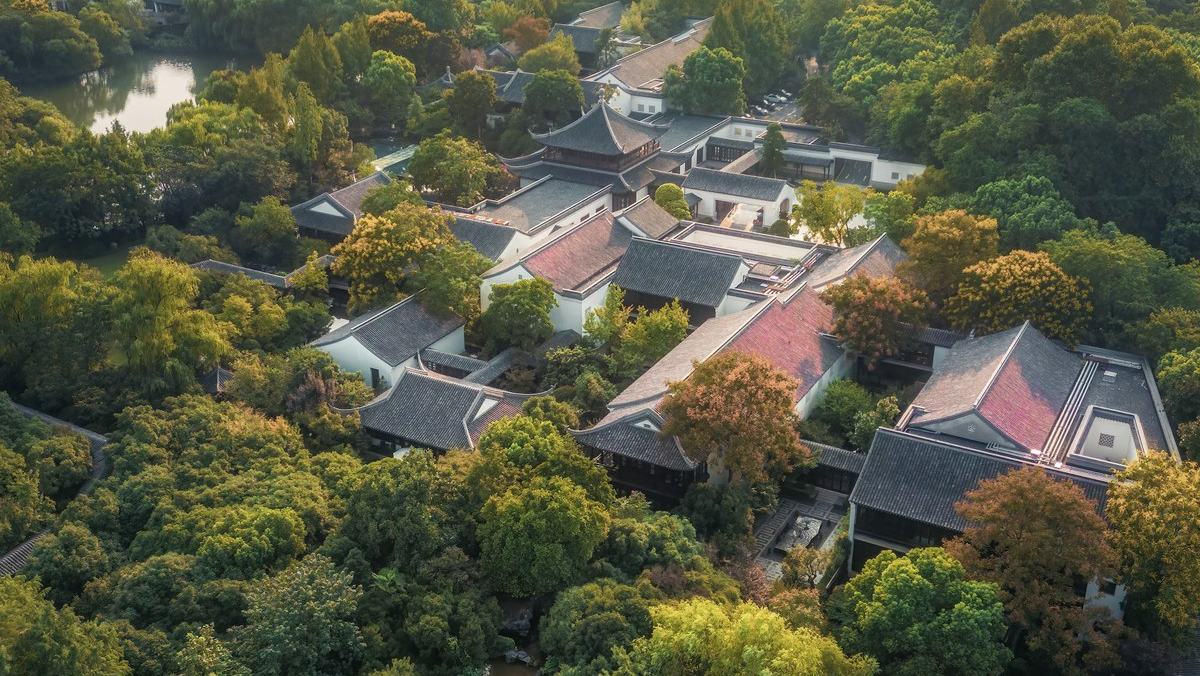
The wider cultural setting is important Hangzhou's West Lake is associated with gardens, art, landscape design and a long tradition of travel and cultural reflection. The Four Seasons property draws upon that setting through its landscaped spaces and a deliberately quieter style of hospitality. A visitor interested in Chinese gardens may respond very differently from someone who prefers a skyscraper hotel near retail and entertainment. A resort-style atmosphere within a city can be appealing precisely because it offers a change in pace. However, visual tranquillity in a press photograph does not mean the site is always silent or uncrowded. Weather, season, time of day and the number of guests all influence how the landscape is experienced.
Jiangnan design rewards close attention The release describes the hotel as rooted in the character of Jiangnan, the culturally rich region south of the lower Yangtze River. In a garden-led hotel, design can be communicated through paths, framed views, water, planted courtyards and changes in light rather than oversized decorative gestures. Travellers who appreciate architecture often notice how an arrival sequence gradually reveals the property. These qualities are different from the broad claim that a hotel is 'Asian-inspired', an expression that collapses many distinct traditions into a vague visual style. It is better to identify the actual geography and design references and recognise that their interpretation in a contemporary hospitality setting remains a creative choice.
The culinary appeal of Jiangsu and Zhejiang Jin Sha's regional identity invites guests to explore culinary traditions shaped by different landscapes, seasonal produce and a concern for balance and texture. The hotel's release highlights its engagement with Jiangsu and Zhejiang cuisine without supplying a definitive current tasting menu. It would therefore be misleading to promise individual dishes or prices on the strength of this announcement alone. Travellers can ask which preparations best express the kitchen's approach on the date of their visit. For collectors of food experiences, that conversation is often more rewarding than simply ordering the most expensive item, because the seasonal and regional context can reveal the thinking behind an otherwise unfamiliar preparation.
Hotel reputation and restaurant reputation can diverge The combined recognition for accommodation and dining is notable, but guests should remember that the two parts of a property are judged through different experiences. A restaurant may excel at a set dinner while a guest's overall hotel stay is shaped by arrival, housekeeping, room comfort and service over several days. A prestigious hotel can contain more than one dining venue with distinct styles, and accolades awarded to one restaurant should not be assumed to apply to them all. This distinction is particularly relevant when travellers use award tables to make decisions. They should check exactly which address, restaurant and category are named in each award announcement.
What repeat recognition suggests and what it cannot prove Receiving Two Michelin Keys in consecutive years may indicate consistency in the property's appeal, especially when supported by other assessments. It cannot prove that standards never change or that all guests receive the same treatment. Hospitality is delivered by people, and even celebrated properties face operational challenges, renovation periods and seasonal pressures. A thoughtful traveller may use recognition as a reason to investigate a property rather than as a guarantee that no further planning is required. Before reserving, it is sensible to clarify whether any rooms overlook the gardens, whether certain outdoor areas are accessible year-round and whether the facilities most important to a particular stay are operating.
The luxury of a slower itinerary Visitors to Hangzhou may be tempted to combine many attractions in a short stay, but a garden-focused hotel is best understood as part of an experience rather than simply somewhere to sleep between excursions. Time spent walking through a landscape, enjoying regional meals and observing changes in light can be as valuable as a densely scheduled private tour. There is a parallel with superyacht ownership, where the freedom to determine the pace of travel often matters more than a checklist of ports. This does not mean Four Seasons Hangzhou offers a yacht charter or a marina service. Its relevance to SYG is as a high-end land destination for owners and guests who value design, place and refined hospitality.
What to verify before a visit The announcement provides the award history but does not establish room availability, the price of a particular suite or whether a restaurant table is open on any given evening. Guests should confirm these matters directly with the property. Those travelling with dietary restrictions should ask Jin Sha about current preparations and possible cross-contact, rather than make assumptions from the restaurant's general culinary description. A family may also need information on accessibility, the layout of garden paths and the best room configuration. Well-planned travel remains essential even at a property that has received industry recognition. The award itself is a starting point, not a booking confirmation.
A distinction between awards and independent reporting This article reports the hotel's own account of honours from Michelin and Tatler and does not claim that the writer personally assessed a stay or tasted a meal at Jin Sha. The exact definitions of each accolade belong to the organisations that award them, and readers should consult those organisations for methodological information. The announcement is a current development in luxury hospitality rather than a newly opened hotel, restaurant launch or record-setting auction. Its significance is the accumulation of recognitions across two different elements of the guest proposition: the accommodation's sense of place and its restaurant's engagement with regional cuisine.
Why the awards matter to sophisticated travellers For an owner choosing a stopover or extended Asian journey, a property with both respected hospitality recognition and a compelling culinary programme can be worth investigating. The combination reduces the need to choose between a strong destination setting and an ambitious restaurant, though neither outcome is guaranteed for every stay. Four Seasons Hangzhou's awards place it on the shortlist for travellers interested in landscape, architecture and Jiangnan food rather than only grand urban spectacle. Its long-term reputation will continue to depend on delivering attentive, thoughtful service after the publicity of the awards has passed.
**Primary source:** Four Seasons Hotel Hangzhou at West Lake, 12 November 2026. Award names and categories reproduced as described by the hotel; no Michelin restaurant stars or invented rankings are attributed to Jin Sha. Official Four Seasons hotel image with appropriate credit.
Primary source: Four Seasons Hotel Hangzhou at West Lake.
Photo: Four Seasons Hotel Hangzhou at West Lake / 2026 official awards press gallery. Official press photograph.