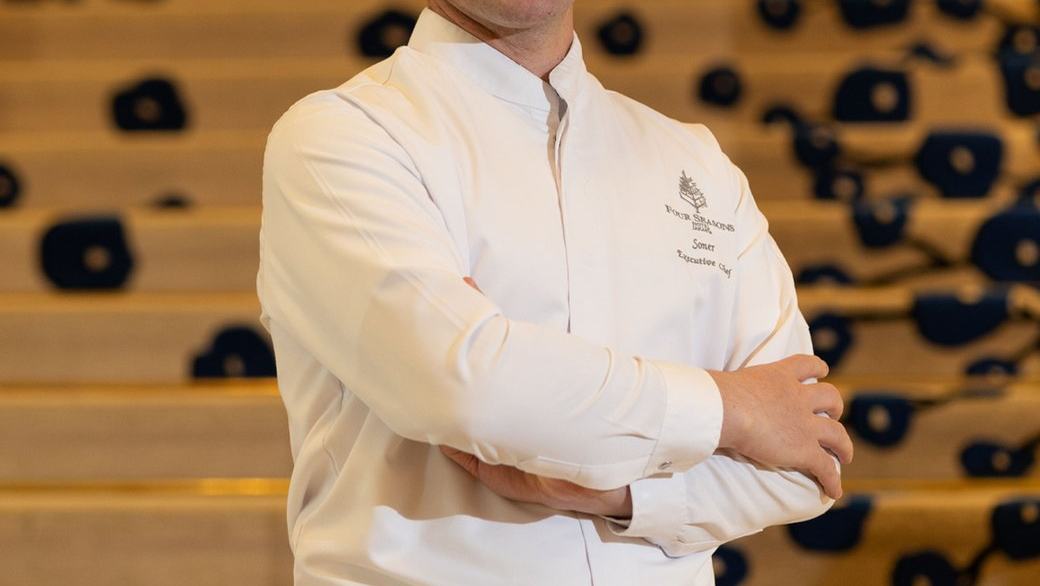
Four Seasons Hotel Jakarta appoints Turkish-born executive chef Soner Alpkaya to oversee Alto Restaurant & Bar, Nautilus Bar, Palm Court, pastry and bespoke dining experiences.
Luxury hospitality and cuisine, 12 November 2026. Four Seasons Jakarta has announced Soner Alpkaya as executive chef. The report covers his appointment and stated responsibilities, not a new Michelin award or a tasting menu that has not yet been announced.
An international chef takes charge in Jakarta Four Seasons Hotel Jakarta has appointed Soner Alpkaya as executive chef, placing him in charge of the property's dining programme and its extensive hospitality operations. The announcement was made on 9 November and positions the appointment as an important new chapter for the hotel's restaurants, bars and guest experiences. The Turkish-born chef brings experience across Europe, Asia, the Caribbean and the Middle East, including work in Michelin-recognised dining environments and large luxury-hospitality operations. The news is an appointment, rather than the opening of a new restaurant, and there is no published claim that his arrival has already produced a new award or an entirely redesigned menu. For guests whose dining interests extend beyond a single signature restaurant, the role matters because a hotel chef can influence everything from a formal dinner to the breakfast served in a private suite. Quality and consistency must be maintained at several levels simultaneously.
The appointment covers more than one restaurant Alpkaya's remit includes Alto Restaurant & Bar, Palm Court, Nautilus Bar, La Patisserie, banqueting, in-room dining and bespoke dining experiences. These are very different settings, each with its own demands. Alto has a distinct restaurant identity, while Palm Court may attract clients for less formal meetings and afternoon hospitality. A bar needs careful coordination between kitchen, beverage team and guest service. In-room dining often has to provide a polished experience within the practical constraints of transporting and serving food away from the main kitchen. Banquets introduce the challenge of cooking for groups without allowing volume to erase individuality. A talented chef can help coordinate these elements, but success depends on the wider culinary and service teams rather than on a single personality. The company has not published an itemised menu of future changes for every outlet.
Experience in varied luxury markets is useful The announcement describes a career shaped by major hospitality destinations across several continents. Alpkaya's exposure to different culinary traditions can help a chef understand guests whose expectations are influenced by international travel. Yet a global career is not itself an assurance that a particular restaurant will become more distinctive. The most compelling dining experiences often arise when international technique is combined with a precise understanding of local ingredients and cultural context. In Jakarta, that means engaging seriously with Indonesian produce, regional flavours and the expertise of local colleagues. The chef has expressed a desire to explore the country's food culture and incorporate its lessons into his work. This is a statement of intention, not evidence that every restaurant has adopted a new regional tasting menu. A meaningful assessment will depend on what is actually presented to guests after the appointment.
Private dining is a demanding part of luxury service Four Seasons identifies bespoke dining experiences as part of the chef's new responsibilities. For affluent guests, this can be a significant dimension of a hotel stay. A small private dinner may require careful negotiation over ingredients, dietary preferences, timing, wine service and the level of interaction with the chef. A successful event should feel personal without forcing guests through an elaborate performance they did not request. Service staff need to understand the expectations of both host and guests, and the kitchen must be able to deliver at the agreed time. The announcement does not provide a published price list for private chef services or promise that Alpkaya will personally cook every such dinner. Those details would require direct arrangements with the hotel. What is confirmed is that his overall remit includes bespoke culinary hospitality.
Respect for ingredients is part of the stated philosophy Alpkaya emphasises the importance of human connection and memorable shared occasions in fine dining. The hotel also describes his work as grounded in respect for ingredients, technique and a collaborative kitchen culture. This approach can suit guests whose idea of luxury is less about conspicuous decoration and more about the origin, flavour and handling of exceptional produce. It also demands discipline. Ingredients must be chosen for quality, transported and stored correctly, and prepared in ways suited to the dish rather than simply carrying an expensive label. An exceptional product can be wasted by poor timing or an overcomplicated preparation. The role of the kitchen team is to create consistency while leaving room for creativity. Such principles are common in ambitious hospitality, but the distinction between a stated philosophy and its successful execution should remain clear in an editorial assessment.
Local food culture offers a strong foundation Indonesia has a rich range of regional cuisines and ingredients, and Jakarta brings together influences from across the archipelago. The chef has said he intends to explore those traditions as he develops his work. A hotel that serves international guests can introduce them to local food without treating that food as a novelty detached from its origins. This requires knowledge and the involvement of people who understand the ingredients and preparations. The best interpretation may sometimes be a traditional dish executed with great care rather than an elaborate fusion designed principally for visual impact. For visitors arriving by private aircraft or spending part of a wider Southeast Asian journey in the capital, a well-conceived hotel restaurant can provide a first encounter with the country's culinary character. The announcement establishes ambition; future menus will reveal how the team approaches that responsibility.
Leadership matters inside the kitchen A senior hotel chef must manage more than recipes. Training, mentoring, quality control, procurement, service timing and the wellbeing of staff can determine how consistently a guest enjoys a property. The company highlights Alpkaya's interest in collaboration and nurturing teams. This is relevant to any large hospitality organisation where many people contribute to the final experience, sometimes with different specialisms and levels of seniority. A memorable meal can depend on the pastry kitchen, a bar team, service staff and procurement as much as on the executive chef. Strong leadership should establish standards while allowing other professionals to develop their expertise. The hotel has not disclosed private details of staffing changes or contracts, and those should not be inferred. What can be said is that the appointment carries management responsibilities affecting the whole culinary operation.
A hotel dining programme serves varied needs Business travellers, families, long-stay residents and visiting leisure guests may use the same hotel very differently. One guest might want a quiet meal before an early departure; another may be hosting an important dinner; others may need seamless room service during an extended stay. The chef's challenge is to protect a recognisable standard without assuming every guest wants a theatrical tasting menu. The availability of quality ingredients, appropriate portion sizes, reliable dietary information and considerate service can be as important as the more visible creative elements. For ultra-wealthy clients, discretion and flexibility may be central. That can mean organising a meal to accommodate a private schedule while maintaining the property's normal safety and quality standards. The specific capabilities of each outlet and private space should be confirmed rather than imagined from a broad appointment announcement.
Alto and Nautilus have distinct identities The hotel's current dining outlets offer a varied setting for the chef's work. Alto Restaurant & Bar has a recognisable Italian association, while Nautilus Bar occupies a different role in the property's food and beverage programme. Palm Court and La Patisserie provide further opportunities for guests to experience the hotel's hospitality. It would be inaccurate to assume that Alpkaya's arrival converts every venue to the same style of cuisine. An executive chef can maintain several distinctive identities through shared standards, technical guidance and the development of the teams responsible for each outlet. The source does not publish a complete set of new menus or opening dates connected with his appointment. Readers should therefore look for specific future announcements rather than interpret the leadership change as a wholesale relaunch that has already occurred.
The general manager frames the appointment as a milestone General Manager Samit Ganguly welcomed the chef as part of the property's continuing development, highlighting international experience and respect for cultural authenticity. That represents the hotel management's view of the appointment, not an independent award or critical review. Such announcements are valuable because they identify who has responsibility and what the organisation intends to prioritise. Their significance becomes clearer once guests can assess the execution over time. A new chef may take time to establish relationships with suppliers, understand the working systems and make informed changes. The most important early measure may be continuity of standards while those adjustments take place. The source provides no evidence of a disruptive closure or planned shutdown of outlets during the transition, and none should be suggested.
What guests can reasonably expect next The confirmed change is the appointment of Soner Alpkaya as executive chef at Four Seasons Hotel Jakarta in November 2026, with oversight of Alto Restaurant & Bar, Palm Court, Nautilus Bar, La Patisserie, banquets, in-room dining and bespoke experiences. His career includes international luxury operations and a stated interest in Indonesia's culinary traditions. No specific new tasting-menu price, opening event or restaurant award has been confirmed in the release. Guests with particular dietary, privacy or event requirements should make enquiries with the hotel's own team. For the ultra-luxury traveller, the interest lies in whether the property can offer a consistent, deeply personal dining experience across varied settings. That question cannot be answered by a press announcement alone, but the appointment establishes who will lead the next stage of the hotel's culinary development.
Primary source: Four Seasons Hotel Jakarta, 9 November 2026, Soner Alpkaya executive chef appointment.