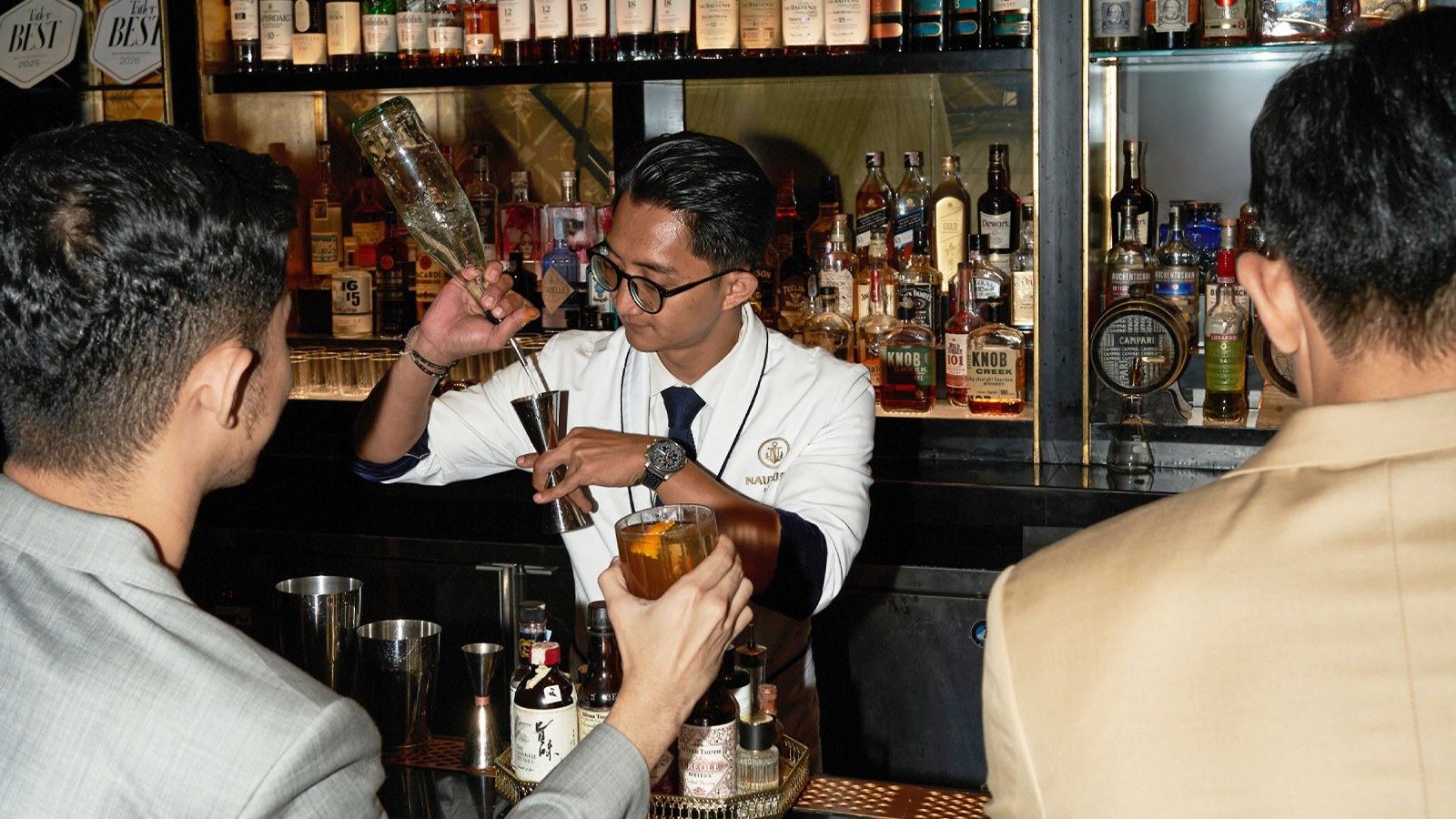
The new Nautilus Bar menu explores Indonesia’s mountains, fields, forests and ports through local flavours and premium cocktails.
A new direction for Nautilus
The new programme has four principal chapters. The hotel identifies Turmerizzzz, combining gin, turmeric and Javanese long pepper, and Noir, with whisky, chocolate and nutmeg vermouth, in Mountains & Peaks. Lands & Fields includes the mango-and-cinnamon Mango Tango and the pepper-and-star-anise Velvet Road. Forests & Jungles introduces Honeyrita and Es Teler, the latter referring to a traditional dessert with jackfruit, coconut and pandan. Seas & Ports features Spice Smuggler, finished with torch-ginger mist, and Dockside Dondong, using kedondong and coconut. These are named drinks described by the hotel, not tasting notes from an independent visit. The original menu's Red Pearl, Lada P & J, Koko Pala and Negroni Collection also remain available according to Four Seasons.
Four Seasons Hotel Jakarta has introduced a new cocktail programme at Nautilus Bar, shifting its inspiration from individual spices toward the wider landscapes of the Indonesian archipelago. The hotel announced the new menu on 12 November 2026, describing a sensory journey through mountains, forests, coastlines and fertile agricultural regions. It is an evolution of a bar that has long used the history of Indonesia’s spice trade as a starting point. The concept is relevant to travellers who want a city hotel experience with a distinct local identity rather than an interchangeable international menu.
Moving beyond the spice route
The original Nautilus identity drew on Indonesia’s historic position in maritime commerce, with ingredients including pepper, pandan, cinnamon and nutmeg. Those flavours are recognizable building blocks, but a menu organized around landscapes allows a different kind of storytelling. A guest can encounter an idea of the coast or the forest through aroma, texture and presentation rather than through a single named ingredient. It also creates a challenge: the finished drink needs to work on its own terms. A compelling origin story does not compensate for an unbalanced cocktail, and the strength of the new programme will depend on execution at the bar.
Why geography is a useful culinary framework
Indonesia’s geography offers unusually diverse reference points: volcanic mountains, coastal fisheries, tropical forest, agricultural islands and the trading networks connecting them. This complexity is attractive for a hospitality team seeking a broader narrative than a conventional list of classics and house specials. Yet any claim that a cocktail authentically represents an entire region should be approached with caution. Such drinks are interpretations produced by bartenders, not comprehensive depictions of local food cultures. The responsible way to present them is as creative expressions informed by places and ingredients, with appropriate acknowledgment of suppliers and traditions.
A bar with a maritime backstory
Nautilus occupies the mezzanine level of the hotel, and its identity makes reference to the voyages, trading routes and exchanges that shaped the archipelago. This resonates with an international yachting audience because maritime movement is part of the country’s history and present-day travel appeal. The connection should not be exaggerated: a hotel cocktail menu is not a new marina, charter product or superyacht service. It is instead a shore-side hospitality development that could interest owners or guests spending time in Jakarta while travelling through Southeast Asia. Accuracy about that distinction matters in the lifestyle section of a superyacht publication.
The value of specificity in luxury hospitality
Among upper-tier travellers, genuine differentiation increasingly comes from what a property can interpret about its location. Global hotel service standards remain essential, but a destination-specific experience gives a returning guest a reason to pay attention. A locally framed drink, knowledgeable service and an informative discussion with the bartender can convey more personality than elaborate presentation alone. Success depends on the staff’s ability to explain the ingredients and preparation in natural language. The best version is conversational, not a memorized performance. The hotel's release establishes the concept, but independent assessment of its delivery would require a visit.
Questions about ingredients and provenance
A landscape-led programme invites practical questions. Where do the ingredients come from? Which are seasonal? Are local producers involved, and how does the hotel handle inconsistent supply? The company’s announcement does not establish all of these details, so they should not be inferred. Guests who care about provenance can ask the team directly. Luxury hospitality is increasingly judged on whether brands can turn promises of authenticity into verifiable sourcing and respectful relationships with producers. The origin and handling of an ingredient may be as interesting as the finished cocktail, especially for visitors who collect culinary experiences as carefully as they collect art.
Tailoring the experience to the guest
Personalisation is frequently discussed in premium hotels, but it means more than placing a guest’s name on a reservation. At a bar, it can involve understanding preferred levels of sweetness, bitterness, aromatic intensity and alcohol, and offering an alternative for guests who do not drink. A thematic menu can make this easier by inviting conversation about flavour and place. There is no reason the Indonesia landscape narrative must be limited to alcoholic drinks. However, the press release should not be taken as proof of a specific non-alcoholic selection unless the hotel provides one. Guests can seek confirmation when booking.
Why the setting matters
The location inside Four Seasons Hotel Jakarta gives Nautilus access to hotel guests, residents and visitors who may not be staying overnight. In a capital with numerous restaurants, lounges and premium hospitality venues, ambience and service are part of the competition. A mezzanine bar offers a different rhythm from a waterfront resort or a high-rise rooftop. For visitors arriving on business, it may provide a relatively contained setting for a meeting or evening conversation. For leisure travellers, the appeal can lie in the contrast between a busy city outside and a more deliberate hospitality experience within.
Design, music and the pace of service
An immersive menu is not only about taste. Lighting, glassware, sound and the manner of introducing each drink contribute to the interpretation. These elements need to reinforce rather than distract from the cocktail. A complicated presentation can become tiresome when repeated at every table, while a concise explanation may give guests just enough context to appreciate the idea. The official announcement does not offer evidence for specific new design or music changes, and none should be implied. What can be said is that the concept sets an expectation: the environment and service need to support a journey through Indonesia rather than merely label drinks after landscapes.
A broader opportunity for destination storytelling
The launch reflects a broader question for international luxury brands operating in culturally complex places. How can a hotel express the character of a destination without reducing it to a few familiar motifs? It requires curiosity, collaboration, culinary competence and restraint. Indonesia is not a single homogeneous culinary or environmental landscape. An effective programme could encourage guests to explore beyond their usual reference points, while acknowledging that a bar menu can only introduce part of the country’s diversity. The long-term test will be whether the concept evolves with guest feedback and the expertise of the team.
What travellers should confirm
Before planning an evening around the new menu, visitors should check the current opening hours, availability of seats, any dress expectations and whether reservations are recommended. Prices and specific drinks can change, and none are supplied here as fixed facts. Travellers with allergies or dietary restrictions should ask the hotel for ingredient information rather than rely on general descriptions. Those interested in a particular drink should confirm that it remains on the current list. These are ordinary precautions, but they help turn an appealing press announcement into a reliable hospitality experience.
The editorial significance
Four Seasons’ 12 November announcement is a modest but distinctive luxury lifestyle story, not a claim of a newly opened hotel or a world-record bar. Its importance lies in the intentional move from a spice-by-spice framework to a geographical one. The next question is whether Nautilus can make that abstract premise tangible in the glass and through its staff. For sophisticated travellers, including those arriving in the region by yacht, the most memorable luxury moments often come from learning something specific about a place. Nautilus is attempting to make that kind of encounter central to its offering.
Primary source: Four Seasons Hotel Jakarta.
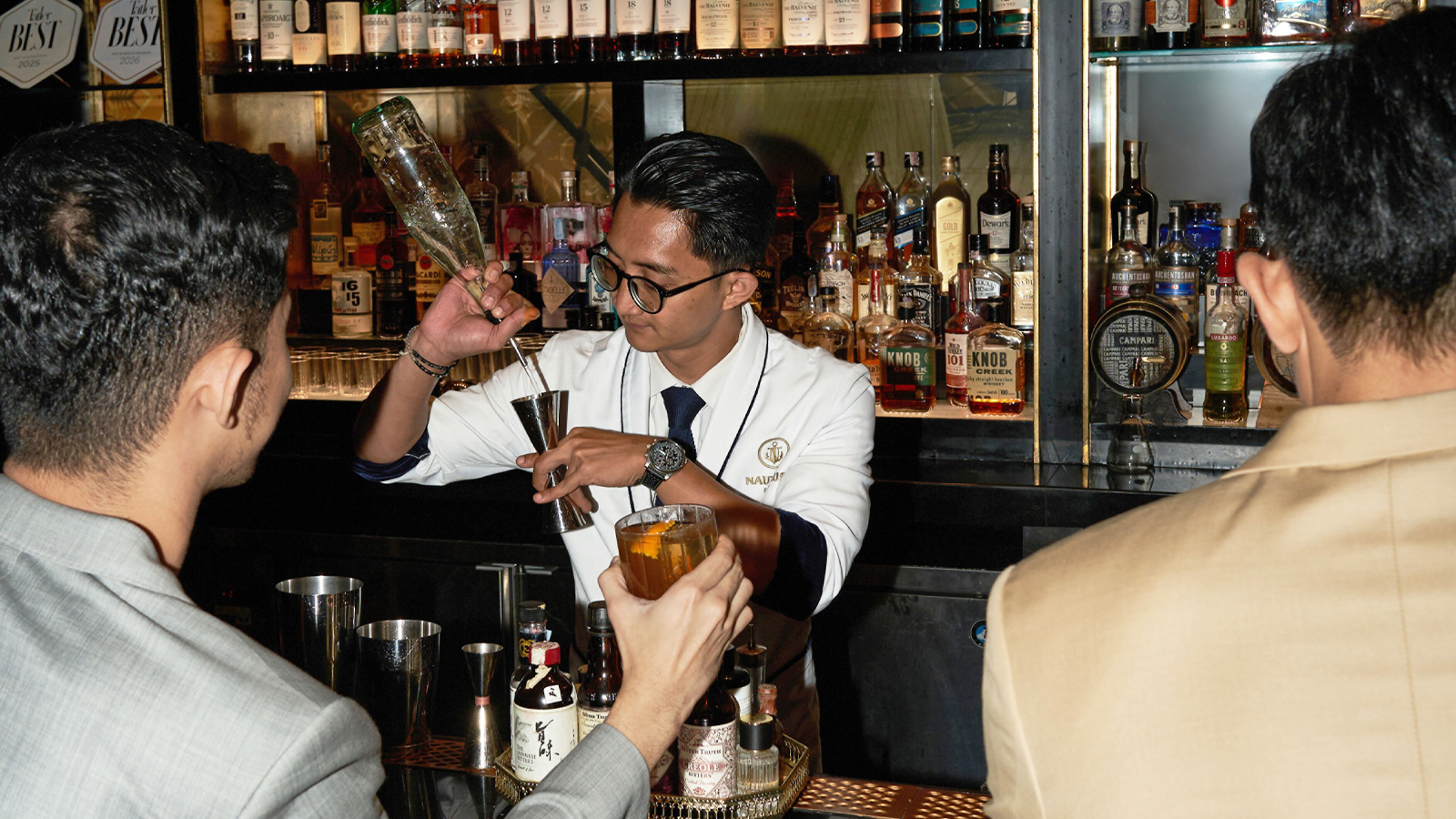
Photo: Four Seasons Hotel Jakarta / official Nautilus Bar press gallery, 12 November 2026. Official press photograph.
Source
Four Seasons Hotel Jakarta