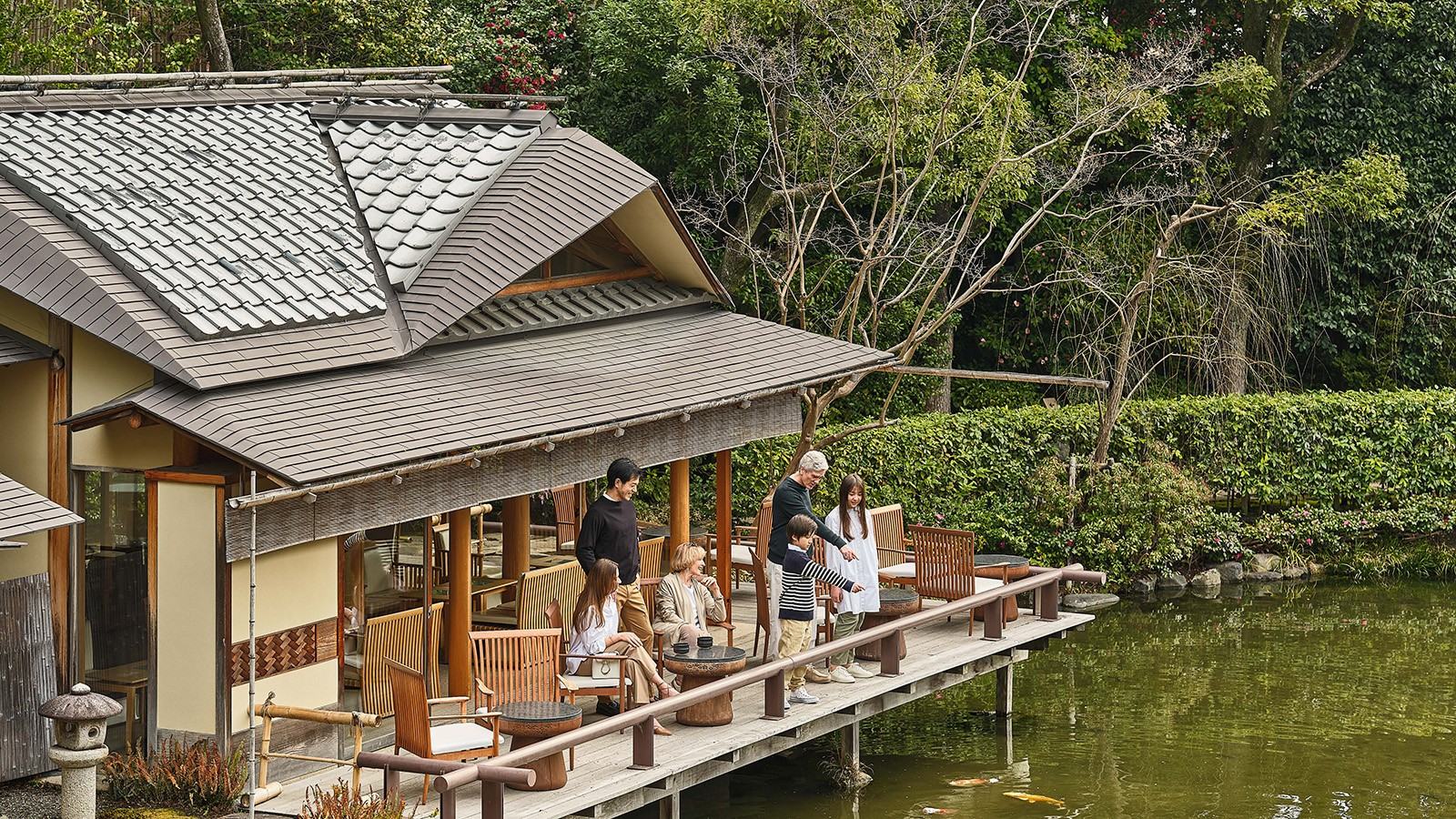
The Kyoto hotel proposes family stays with adjoining suites, kintsugi and kimono experiences, sushi workshops and historic gardens for multiple generations.
An old garden provides a shared centre
Four Seasons Hotel Kyoto is highlighting multigenerational travel through a programme centred on its 800-year-old pond garden, connecting rooms and guided cultural activities. Rather than asking children, parents and grandparents to follow the same tightly scheduled tour, the hotel emphasises shared spaces where different ages can participate at their own pace. The historic garden makes a natural meeting point between excursions.
Set in Kyoto’s Higashiyama district, the property offers a calmer counterpoint to the city’s busy temples and cultural attractions. Its pathways and koi pond create opportunities for informal observation, while the wider programme introduces activities that require more direct participation. The principle is straightforward: some of the most memorable family moments emerge between formal appointments.
Accommodation needs change with family size
Suites and connecting rooms allow extended families to remain close without eliminating privacy. For longer stays, the Residence Rentals offer kitchens, dining areas and the rhythms of a more self-contained home. Such facilities can matter more than a dramatic hotel lobby when a family includes children with different meal times or older travellers who prefer some quiet.
The exact floor plan determines whether an accommodation arrangement works for a particular group. A kitchen is useful only when its equipment and layout meet the family’s needs, and connecting doors should be confirmed in writing rather than assumed from room names. Those practical questions deserve attention before booking an international holiday involving several households.
Culture is approached through making and doing
Cultural Ambassador Nao Yokoyama coordinates introductions to Kyoto traditions, including games, kimono dressing, kintsugi workshops and photography. Kintsugi, associated with repairing broken pottery, offers a tangible way to discuss care and restoration across generations. Experiences led by local practitioners are most rewarding when guests allow time to learn rather than rush through a list of iconic activities.
A family may also arrange a rickshaw ride or a carefully hosted encounter with Kyoto’s geisha traditions. These activities involve living cultural practices rather than staged attractions whose meaning can be reduced to a photograph. The hotel’s concierge can explain appropriate etiquette, booking requirements and which experiences will suit children.
Meals create another point of contact
Sushi Ginza Onodera offers a hands-on sushi class for families, while the restaurant’s counter experience welcomes children aged eight and above under its stated conditions. That age threshold is a useful planning detail for parties with young children. At EMBA KYOTO GRILL, local vegetables and grilled seafood or meat provide a more flexible family-dining alternative.
SEY bar adds a different evening atmosphere with drinks and izakaya-inspired plates, although it may not be the most suitable setting for every age group. Parents can balance shared meals with quieter adults-only occasions. A longer residential stay permits that rhythm without forcing everyone into identical daily plans.
Tradition and contemporary art can share a week
Kyoto’s modern side also appears in the itinerary through teamLab Biovortex, a contemporary digital-art environment that contrasts with the city’s ancient gardens. Some families will enjoy alternating interactive installations with more contemplative cultural experiences. Keeping both on the schedule can prevent the trip from becoming a lecture for younger travellers or a succession of amusements for older ones.
For yacht-owning families accustomed to travelling together, the Kyoto proposition is noteworthy because it supports multiple generations without promising a single perfect itinerary. The documented features are connecting accommodation, the historic garden, cultural guidance and varied dining. Reservations, admission terms and transport should be confirmed individually rather than assumed included with the stay.
Source
Four Seasons Press