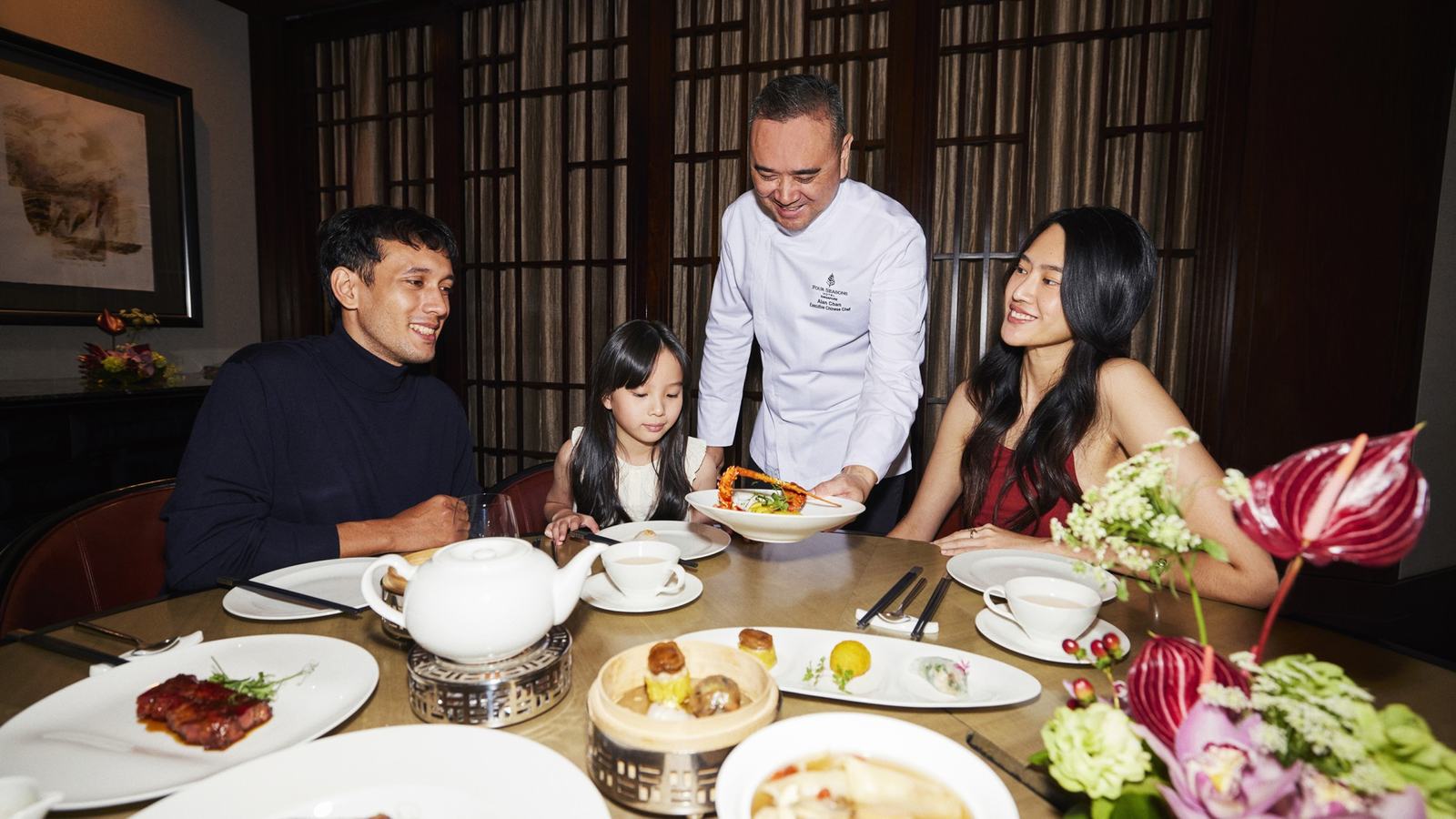
From Nobu weekend brunches to an intimate Italian chef's table and Hong Kong-inspired Cantonese meals, the hotel expands hosted group dining.
More than one way to gather over a meal
Four Seasons Hotel Singapore has introduced a group of dining experiences that put conversation and shared service at the centre of its restaurants. The programme spans Nobu Singapore, Jiang-Nan Chun and One-Ninety, moving between Japanese-Peruvian cooking, Cantonese favourites and a semi-private Italian chef’s table. It is a restaurant-led response to guests who want a distinctive occasion without reserving an entire venue.
The appeal lies in the contrast between formats rather than one universal menu. A group of friends can spend time at an abundant brunch, while a smaller party might prefer a sequence of courses assembled around its tastes. Yacht owners meeting clients or family during a Singapore stop can compare these settings according to the purpose of the evening.
Nobu makes Sunday a sociable occasion
The new Sunday Sushi Social offers familiar Nobu dishes alongside sushi, sashimi and grilled specialities, including Black Cod Miso, Chilean sea bass and Beef Anticucho. It has been conceived as a shared meal, making the range of dishes as important as the individual plate. The format encourages guests to explore several tastes in one sitting without commissioning a bespoke tasting menu.
A separate Taste of Nobu Saturday Brunch includes a buffet of Japanese-Peruvian favourites and a live station for hot dishes. For some guests the attraction will be the visual choice available; for others it will be the chance to enjoy a relaxed weekend table. An extended bar experience is offered with certain brunch beverage packages, but inclusions and pricing require checking at the time of reservation.
Cantonese tradition gets its own interpretation
At Jiang-Nan Chun, Executive Chinese Chef Alan Chan presents Taste of Hong Kong, drawing on the dishes and dining customs of his home city. The selection includes dim sum, congee, noodles and more substantial specialities, moving between comfort food and meticulous restaurant preparation. This programme is distinct from Nobu’s approach, even though both encourage dishes to be shared.
Examples listed by the hotel include steamed pork dumplings in laksa sauce, rice rolls with crispy prawns and Hong Kong-style beef noodle soup. That combination is more revealing than simply calling the menu Cantonese, because it shows how the chef brings recognisable flavours into an upscale hotel dining room. Guests with dietary restrictions should review the full dishes with the restaurant.
One-Ninety offers a smaller table close to the kitchen
One-Ninety’s Chef’s Table accommodates six to fourteen guests in a semi-private setting facing the open kitchen. Chef de Cuisine Valerio Pierantonelli offers a customisable six-course Italian menu with potential wine pairing, turning preparation into part of the occasion. It could be attractive for a private celebration where diners want interaction with the kitchen but do not need a completely isolated room.
The same restaurant also presents Convivio Weekend Brunch, using a semi-buffet style with Italian cheeses, seafood, salads and a tableside main course. The two formats offer contrasting degrees of structure, so guests should select according to how much time and ceremony they want. A semi-private table is not automatically a fully private event, and the venue should clarify the arrangement beforehand.
The practical luxury is choice
These programmes matter because different gatherings require different atmospheres. A celebratory Sunday may benefit from the energy of a shared sushi experience, while a business group could value the relative containment of a chef’s table. The hotel’s new combinations make those choices more explicit without claiming that every restaurant can be adapted to any requirement.
Dining reservations, package conditions and group-size restrictions should be confirmed before arrival, particularly during major Singapore events. The announcement establishes the named restaurants, dishes and six-to-fourteen-person Chef’s Table, rather than promising unlimited flexibility. For discerning guests, choosing the right format is the beginning of a better evening.
Source
Four Seasons Press