Pastry chef Michele Abbatemarco and chef Kensuke Kuze reinterpret Italian, Austrian and French festive traditions at The Lounge above the Imperial Palace gardens.
A culinary journey above the capital
Four Seasons Hotel Tokyo at Otemachi has introduced a seasonal afternoon tea inspired by the festive food traditions of Italy, Austria and France. Available at The Lounge from 16 November 2026 until 6 January 2027, the experience combines the work of Italian executive pastry chef Michele Abbatemarco with savoury preparations developed by executive sous chef Kensuke Kuze. The property overlooks the Imperial Palace gardens and the changing skyline of central Tokyo, establishing a distinctly Japanese context for a menu informed by European culinary memories. The announcement was issued on the opening day of the seasonal programme. For travellers interested in fine dining and the design of hospitality experiences, the menu illustrates how familiar celebrations can be reinterpreted in a different cultural setting without losing their association with a particular place or tradition.
Michele Abbatemarco's interpretation of European pastry
The pastry chef draws on memories of Christmas in developing the individual preparations. The selection is not conceived as a strictly historical reproduction of desserts eaten in a single European region. Instead, it uses familiar festive objects and established pastry flavour combinations as the starting points for new individual compositions. This approach is particularly suited to an afternoon tea, where each piece is experienced on a relatively small scale and can express a distinct idea. The composition of a miniature dessert requires attention to the relationship between its appearance, the texture of its component parts and the sequence in which its flavours emerge. A decorative element should complement the experience of eating it rather than merely providing a visual reference. The official menu identifies several examples that allow the chef's approach to be considered in more detail, although it does not provide the complete recipes or production methods employed in his kitchen.
Tarte Tatin and a Christmas toy
One of the menu's playful creations is identified as the Christmas Teddy Bear. Its flavour references the French Tarte Tatin through a combination of green apple and warming spices. The traditional dessert is generally associated with the transformation of apples during cooking, and the pastry chef has chosen to translate the idea into a different form rather than reproduce the familiar appearance of an inverted tart. Such a reinterpretation allows the fruit and aromatic elements to retain their association with a recognisable culinary tradition while the finished piece introduces a new visual identity. The contrast between a festive toy and a reference to classical pastry can be particularly appealing in a luxury hospitality setting that welcomes guests of different generations. The restaurant has not specified every component of the dessert in its announcement. Diners interested in its ingredients or suitability for particular dietary needs should obtain the relevant details from the restaurant.
Ornament-inspired flavours and winter spices
Boule de Noël is another preparation with a form associated with seasonal decoration. The menu description identifies an almond crunch, fig compote and cream incorporating spices associated with pain d'épices. The combination illustrates how different textures and flavours can be condensed into a carefully constructed small dessert. The almond component introduces the possibility of a crisp contrast to the softer compote and cream. Fig brings another fruit character to the selection, distinct from the apple used elsewhere. The reference to spiced bread connects the preparation with the aromas commonly associated with European winter baking. Its appearance as a Christmas ornament adds a separate visual association. In the hands of a pastry chef, these different references can be arranged so that a familiar season is recognised through a combination of flavour, form and texture rather than through decoration alone. The result is one element of the wider sequence presented at The Lounge.
Chestnut, blackberry and pistachio
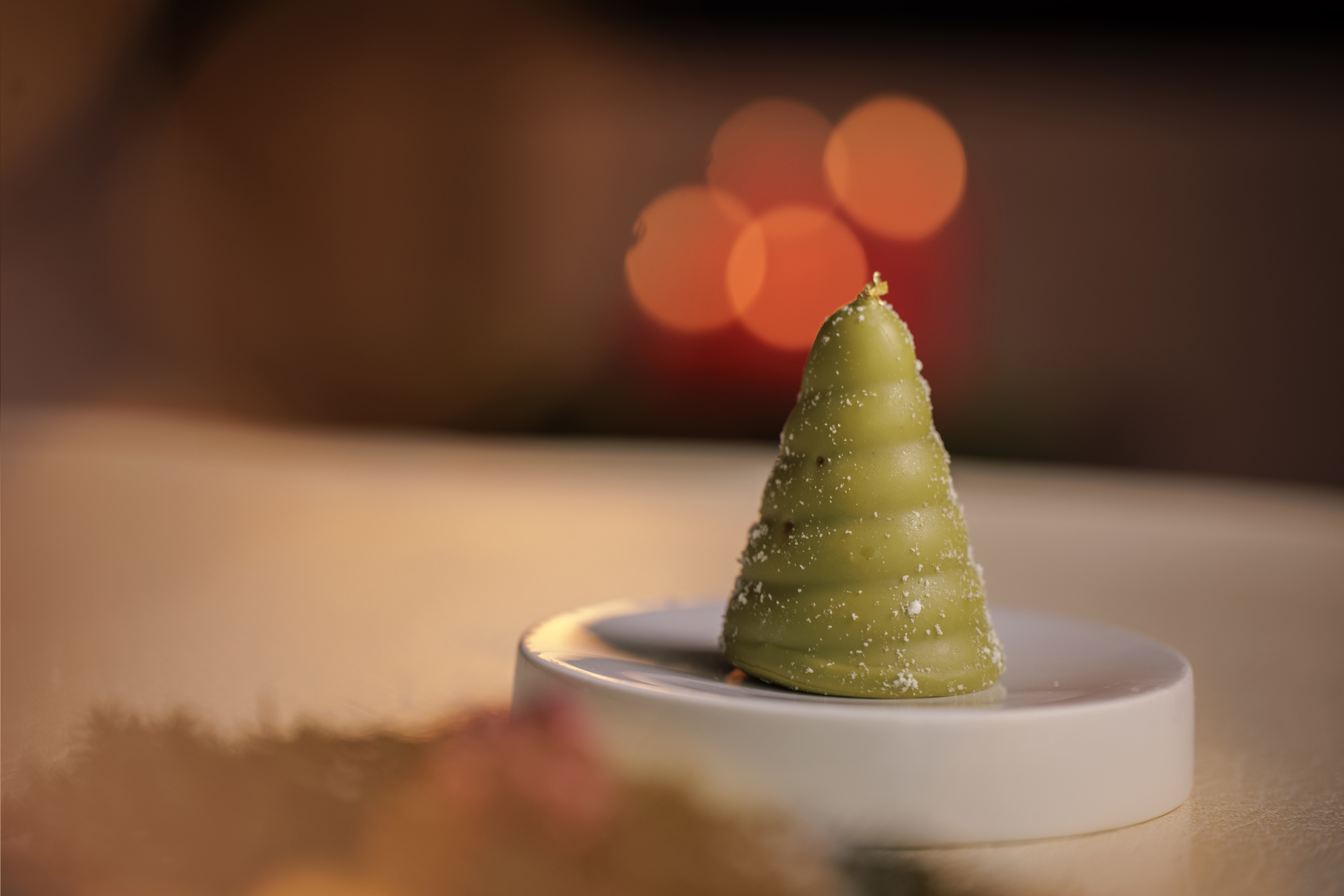
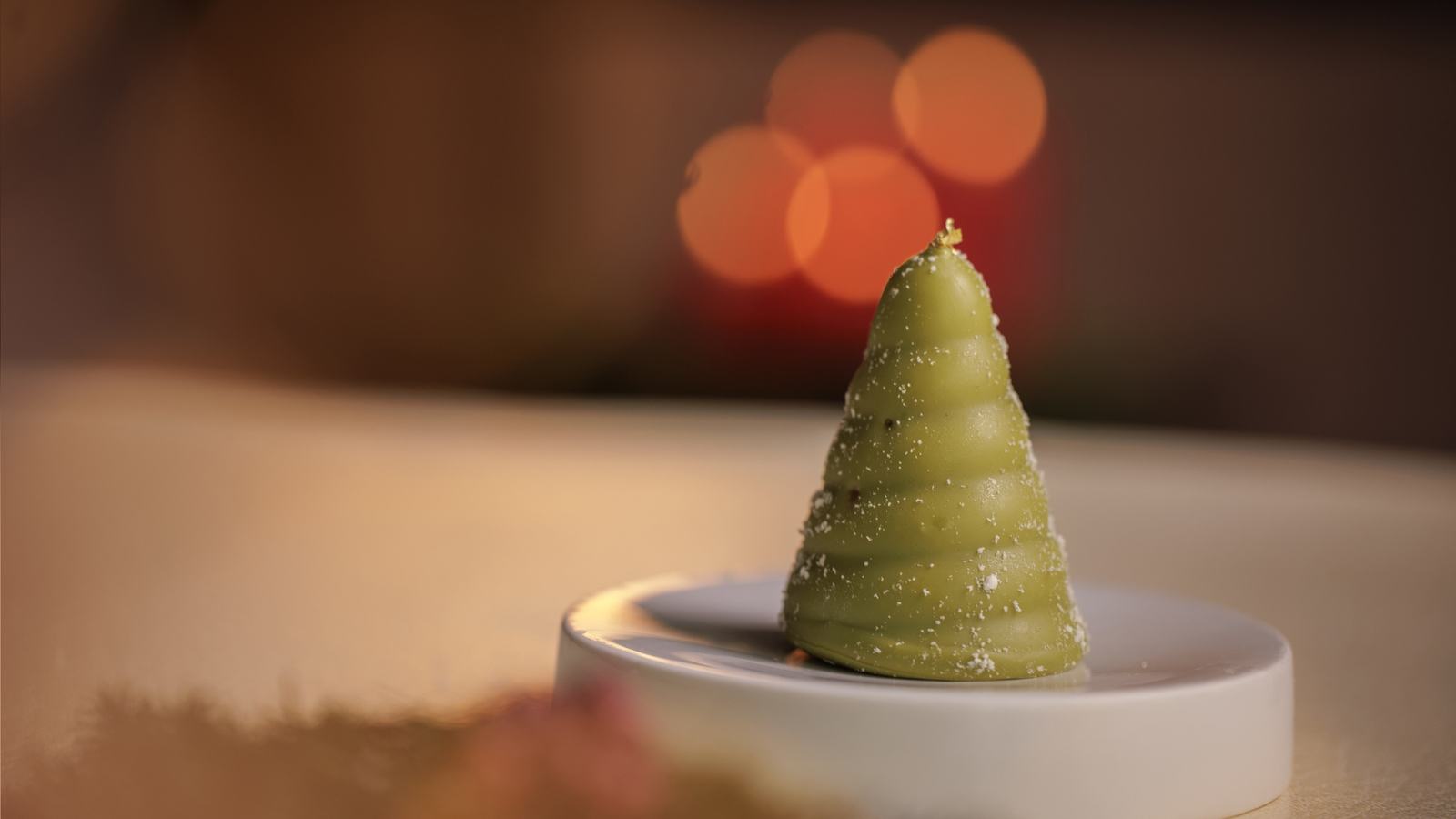
Two further pieces take the forms of a snowman and a Christmas tree. The former is informed by Mont Blanc, with chestnut and blackberry providing its principal disclosed flavours. A fruit component can introduce a contrasting note alongside the richness associated with chestnut-based pastry. The tree-shaped preparation uses pistachio mousse, dacquoise and strawberry gelée. Those components allow different structures within a single dessert, from the mousse to the baked base and fruit element. The menu therefore offers a series of ideas rather than repeating one festive flavour throughout several different shapes. Guests can observe how the compositions change from fruit-led references to preparations containing nuts and more substantial pastry components. The individual textures will depend on the techniques and service arrangements employed by the kitchen. The announcement does not indicate that the pieces are suitable for people with allergies to nuts or other ingredients, and diners should discuss such requirements with the hotel in advance.
Traditional Italian and Austrian baking
The petits fours include pandoro, the festive cake associated with Verona, and crescent-shaped biscuits derived from an Austrian Christmas tradition. These pieces provide another connection between the Japanese setting and the chef's European references. The character of pandoro comes in part from its delicate texture, which can be especially important when a substantial cake is adapted for a smaller individual serving. The crescent-shaped biscuits introduce a different style of baked confectionery with an identifiable seasonal appearance. Their inclusion alongside the more sculptural desserts gives the selection a relationship with established festive baking rather than presenting it purely as a collection of contemporary decorative forms. For a guest who has grown up with similar preparations, the experience may bring to mind a personal tradition. For someone encountering them for the first time, they may offer an introduction to different regional approaches to Christmas baking.
Kensuke Kuze's savoury selection
The savoury component draws on European ideas through preparations such as a foie gras tartlet with honey cream and spiced bread, and a pastry filled with braised beef and chicken mousse accompanied by a red wine sauce. The selection complements the sweet courses by introducing a different balance of flavours and textures. It also provides an opportunity to consider how pastry can function in a savoury arrangement rather than being confined to desserts. The restaurant's approach is especially interesting in the context of a travelling household, where guests may arrive with varied expectations of what afternoon tea should contain. By incorporating richer preparations into the menu, the chefs create a more substantial progression than an assortment of sweet items alone. Portions, the complete sequence and possible adaptations should be confirmed with the hotel if they form an important part of a guest's decision to attend.
Japanese ingredients and the Tokyo setting
The announced beverages include a strawberry and lemon preparation incorporating bergamot and a spiced tea-based drink using kuromitsu, a dark sugar syrup associated with Okinawan sugar. This introduces a connection to Japanese ingredients alongside the European references of the pastry. The Lounge's views towards the Imperial Palace gardens establish a further contrast between the inspiration for the menu and its geographical setting. A guest can experience the changing city light while encountering culinary ideas that originate in distant regions. The hotel expects its wider festive decorations to be installed from 26 November, providing an additional visual dimension for visitors arriving later in the season. The release does not specify that particular window seats are included in reservations. Guests interested in a specific outlook should discuss the seating arrangements when making their plans.
Arranging a festive visit to Otemachi
The afternoon tea is scheduled daily from eleven in the morning until half past seven in the evening over the published period. Weekday prices are JPY 9,800 per person, rising to JPY 10,800 at weekends and on public holidays. The property requires reservations at least three days in advance. Availability has not been separately confirmed, and guests should establish the applicable reservation conditions directly before committing to a visit. For superyacht owners whose wider travel includes Japan, the engagement offers a land-based culinary experience distinct from hospitality aboard their own vessels. Its interest lies in the care taken to reinterpret a recognisable festive repertoire within a different city and cultural context. Individual preparations acknowledge Italian, Austrian and French traditions, while the setting and selected Japanese ingredients establish a clear relationship to the place in which the menu is being served. The experience brings those references together through the work of the hotel's pastry and savoury kitchens.
Primary source: Four Seasons Hotel Tokyo at Otemachi official press release, 16 November 2026.
Photography: Four Seasons Hotel Tokyo at Otemachi, official pressroom image for the festive afternoon tea. Official source.