Fragonard marks 100 years with an exhibition of perfume, art, objets d'art and historic costumes at Monnaie de Paris from 13 November.
Paris lifestyle preview, 11 November 2026. The Fragonard centenary exhibition is scheduled to open on 13 November and run to 10 January 2027; it has not yet opened at the time of writing.
A perfume house shares a century of collecting The House of Fragonard is marking its centenary with an exhibition at the Monnaie de Paris, the historic Paris Mint on the Quai de Conti. Fragonard: A Century of Collections and Craftsmanship opens on 13 November 2026 and is scheduled to continue until 10 January 2027. According to the venue's official description, the exhibition brings together three strands of the house's eighteenth-century collections for the first time: decorative objects, fine art and historical costume. The story is therefore about a collecting tradition as well as fragrance, making it a distinctive addition to a Paris cultural itinerary.
This is a genuine institutional preview, not a review claiming access to objects before opening. The published details point to historic perfume bottles, small personal accessories known as nécessaires, rare garments and paintings by Jean-Honoré Fragonard and other artists. Those categories promise a discussion of the material culture that surrounded scent, fashion and domestic refinement in eighteenth-century France. For Superyacht Guide's lifestyle audience, the appeal lies in learning how craft, decorative arts and private collecting meet, rather than presenting perfume as another luxury label without historical context.
Grasse provides the original story Fragonard's own history begins in 1926 in Grasse, the southern French town associated with perfume production. The Monnaie de Paris explains that the company adopted the name of Jean-Honoré Fragonard, the eighteenth-century painter born in Grasse, as a tribute both to the place and to French artistic culture. It is important to keep the identities distinct: the painter was not the founder of a twentieth-century perfume business, and the exhibition's subject is the house's century of craftsmanship and collected objects rather than a conventional retrospective of his entire artistic career.
Grasse also connects the exhibition with the landscapes and plants that have helped define perfumery's cultural imagination. The advertised accompanying workshop draws on floral accords such as rose, jasmine and orange blossom. Those are examples provided by the institution, not a complete ingredient list for any commercial Fragonard fragrance. Perfume manufacture is a technical and artistic discipline that involves sourcing, blending, maturation and quality control. Seeing finished bottles and garments in a museum can help visitors appreciate the cultural decisions surrounding those processes, even though the display itself is not presented as a working industrial tour.
Three generations have formed the collections The institution names Anne, Agnès and Françoise Costa, the founder's great-granddaughters, as the present leaders of the family house. It says successive generations have enriched collections now associated with seven museums in Grasse, Paris and Arles. That history matters because collecting by a continuing family enterprise is different from assembling a temporary retail display. Objects acquire significance through the choices of people who preserve, study and place them together over many years. An exhibition can reveal those choices and invite viewers to question how a private collecting identity becomes part of a public cultural institution.
The preview does not supply a detailed catalogue or individual market values for every item. It would be misleading to attribute a particular object to one Costa family member without documentation, or to imply that the items are available for sale. The useful distinction is between the business's modern product range and the historical objects it has assembled. A visitor may be familiar with Fragonard soaps or fragrances but encounter the brand's interest in eighteenth-century costume for the first time. The centenary provides a reason to connect those worlds without inventing a direct provenance for individual pieces.
Bottles and personal accessories tell a social history The venue specifically highlights precious flacons and nécessaires. An elaborate perfume container can be understood as more than packaging: its form, material and decoration speak to the expectations of the person who commissioned, purchased or used it. A nécessaire, often organised around personal effects and grooming, can illuminate travel, social ritual and the way private possessions were arranged. The exhibition will bring such objects into dialogue with artworks and historic clothing, according to the official announcement. Their exact arrangement and complete individual histories must be assessed in the display or catalogue after opening.
For owners of yachts and other carefully designed interiors, these categories have an obvious resonance. Contemporary guest spaces also coordinate fragrance, textiles, furniture, finishes and accessories to establish an atmosphere. The parallel is an editorial observation, not a claim that eighteenth-century objects were designed for present-day onboard use. The deeper lesson is about coherence: objects become expressive when considered together, with attention to scale and function. In historical collecting, however, preservation takes precedence over decoration, and fragile original materials should never be treated as interchangeable with contemporary luxury accessories.
Painting and costume expand the exhibition beyond fragrance Jean-Honoré Fragonard is among the painters represented, according to the Monnaie de Paris. Because the venue has not supplied a comprehensive picture list in the material reviewed for this preview, it would be inappropriate to name a particular canvas as definitely on display. What is established is that paintings will be shown alongside rare costume and decorative arts. The combination can reveal how eighteenth-century taste moved between pictures, garments and designed objects, and how the language of refinement changed according to setting and material.
Historic costume creates special responsibilities for an exhibition. Fabrics can be vulnerable to prolonged light exposure, humidity changes and handling, so the conditions under which a museum presents them are part of their stewardship. A visitor need not become a textiles specialist to notice the relationship between dress and the decorative objects surrounding it. Looking at colour, silhouette, scale and workmanship may offer a richer understanding of the collection than searching only for famous artist names. The exhibition is framed as craftsmanship, and that choice of emphasis is central to the experience promised by its organisers.
A Paris Mint setting brings its own craft tradition The exhibition takes place at the Hôtel des Monnaies, at 11 Quai de Conti in Paris's sixth arrondissement. This is not a purpose-built perfume showroom. The institution is historically associated with metalworking, medals and coin production, giving the centenary display another setting in which skilled handwork can be appreciated. The official page names Philippe Costamagna of the Fragonard Museums, Charlotte Urbain and Clément Trouche among the curatorial team, with scenography by Agence Nathalie Crinière. Those named roles establish a deliberately constructed exhibition rather than an informal collection of branded material.
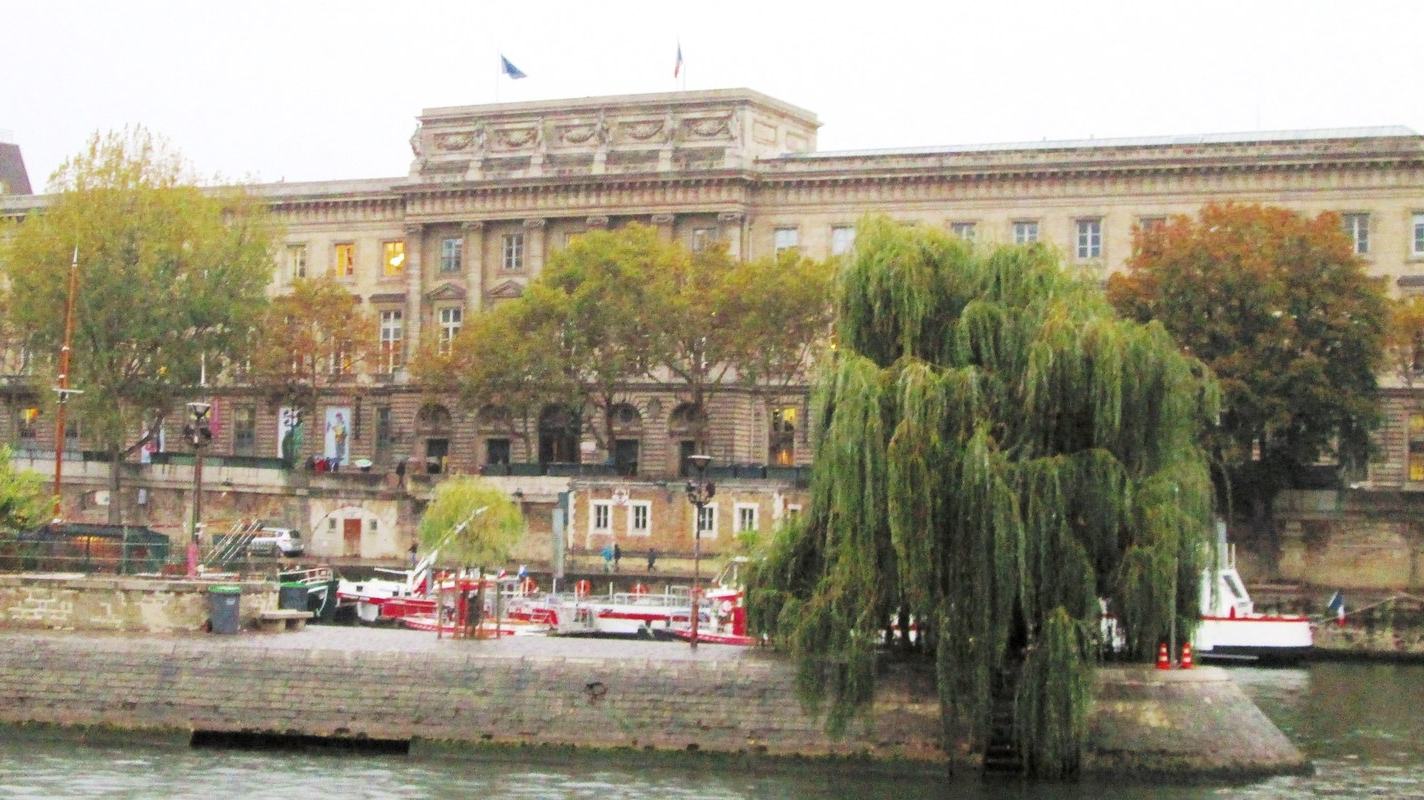
The building's location near the Seine also makes the visit convenient within a wider Left Bank itinerary, although journey times and access should be checked using current transport information. The photograph accompanying this article shows the Hôtel des Monnaies in 2018, years before the Fragonard exhibition; it is not a picture of the installation or the objects being shown. That distinction is particularly important for readers evaluating photographs used in cultural reporting. A picture of a historic venue can be a legitimate illustration if its date and subject are identified honestly.
Visitors can explore fragrance through a separate workshop The Monnaie de Paris advertises a perfume-creation workshop associated with the exhibition. It describes six accords, including rose, jasmine and orange blossom, and says participants will make an eau de toilette and receive a 12-millilitre spray bottle. The venue explicitly says the workshop is available in French only, with a separate fee structure. The activity may suit visitors who want to move from observing historical objects to discussing how notes are combined, but it should not be assumed to be included with exhibition admission.
The official information currently lists general admission at €12, a reduced price of €8 and free admission for visitors under 26. Workshop prices are listed separately, beginning at €30 for standard admission. Opening hours, late Wednesday access, reservation availability and any changes should be checked directly at the venue; the published schedule has last admission times as well as closing times. The free first-Sunday museum ticket is expressly stated not to include this exhibition. Those practical points can prevent avoidable disappointment for visitors whose time in Paris is limited by an onward journey.
What this centenary offers a thoughtful collector The appeal of Fragonard's centenary is the possibility of seeing a family company's approach to preserving objects that might otherwise be reduced to nostalgia. Bottles, costume and paintings can be examined together as evidence of techniques, social customs and aesthetic preferences. They may also prompt broader questions: why do families collect, which objects survive, how is authenticity assessed and what happens when a private selection is entrusted to public display? The organiser's description cannot answer every question in advance, but it makes those avenues of inquiry plausible and worthwhile.
For yacht owners and guests exploring Paris, this event offers a cultural stop with roots in the French Mediterranean through Grasse. The connection should remain proportionate: the exhibition is not about superyacht outfitting or onboard fragrance products. It is a public presentation of the Fragonard house's collections, opening on 13 November and continuing into January, which can enrich a broader trip devoted to art, interiors and design. Its value is in understanding craftsmanship across different materials and generations, not in attaching a speculative commercial price to the objects on view.
Primary source: Monnaie de Paris, Fragonard: A Century of Collections and Craftsmanship.
Photo licence and source
Hôtel des Monnaies, Paris, seen from the Seine in 2018. Beyond My Ken / Wikimedia Commons, CC BY-SA 4.0; resized under same licence. The Monnaie de Paris exhibition venue in 2018, not the exhibition itself. https://creativecommons.org/licenses/by-sa/4.0/ Public-domain image source.
