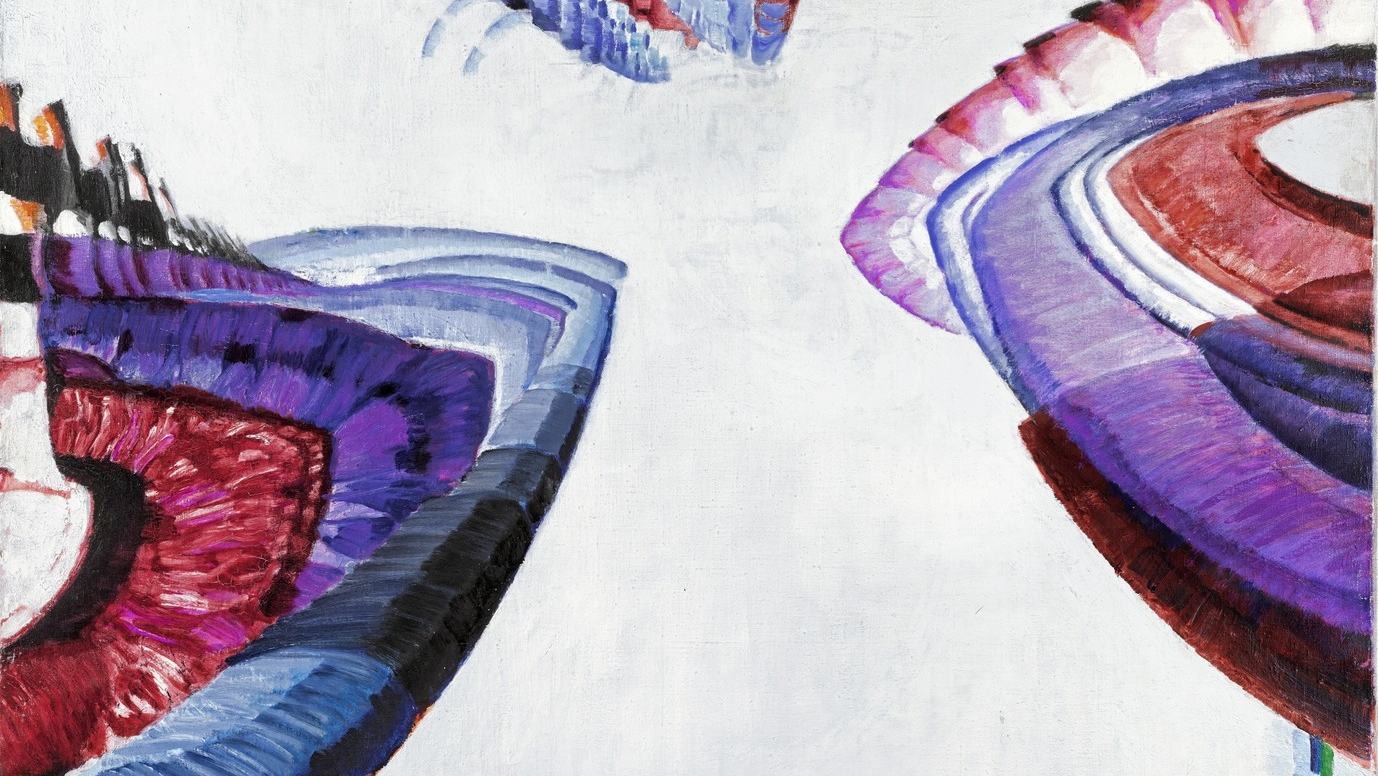
A major early abstract work by František Kupka, painted between 1914 and 1922, leads a forthcoming Paris sale with a €6m–8m estimate.
An early abstraction leads a Paris sale
Sotheby's is preparing to offer Espace non-descriptif by František Kupka in its Paris Modernités auction on 23 October 2026. The oil painting, measuring approximately 112.5 by 114.7 centimetres, was executed over a period between 1914 and 1922. Technical examination and historical scholarship can also help distinguish later restoration from the artist's original working process. That distinction becomes especially important for a canvas whose date covers several years and whose surface has been studied by successive generations.
With an estimate of €6 million to €8 million, it is one of the most financially significant works in the sale. Its importance also lies in the period of artistic experimentation that produced it, when several artists were moving away from direct representation toward new arrangements of colour and form.
Kupka and the beginnings of abstract painting
Kupka was among the early pioneers of abstraction, exploring the ways colour, rhythm and spatial relationships could become independent subjects. His practice developed through a period of enormous artistic change in Europe, when painters questioned traditional approaches to perspective and narrative.
An abstract canvas can carry a sense of motion or depth without showing an identifiable object. Understanding that process may require time in front of the work, observing how adjacent forms and colours influence one another.
A long period of development
The auction catalogue dates Espace non-descriptif between 1914 and 1922, suggesting a period of work rather than a single precisely defined day. This timing places the painting around the years of the First World War and its immediate aftermath.
Collectors should avoid treating such a date range as evidence of continuous work unless the documentation explicitly establishes it. What can be said is that the painting belongs to a formative historical period during which Kupka's artistic ideas were developing.
Provenance from the artist's lifetime
Sotheby's records Galerie Louis Carré in Paris acquiring the work directly from the artist in 1951 and retaining it until at least 1968. It later entered a Geneva private collection, with the current owner acquiring the painting in 2015.
A direct artist-to-gallery link provides an important strand of provenance. Documentation should still be examined carefully, including the relationship between the physical object and any titles, dates or references used in earlier catalogues.
A broad exhibition record
The painting is listed in exhibitions in Prague during 1946, Lausanne in 1955, Paris in 1958 and other later international presentations. Sotheby's also states that Pierre Brullé has confirmed its authenticity.
These records help position the work within a long history of scholarship and display. For collectors, exhibitions can provide valuable context, but they do not remove the need for independent review of the painting's condition and any previous conservation.
The responsibilities of an important acquisition
At more than a metre across, the canvas requires suitable environmental control and secure mounting. Insurance, transportation and professional examination should form part of a purchase plan rather than being addressed only after an auction.
The estimate is guidance, not a confirmed sale price. Kupka's work invites attention both because of its market position and because it represents a particular moment in the emergence of modern abstract art.