The Frick’s new Siena bronze sculpture exhibition brings rare Tuscan Renaissance works to New York from October 2026 through January 2027.
A New York exhibition returns Siena's bronze to the spotlight
The Frick Collection has opened ‘Siena: The Art of Bronze, 1450–1500’, an exhibition running from 15 October 2026 to 18 January 2027 that examines the Tuscan city’s often overlooked achievements in Renaissance sculpture. The museum describes the project as the first exhibition devoted specifically to Siena as a major centre of artistic and technical innovation in bronze during this period.
The show is timely for collectors, museum supporters and travellers planning New York cultural visits this autumn. Its central idea is that Siena’s artistic influence cannot be understood through painting alone, and that sculptures, medals and objects of devotion offer a much wider account of the city’s Renaissance culture.
Nearly forty works with international loans
The museum says the exhibition assembles nearly forty objects, including figures, reliefs, candelabra and medals associated with leading artists such as Donatello, Vecchietta and Francesco di Giorgio. Many of these works are rarely seen outside Tuscany, making their temporary presence in New York significant even for visitors familiar with major European collections.
Loans are credited to institutions including Siena’s Museo Civico, Florence’s Bargello, museums in Naples and Perugia, the British Museum, the Victoria and Albert Museum and the National Gallery of Art in Washington. A gathering of works from such different lenders requires complex conservation and transport arrangements that are largely invisible to the visitor.
Why bronze requires a different way of looking
Bronze combines durability with exceptional scope for surface detail and complex forms, but the finished metal object can conceal the remarkable difficulty of casting, joining and finishing. An exhibition built around sculpture allows viewers to examine the interplay of material, craftsmanship, artistic idea and the circumstances in which an object was commissioned.
That makes the display more than an exercise in famous names. A small medal or liturgical object may be as revealing of a maker’s skill as a monumental statue, provided visitors consider the work’s original purpose, how it was seen and the political or religious context behind its creation.
Siena beyond its celebrated painting tradition
Curator Giulio Dalvit argues in the Frick’s official announcement that Siena has often been recognised for its paintings while its fifteenth-century bronze work has attracted less attention. The exhibition builds a focused historical case for the city as a centre of sculptural experimentation between 1450 and 1500.
That argument is especially interesting because Siena was connected to long-distance travel and trade routes, including the Via Francigena pilgrimage route. Rather than treating the city as a static provincial art centre, the exhibition invites visitors to see artists and patrons responding to local identity and to ideas circulating across Renaissance Italy.
Research beyond the gallery rooms
The Frick has issued an accompanying scholarly catalogue that surveys Sienese bronze production and contains contributions from international specialists. The museum describes archival research, scientific analysis and new photography as important components of the publication, helping to establish a more detailed foundation for the interpretation of individual works.
Collectors interested in historic sculpture should pay attention to this kind of technical scholarship. Attribution, date, casting method, later alterations and documented ownership can be contested, so a carefully researched museum catalogue is a more reliable basis for study than an unsupported sales description or a photograph circulating online.
A specific cultural stop during a New York stay
The Frick’s setting within a historic Fifth Avenue residence gives its exhibitions a distinctive, relatively intimate character compared with a large encyclopaedic museum. A focused display of Renaissance bronze can be incorporated into a cultural day that also allows time for the institution’s permanent collection and neighbouring galleries.
Admission, special events, security procedures and accessibility needs should be checked through the museum before travel. A high-value itinerary is most successful when it preserves adequate time for close observation, rather than trying to compress several major collections into an unrealistic schedule.
Why this matters to private art patrons
Private collectors may be drawn to the exhibition because it provides firsthand access to works seldom assembled in one place, including pieces usually housed in Italy. Yet attendance should not be confused with an opportunity to purchase these objects: they are museum loans presented for study and public appreciation, not a commercial auction catalogue.
Owners considering sculpture for a home, a collection or a philanthropic project can take a broader lesson from the display. Responsible collecting depends on historical context, documented provenance, conservation expertise and the ability to distinguish a compelling attribution from a fully demonstrated one.
Dates and works confirmed by the museum
‘Siena: The Art of Bronze, 1450–1500’ offers a rare occasion to see the metalworking achievements of a specific Italian city through nearly five decades of artistic activity. The exhibition is already under way in New York and remains scheduled into January 2027, giving international visitors a defined window to plan a visit.
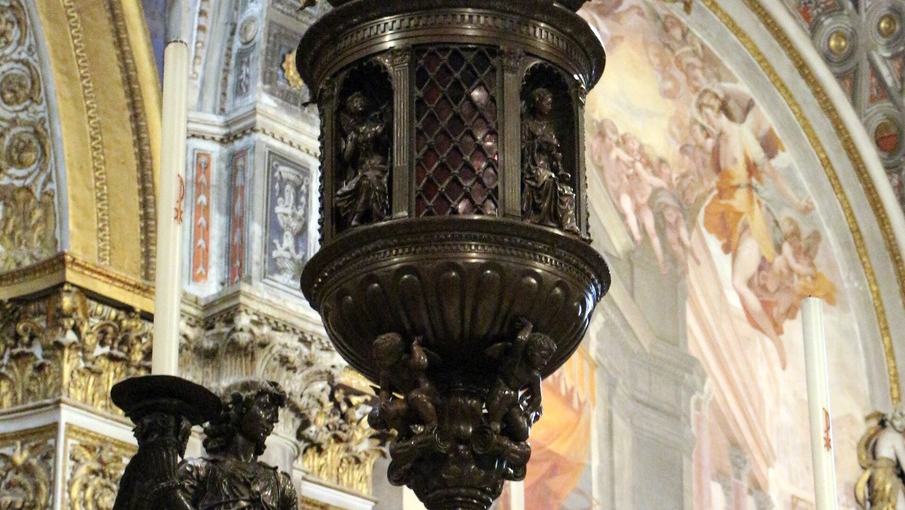
The scope, lenders and scholarship are documented in the Frick Collection’s official exhibition announcement, with dates provided on the museum exhibition page. The accompanying image shows Vecchietta’s historic bronze tabernacle in Siena Cathedral, photographed by Sailko under CC BY 3.0; it is contextual art history imagery and not represented as a work in the Frick’s temporary exhibition.
