Eight FUFU Japan properties receive ten Michelin Keys, including the first distinction for Tokyo Ginza, while Jogashima introduces a coastal hot-spring retreat.
Japanese resort collection marks a new milestone
Kato Pleasure Group has announced that eight properties in its FUFU Japan collection received a combined ten Michelin Keys in the guide's 2026 hotel selection. Its November 16 statement coincides with the first anniversary of FUFU Tokyo Ginza, which has secured its first Key. Two establishments, at Kawaguchiko and Nikko, retained two Keys each, while six others received one. The announcement also highlights the company's tenth property, opened earlier this year on the island of Jogashima. Together these developments illustrate a particular approach to luxury travel in Japan: a relatively small number of rooms, considerable attention to bathing and dining, and interiors informed by the setting of each property. For a superyacht-owning household planning an extended visit ashore, the collection presents an interesting alternative to a large international hotel, especially where privacy and the opportunity to experience a particular landscape matter more than a substantial programme of resort entertainment.
What the hotel distinction means
Michelin Keys relate to accommodation rather than the restaurant stars for which the guide is widely known. They distinguish the overall experience of staying at a participating hotel or resort. They should not be interpreted as a separate Michelin Star awarded to the restaurant, or as an assessment of the medical benefits of its bathing facilities. The eight properties identified by FUFU have received different levels of distinction, whose aggregate is ten Keys. This is not a claim that any individual property received ten. The group's statement that it has led Japanese hospitality brands by number of recognised properties for three successive years is based on its own research, dated September 18, 2026. The figures establish a useful context for its November announcement, but a private traveller should consider the characteristics of each retreat independently. A mountain setting, a forest location and a metropolitan property may offer entirely different experiences despite being operated under one name.
Ginza introduces the ryokan concept to a metropolitan address
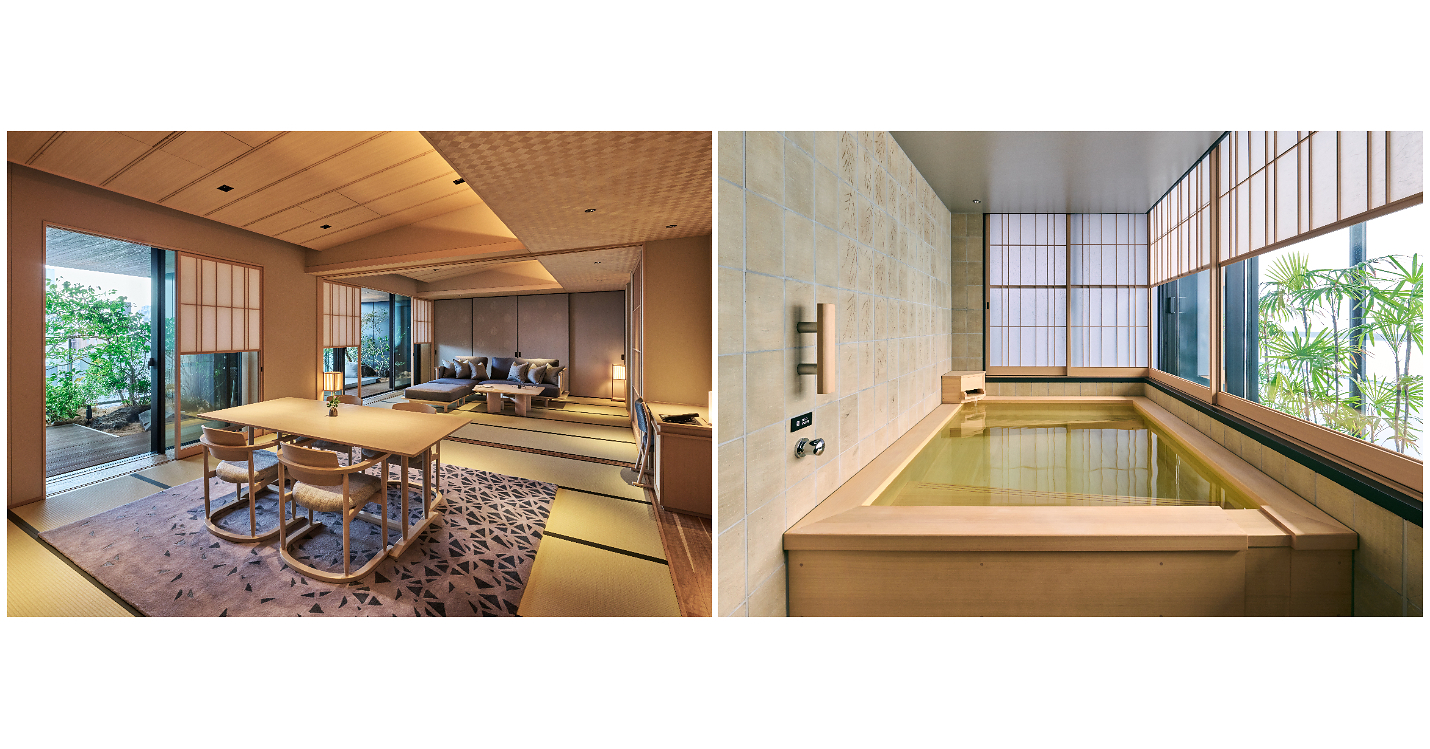
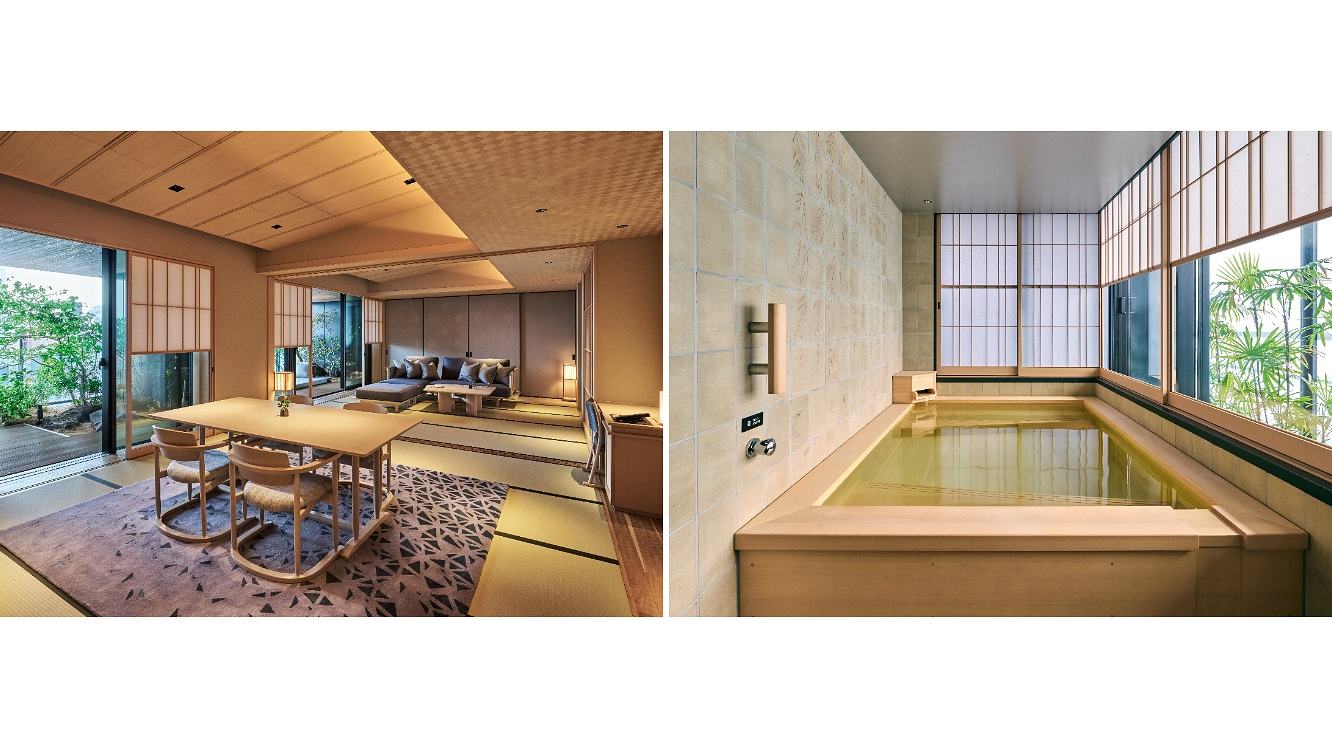
FUFU Tokyo Ginza opened in November 2025 and has 34 guest rooms. Rather than attempt to replicate the appearance of a traditional rural inn in every respect, the property incorporates aspects of the privacy and calm associated with a ryokan into a city address. Each room is described as having a garden and its own bathing facility supplied with natural hot-spring water from the group's spring in Atami. This is distinct from an onsen located directly over its own spring. The transport and use of the water are part of the operator's arrangements. The private bath allows guests to decide when to use it without organising their day around a communal bathing schedule. For a household that normally values the independence of a private residence or yacht, that feature can be as significant as room size. The Ginza property also has intimate dining spaces, Japanese cuisine and a rooftop lounge incorporating open-air footbaths.
Exploring the city from a quiet base
Ginza provides access to an extraordinary concentration of Japanese design, specialist retail and restaurants. A visitor who wishes to spend part of a journey examining contemporary fashion, traditional decorative materials or objects for a private collection may find the district an interesting place to begin. The character of the hotel is essentially different from that of a remote retreat because its surroundings offer numerous reasons to leave the property during the day. Returning to accommodation with a private garden and bath can provide a contrasting experience after several hours of appointments or cultural visits. This combination is especially useful for a party whose members have different interests. One guest can explore the city while another remains in the room or arranges a quieter programme. The press release does not enumerate every room configuration, concierge service or possibility for exclusive use of the hotel. Those arrangements should be discussed with the property if they are essential to the visit.
Kawaguchiko and Nikko retain their distinctions
FUFU Kawaguchiko and FUFU Nikko each retained two Michelin Keys for the third consecutive year, according to the group. The first draws on the setting of Lake Kawaguchi and Mount Fuji. The second is situated in a destination associated with historic buildings and religious heritage. Their appeal lies in the relationship between the accommodation and the landscape or cultural environment surrounding it. The view available from a particular room should not be inferred solely from general photographs of the property, especially in a destination where cloud and weather can substantially change the visible landscape. Travellers considering a visit centred on the mountain should allow flexibility in their itinerary. In Nikko, a programme informed by the area's historic sites may involve different practical considerations, including opening hours and seasonal conditions. The awards indicate that both retreats have sustained their recognition over multiple guide editions without suggesting that they offer identical facilities or furnishing schemes.
Six properties with individual identities
The six hotels receiving one Key are at Nara, Kyoto, Hakone, Karuizawa, Kyu-Karuizawa and Tokyo Ginza. The two Karuizawa properties are separately identified as Wind in the Sunshine and Restful Forest. The group has maintained a separate identity for each hotel, rather than making geographical proximity the defining feature of its accommodation. Kyoto and Nara offer a different cultural context from the mountain and forest regions, while Hakone provides another landscape in which hot-spring bathing has long been associated with hospitality. For an internationally mobile family, a journey incorporating several of these properties can offer a way to experience different parts of Japan without relying exclusively on a single base. The choice of accommodation should be informed by the desired activities and actual travel arrangements. The current announcement does not establish package pricing or guaranteed connections between properties, and a carefully coordinated itinerary will require separate reservations at each stage.
Jogashima brings an ocean setting to the collection
The new retreat at Jogashima, opened in February 2026, represents the group's first resort overlooking the ocean. Jogashima lies at the end of the Miura Peninsula in Kanagawa Prefecture. The operator describes every guest room as having a sea view and a natural hot-spring bath, with a rooftop lounge providing another place to observe the changing coastal light. The restaurant focuses on Japanese preparations using seafood from the surrounding waters. The property is not identified among the eight Key recipients in the November release, so its opening should be distinguished from the award results. Its location is of particular interest to the superyacht community because it brings this form of Japanese hospitality into a coastal landscape rather than a mountain or metropolitan setting. FUFU estimates a road journey of about 90 minutes from Shinagawa and 70 minutes from Haneda Airport. These are indicative travel times, not guaranteed transfer durations.
Design considerations for private homes and yachts
One of the most interesting aspects of the FUFU model is the way that bathing, landscape and accommodation are considered together. A room can provide an experience of its surroundings without demanding that its occupants move through extensive public spaces. The idea may be familiar to owners who commission their own yacht interiors, where the orientation of a room towards the water and the provision of private facilities can influence the character of time spent aboard. The relationship between a view, natural materials and privacy can also inform the design of a shore-based residence. There are important differences, however, between a natural hot-spring bath in a Japanese hotel and a bathing installation on a vessel. Water treatment, drainage, weight, ventilation and safe operation at sea must be assessed by the relevant marine specialists. The properties provide examples of a particular design philosophy rather than technical models for direct replication aboard a yacht.
Selecting a retreat for an individual journey
The November announcement confirms the distinctions for eight hotels and describes the current collection as encompassing ten resorts. It does not imply that every property has received a Key or establish room availability for a particular period. Travellers should obtain current accommodation information directly from the individual hotels, especially when arranging a visit for several family members or requesting specific room locations. Questions relating to dietary requirements, accessibility and the use of private bathing facilities should be addressed before departure. A yacht itinerary requires separate arrangements for suitable port access; the coastal position of Jogashima does not by itself establish that a large vessel can berth at the property. The distinctive opportunity presented by the FUFU collection is the possibility of combining Japanese regional experiences through several intimate accommodation settings. The latest guide recognition gives renewed prominence to the established retreats, while Ginza and Jogashima demonstrate how the operator is extending its approach into metropolitan and maritime landscapes.
Primary source: Kato Pleasure Group official press release via PR Newswire, 16 November 2026.
Photography: Kato Pleasure Group and FUFU JAPAN, official editorial release imagery. Official source.